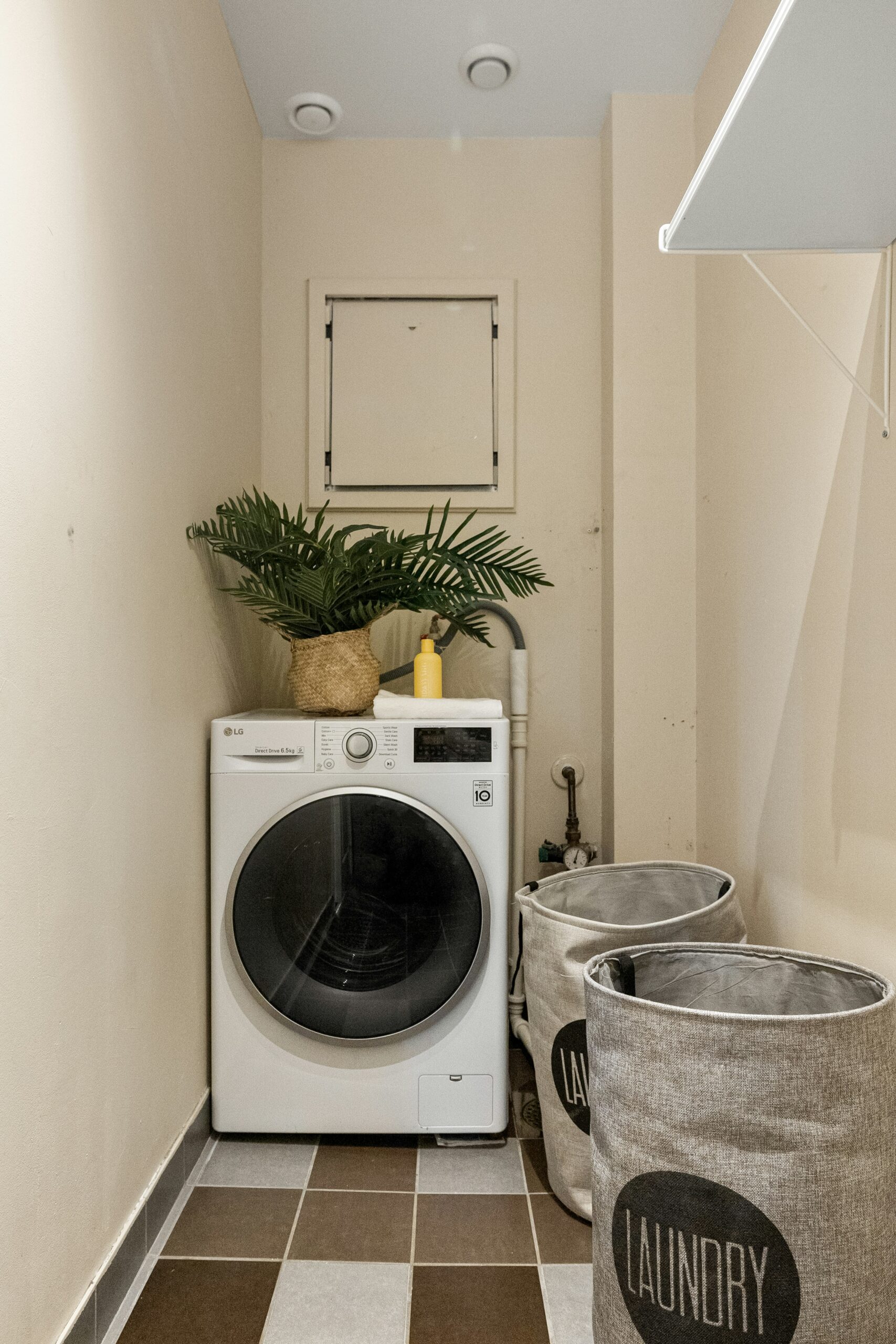
Whole-house delivery changing after an appliance install needs the actual connection role identified. An inline treatment unit and an ordinary appliance branch do not share a generic bypass or direct-reconnection test.
Safe first response
Keep away from wet electrical equipment. Do not touch wet appliances, plugs or switches, or enter water to reach a breaker. When no gas leak is suspected, power may be isolated only from a safely accessible dry location; otherwise call an electrician or emergency help. Wet equipment needs qualified assessment before it is used again.
For uncontrolled leakage or immediate danger, use a separate known safely accessible permitted owner control without force or obtain urgent supplier/plumber help. Keep out of potentially energized water regardless of footwear; never enter it to reach a valve or breaker. Any electrical isolation needs a safely accessible dry approach. Do not operate supplier, shared, fire or unknown controls by guesswork.
Record what is already known
- Actual appliance/model, branch versus inline arrangement and completed work.
- Original local versus broad delivery change and demand at the time.
- Any required treatment purpose, actual approved bypass conditions and existing pressure points.
What the pattern establishes
A restriction in an ordinary small appliance branch does not automatically restrict unrelated house branches. A changed result after bypassing an inline unit changes the entire flow arrangement and does not uniquely prove a failed device. Required treatment may make an untreated bypass unsuitable.
What to do next
- Contact the installer before altering new work. Preserve appropriate protection and actual water-use requirements.
- Do not reconnect inlet and outlet directly, remove a required filter or loosen fittings to inspect a suspected kink.
- Do not open a branch into a bucket or use an isolated loose piece to flush. Actual approved secured service/discharge and every-feed isolation must be established.
- An intended treatment service bypass needs actual model/application and permitted-use instructions; it is different from bypassing pressure/backflow protection.
- Have actual static/flowing points, demand, branch topology, connection and component evidence assessed before selecting a replacement or relocating supply.
Keep required protection effective
Do not bypass a pressure regulator, backflow preventer or other protective control to see whether the symptom disappears. A different result after changing the supply arrangement does not prove the removed device was faulty. Approved protected arrangements and qualified device-specific tests are different from an improvised bypass.
Water-use readiness
Follow the actual supplier’s permitted uses, sampling and restoration directions. Clear appearance or a steady stream does not lift an advisory. Do not taste unknown water, boil chemical contamination as a general remedy, bypass required treatment or draw suspect water into a heater. Use a known-safe consumption source while an unexplained quality concern is assessed.
Before intrusive service
Before any internal service or fitting removal, identify and isolate every supply that can pressurize the section, release trapped pressure through the appropriate controlled outlet and verify depressurization. Account for hot water and possible alternate feeds. Lowering a PRV setting, reducing flow or wearing gloves does not make a pressurized assembly safe to open. If isolation cannot be established, leave it assembled and obtain qualified help.
Identify every actual feed, the model and its pressure/energy/temperature conditions before a retained part is opened. A main cannot isolate its own supply-side connection; a mixer can have both hot and cold feeds. Keep effective isolation during work, fully secure compatible rated parts before controlled restoration, and use the actual commissioning/leak/function checks. A service flush needs a relevant secured path and accepting discharge, never an exposed supply aimed at a bucket.
Does pressure improving after a bypass prove the appliance is defective?
It shows a changed arrangement changed the result. Actual installation, operating conditions, protection and model evidence are needed to name the fault.
Related guides
- House water supply fades slowly then stops
- Water only flows when main valve partially open
- Water supply lost after neighbor repair
- Pressure loss after replacing main valve
- Whole-House Water Supply Interruption