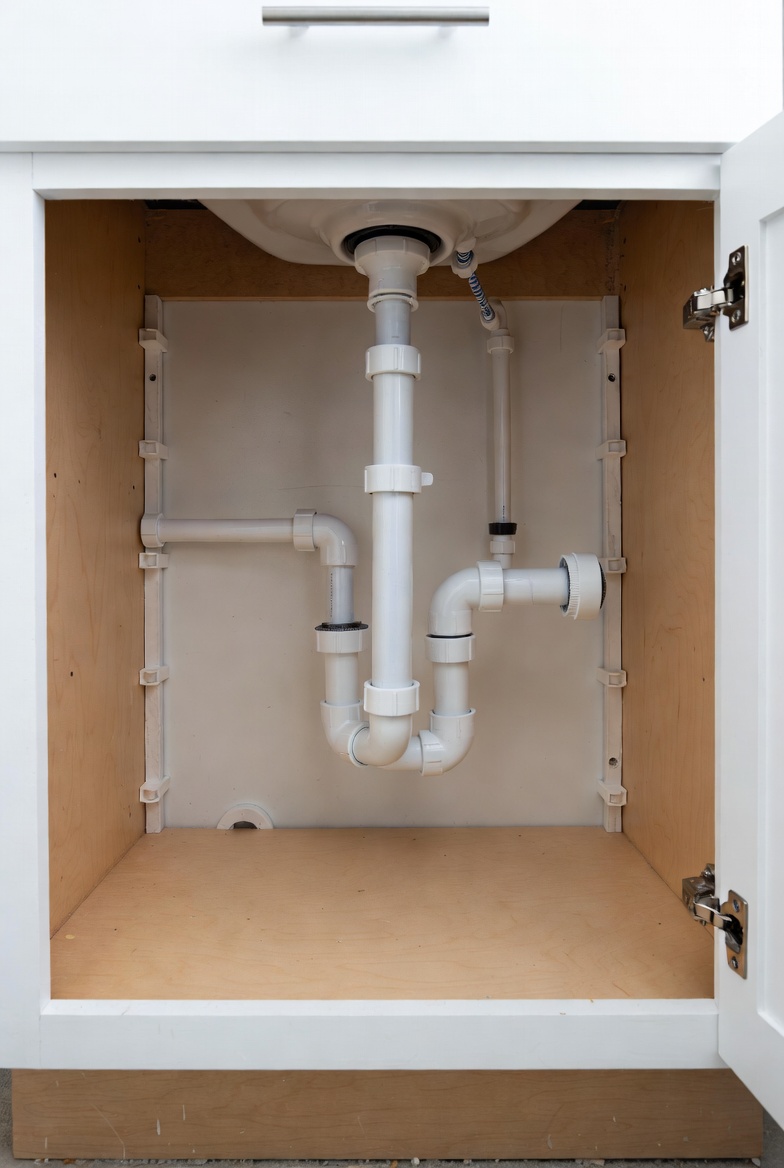
Quick Answer:
If a recent repair left the sink linkage binding, the pivot rod or connecting arms may be bent or misaligned. Inspect for a bent pivot rod and realign the linkage path. A careful realignment usually restores smooth operation without replacing parts.
Why This Happens
- During a repair the pivot rod or ball rod can be bumped or twisted out of its original shape, so moving the stopper pulls at a different angle.
- Fastening the clips or nuts too tightly can change the linkage geometry and cause parts to bind.
- Improper reassembly can let the stopper sit off-center, which can make the stopper catch and sometimes even cause the Stopper blocks drain partially symptom.
Step-by-Step What to Do
Prepare and access the linkage
- Clear the area under the sink and place a bucket under the drain to catch any drips.
- Remove the P-trap if it blocks access to the pivot rod. Use channel-lock pliers if slip joints are tight.
Inspect the pivot rod and connections
- Locate the pivot rod where it passes through the drain tailpiece and connects to the stop lever with a clevis or clip.
- Inspect for bends, twists, or a pulled-out clevis pin. Inspect for a bent pivot rod and realign the linkage path.
- Also check the stopper for any chips or deposits that might change its path.
Realign the linkage
- Loosen the retaining nut that holds the pivot rod in the tailpiece just enough to free the rod—do not fully remove it unless necessary.
- Gently move the pivot rod so the clevis lines up with the hole in the lift rod bracket and the stopper. Adjust the height and angle until the stopper drops and rises smoothly.
- Tighten the retaining nut snugly but not so tight that it distorts the rod or tailpiece.
Test and fine-tune
- Operate the lift rod several times to confirm smooth travel. If it still binds, slightly loosen and re-angle the pivot rod until the motion is free.
- Reinstall the P-trap and test for leaks before finishing.
What Not to Do
- Do not bend the rod more by forcing it; fix alignment instead.
- Do not overtighten the retaining nut or clips—this can warp the tailpiece or rod and make things worse.
- Do not use pipe wrenches or excessive leverage on thin linkage parts; they’re designed for light motion, not heavy force.
When to Call a Professional
- If the rod is badly kinked or cracked, replacement may be needed and a plumber can ensure the correct part and fit.
- If corrosion is extensive and the linkage is seized or the metal is flaking, call a pro—this is similar to situations where the Linkage rusted through.
- If you’ve tried alignment and it still binds, a plumber can check for hidden obstructions or damaged drain parts that are not obvious from below.
Safety Notes
- Turn off any nearby water sources only if you’ll be disconnecting supply lines. For most linkage work you don’t need to shut off the main water.
- Wear safety glasses to avoid rust or debris falling into your eyes when manipulating parts under the sink.
- Support the waste tailpiece and avoid leaning on fragile plastic fittings; sudden breaks can cause injury or water damage.
Common Homeowner Questions
- Why does the stopper stick after I tighten a nut?
Because tightening can change the angle of the pivot rod; loosen slightly and realign before retightening. - Can I replace the pivot rod myself?
Yes—pivot rods are inexpensive and usually straightforward to swap if you can reach them. - Will lubrication help?
Lightly lubricating metal-on-metal link points can help, but fix alignment first and avoid heavy greases that attract grime.