Quick Answer:
If water you run in the right bowl comes up in the left, the two bowls are sharing a clogged section of drain. Stop using the sink, remove standing water, try a plunger on both bowls, and inspect the shared connection (the tee or baffle) for a restriction before trying more invasive fixes.
Why This Happens
Most double-bowl sinks join under the cabinet into a single drain line. When the shared section or the fitting that connects the two tailpieces is partially blocked, water pushed down one side can be forced back up the other. Recent changes to plumbing or cabinets can also shift pipes so flows intersect differently; see Cross-flow after plumbing repair and Cross-flow after remodel for common causes after work is done.
Step-by-Step What to Do
1. Stop and prepare
- Stop running water and turn off the garbage disposal if there is one.
- Put on gloves and have a bucket and towels ready to catch water when you open pipes.
2. Remove standing water
- Scoop or bail out water from both bowls so you can see what’s happening and work without mess.
3. Try a plunger on both bowls
- Use a sink plunger (not a toilet plunger). Seal the other bowl with a wet cloth or the sink stopper and plunge each bowl several times. Plunging both helps move blockages in the shared section rather than shifting them from one side to the other.
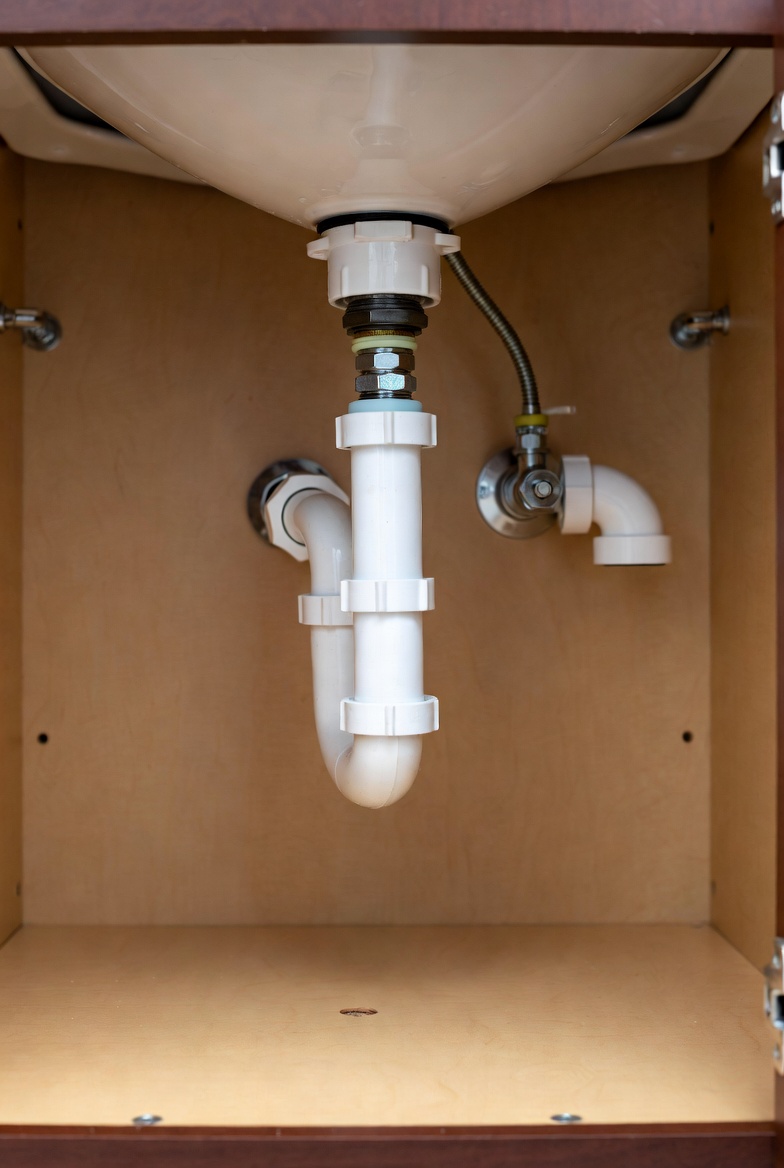
4. Inspect the tailpieces and p-traps
- Place the bucket under the P-trap. Loosen the slip nuts and remove the trap to check for hair, grease, or debris. Clean it and reassemble. If both traps are clear but the problem remains, the clog is farther downstream in the shared section.
5. Check the tee or baffle where the two bowls connect for restriction
- Many double sinks have a tee or a baffle fitting where the two tailpieces meet. Remove accessible fittings and look for trapped debris, grease buildup, or a misaligned baffle.
- Clean the fitting with a brush or rag. If you see damage, note it for repair or replacement.
6. Use a hand auger if comfortable
- If the shared section is still clogged and you’re comfortable using tools, feed a 1/4″–3/8″ hand auger through each tailpiece into the common drain, then through the tee. Work gently to avoid damaging fittings.
- Run water to test after pulling the auger back out.
7. Test and finish
- Run water in both bowls for several minutes. Check under the cabinet for leaks and confirm both bowls drain normally.
- If the clog returns or you see persistent slow draining, move to the “When to Call a Professional” steps.
What Not to Do
- Do not snake only one side without checking the shared section. Doing that can push the obstruction into the common tee and leave the other bowl backing up.
- Do not pour concentrated chemical drain cleaners into a partially filled sink. They can splash, damage finishes, and create hazardous fumes—especially if metal trap or disposal and chemicals mix.
- Do not force connections or overtighten slip nuts after cleaning; cross-threading or cracking plastic parts creates leaks.
When to Call a Professional
- Water still backs up after you’ve cleaned traps and checked the tee or baffle.
- There is sewage smell, water rising into cabinets, or slow drains from other fixtures—possible deeper main-line issue.
- You find damaged or corroded fittings, or you’re not comfortable disassembling plumbing under the sink.
Safety Notes
- Turn off power to the garbage disposal at the breaker before working nearby.
- Wear gloves and eye protection when handling dirty water or using tools.
- Never mix chemicals. If any commercial drain product was used earlier, ventilate the area and avoid contact until you know what’s present.
Common Homeowner Questions
- Q: Will a clogged garbage disposal cause this? A: Yes—debris from a disposal can lodge in the shared tee and cause cross-traffic between bowls.
- Q: Is this a sign of a main sewer problem? A: Not usually. If only the sink bowls are affected, it’s most often a local clog in the shared sink piping.
- Q: Can I clear it myself every time? A: You can handle many clogs, but recurring backups or hard-to-reach obstructions are best handled by a plumber.