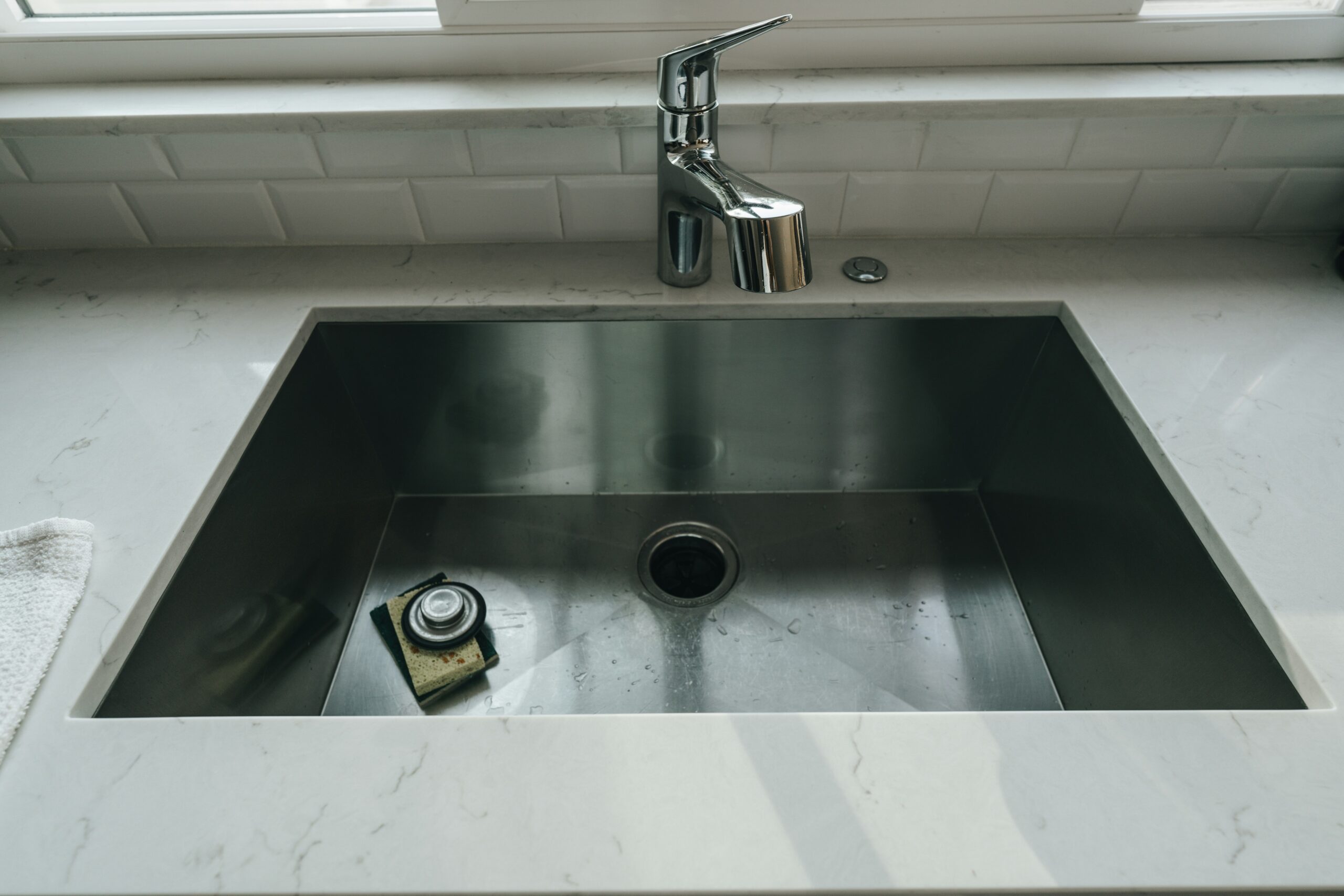
Check for an emergency first
Keep away from wet electrical equipment. Do not touch wet appliances, plugs or switches, or enter water to reach a breaker. When no gas leak is suspected, power may be isolated only from a safely accessible dry location; otherwise call an electrician or emergency help. Wet equipment needs qualified assessment before it is used again.
For a high-pitched kitchen faucet screech, begin with when it occurs and the actual faucet model. A sound alone cannot identify high pressure, an aerator, a cartridge or a supply stop. Keep supply-flow noise separate from drain gurgling and from any unrelated water discoloration.
Useful details to record
- Whether the sound accompanies opening, steady flow, closing, a spray mode or an appliance’s ordinary use.
- Any flow reduction, leak, hose movement or recent faucet, valve or supply work already noticed.
- Faucet model and service instructions, plus whether other fixtures already have a similar symptom.
What the pattern can tell you
- It occurs at one faucet or spray setting. That makes the actual fixture and outlet parts relevant, without proving which component failed.
- Several fixtures show noise or changed flow. Give the plumber the scope; a pressure-control check may be appropriate, but noise is not a pressure measurement.
- A drain gurgles at the same time. Record it separately. A drain vent does not directly explain particles in an incoming drinking-water line.
What to do next
- Stop using a leaking or violently moving fixture and have it assessed. Do not repeatedly snap the handle or run an ice maker to reproduce a sound.
- Identify the exact faucet before owner maintenance. With water off and parts cool, clean only an intended owner-removable aerator or spray screen under the model instructions, using the correct tool and orientation. Do not force a hidden aerator, loosen the riser or remove a pressurized cartridge.
- Moen’s kitchen low-flow examples distinguish aerators, spray screens and other assemblies by design. That supports identifying the actual product; it is not a promise that cleaning fixes every screech.
- After correct reassembly, a small attended check under the actual instructions can show whether ordinary flow and noise improved. Stop for leakage or persistent severe noise; do not increase force or alter safety parts.
- Use qualified service for internal parts, unknown connections, recurrent noise, leaks or wider pressure concerns. Do not throttle a supply stop to mask the symptom, turn a regulator by generic increments or bypass pressure/backflow protection.
- If discoloration or a new unexplained quality change is also present, stop consumption from the suspect source, use known-safe water and contact the supplier. Boiling is not a general chemical remedy; the linked water-quality guide explains the separate investigation.
Should I replace the refrigerator filter because the faucet screeches?
The sound does not establish a refrigerator-filter fault, and a generic cartridge age or flush volume is not a noise diagnosis. Preserve the timing and model information and assess the actual faucet and supply arrangement before choosing parts.