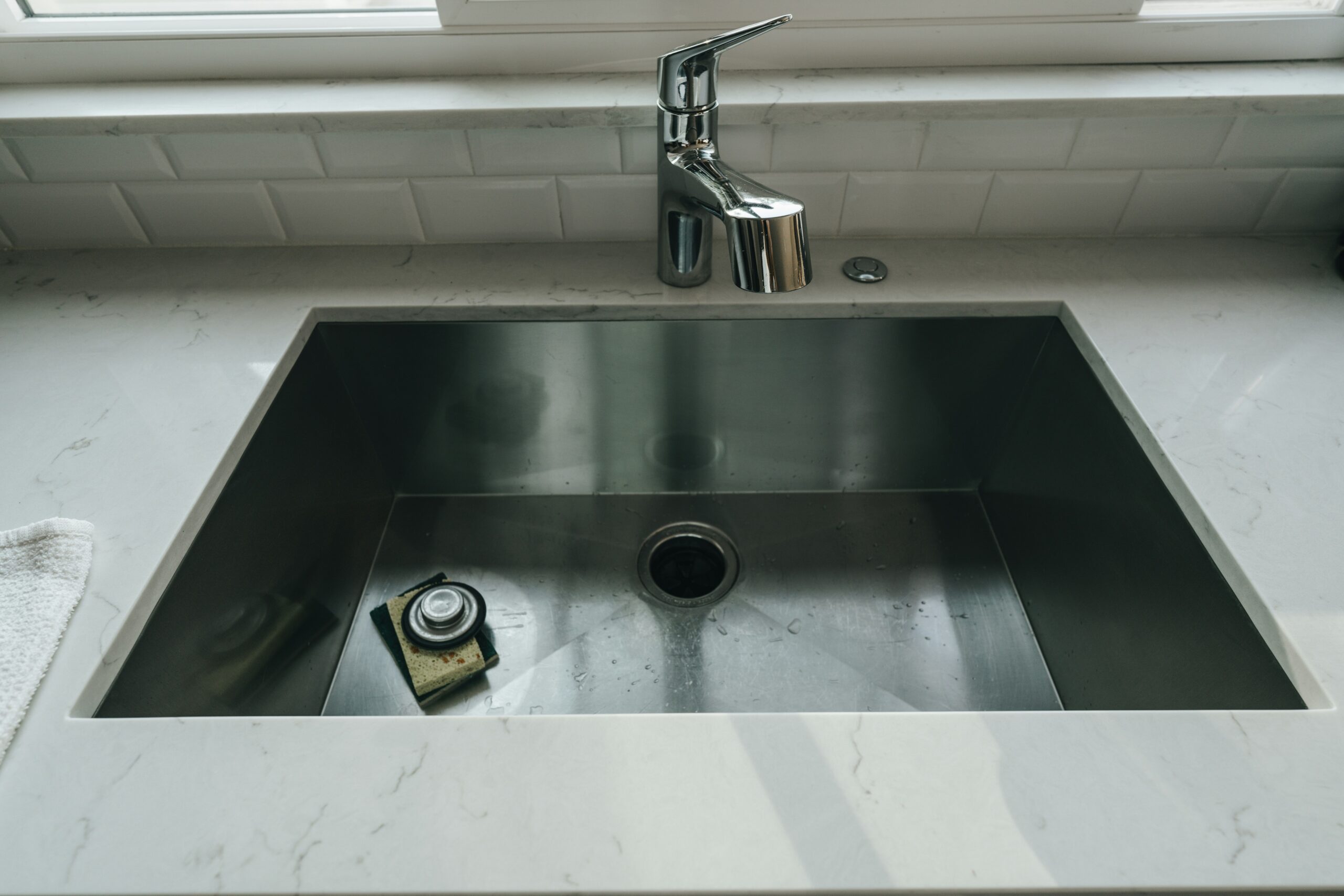
A kitchen faucet dripping for minutes after shutoff needs the actual escape point and finite versus continuing-water behavior identified. Do not treat drain venting or appliance timing as a faucet leak diagnosis.
Safety before another test
If fuel gas is suspected, leave the building or affected area immediately. Do not operate valves, switches, plugs, appliances or phones there. Call the gas emergency service from a safe location well away, and wait for responders’ clearance.
Keep away from wet electrical equipment. Do not touch wet appliances, plugs or switches, or enter water to reach a breaker. When no gas leak is suspected, power may be isolated only from a safely accessible dry location; otherwise call an electrician or emergency help. Wet equipment needs qualified assessment before it is used again.
Stop affected use for leakage, unsafe temperature, damaged parts or a receiver that cannot accept water. Use only an identified safely accessible permitted owner control without force, or obtain prompt appropriate help.
Keep the original event
- Original duration without repeated on/off cycles, and whether the drip ended.
- Spout versus handle/base/cabinet wetness and exact faucet model.
- Relevant work and existing safe control/flow observations.
What the observation establishes
Moen’s high-arc example describes finite retained spout water after closure; it does not set every faucet’s normal waiting time. A drip continuing after stop closure can still be retained water, a passing stop or another actual feed. Neither stopping nor continuing uniquely proves faucet, piping or appliance fault.
What to do next
- Use safe appropriate control or prompt service for persistent leakage; do not force the handle or run a mandatory timing ladder.
- Separate outlet sealing, external leakage and retained spout volume before choosing parts.
- Do not run the disposal, alter a dishwasher check valve or change a drain vent to explain a supplied faucet drip without an actual connection.
- Any suitable outlet flush needs the actual controlled source/discharge conditions. Isolate and verify all relevant feeds again before cartridge or supply service.
- Fully secure compatible parts before normal restoration and actual checks; do not replace a cartridge or tighten every fitting merely because it drips after use.
Supply and waste remain separate
A faucet feed and the sanitary drain are separate systems in a correctly installed arrangement. A P-trap, disposer outlet or drain air-admittance valve does not directly pressurize or aerate the faucet supply. Appliance filling can affect shared supply demand; appliance draining enters a receiving waste path. Do not claim crossover or contamination without the actual connecting path and evidence; suspected non-potable entry needs prompt supplier response.
Actual service and restoration
Before opening a cartridge retainer, hose, filter housing or other water-retaining part, identify the actual model and every relevant feed. Establish effective source isolation, controlled pressure release and verification; a closed suspect stop is not proof and a stop cannot isolate its own inlet. Keep feeds isolated during removal/refitting except for a specifically prescribed controlled captured service arrangement. Secure compatible parts fully before normal restoration, then complete actual leak and functional checks. A bucket or comfort with tools does not establish safe source control.
For suitable ordinary outlet care, keep the faucet off, parts cool and the basin able to receive any permitted discharge. Use the actual accessible aerator or spray-head design, key/tool, parts stack and compatible cleaner/contact time without force. Preserve required restrictors, checks and seals. A specifically prescribed captured aerator-removed flush can be legitimate; it is different from removing a cartridge or supply hose. Follow its complete temperature, source, accepting-discharge and shutoff-before-refit conditions, then check the fully refitted outlet.
Does a drip after both stops close prove the source is an appliance?
No. Finite retained volume, stop effectiveness and every real feed still matter. Use the actual model and escape path rather than that binary test.
Related guides
These links address distinct symptoms. A faucet-supply problem, drain return and appliance event do not establish the same fault.
- Kitchen Sink Takes Over a Minute to Get Hot Water
- Kitchen Sink Leaks Only When Dishwasher Is On
- Kitchen Sink & Food Waste Plumbing
- Bathroom Sink Drips Only After You Turn It Off