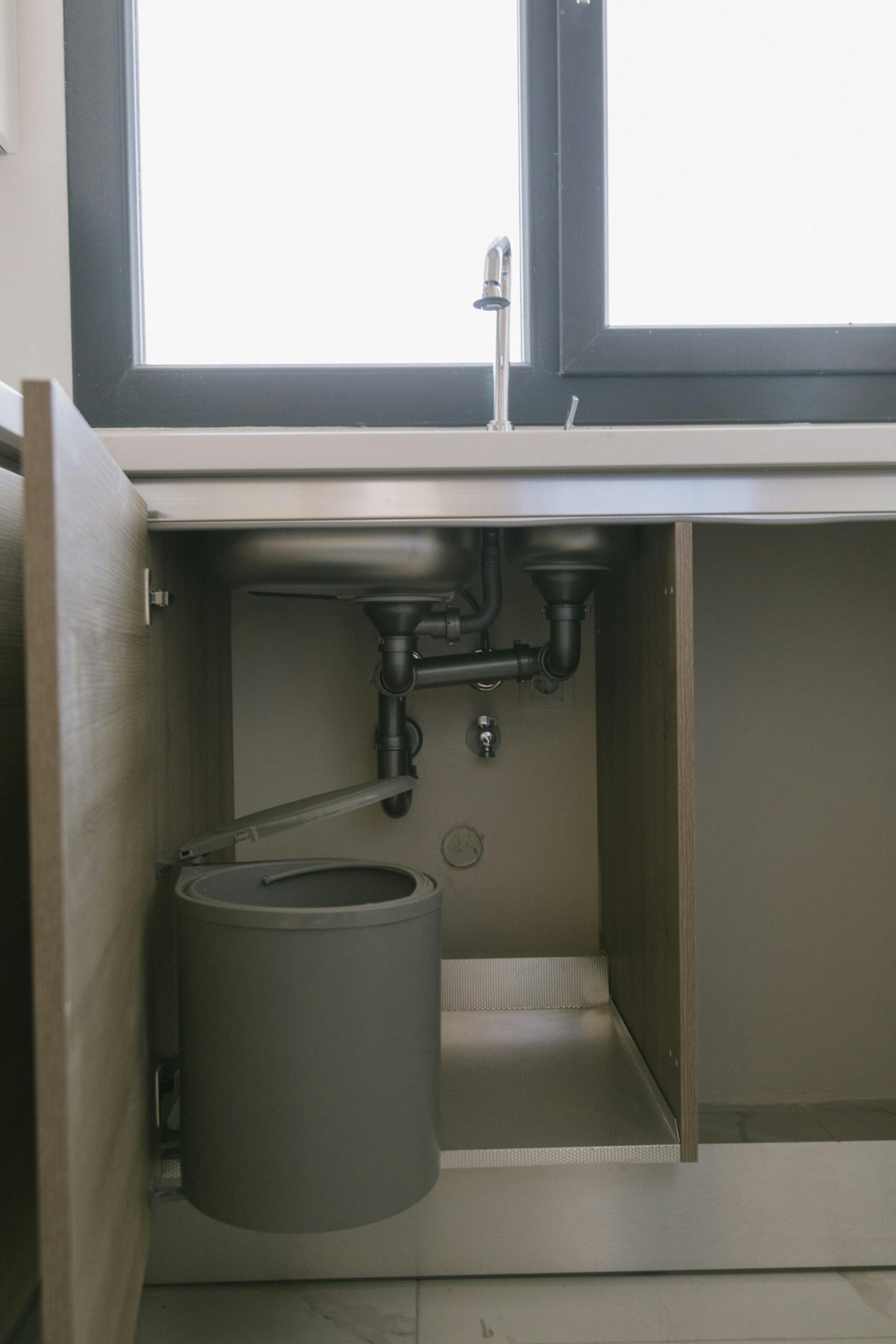
A garbage-like smell near the kitchen drain needs location and hazard assessment before cleaning. Food residue is one possibility, but the description does not distinguish an ordinary surface film from a cabinet leak, wastewater return or another gas. Do not sniff around under a running sink to choose the source.
Check for hazardous fumes or equipment faults first
For strong, widespread or unexplained gas-like fumes, exposure symptoms or suspected concentrated sewer gas, leave the building and call emergency services from outside. If fuel gas is suspected, leave even if the smell is faint; do not operate switches, valves, appliances or phones there. Call the gas emergency service from well away. Do not stay to sniff drains, run a fan or investigate. A fading smell does not establish safe re-entry.
If cleaning causes sharp fumes, eye irritation, coughing or breathing symptoms, leave the affected indoor area for fresh air and keep others away. Do not remain to rinse, neutralize or mix products. Call emergency services for serious symptoms or immediate danger; in the United States, Poison Control is 1-800-222-1222. Obtain advice from safety and follow appropriate re-entry instructions.
Keep a leaking, jammed, burning, abnormally noisy or repeatedly tripping disposal inactive for suitable assessment. For actual or suspected wet electrics, do not touch plugs or switches or enter water to reach a breaker; isolate only from safe dry access or get qualified help. During backup, stop added water and connected appliance discharge. Sewage, continuing overflow or shared drainage effects need prompt service, not a cleaning run.
Identify the real component before cleaning it
- Stopper or strainer: Remove only a part intended for owner removal. An exposed rim can be cleaned under its material instructions; a fixed drain body is not a removable basket.
- Splash guard or overflow: Use the actual guard method, and verify an overflow exists before treating an opening as a channel. Do not force tools into a hidden passage or apply a strong overflow flush.
- Changing cleaning products: One product at a time is not enough if incompatible residue remains. Use actual label and equipment guidance rather than a rinse-and-switch rule or a generic vinegar/baking-soda treatment.
Use the actual model’s maintenance procedure
Never put hands or fingers inside the disposal, even with power disconnected. Before permitted manual cleaning or object retrieval, safely disconnect the actual affected sources and keep electrical covers closed. A silent response to a wall switch is not proof that exposed wiring is safe. Use the specified tool and access; a top-entry wooden jam method, bottom wrench and retrieval tongs have different purposes. Re-isolate before returning to manual work after any powered step.
Identify any cleaner or winterizing product already present. Follow its exact label and the equipment instructions; do not add bleach, vinegar, baking soda, ammonia or a guessed neutralizer to unknown residue. Waiting or rinsing by guesswork does not certify clearance. A cleaner approved for one task or appliance is not approval for every disposal or drain condition.
For an ordinary localized residue problem without those hazards, clean only the surfaces and components the actual maker makes owner-serviceable. A removable splash guard can be cleaned away from the opening as instructed; a fixed guard must not be pried out. Use a compatible method and avoid pushing a brush into unseen parts. Remove tools and refit required guards before permitted operation. Confirm sound assembled plumbing and accepting drainage; stop for leakage, rise, hum, distress or a trip.
Some manufacturers permit ice scouring, a specified warm-water cleaning method or hot drainage between grinding periods while prescribing cold water for normal food grinding. Follow the installed model’s actual procedure, not a universal hot/ice/soap recipe. Collect cooled grease from cookware instead of melting and flushing it downstream. Clear-looking rinse water, a timer or less odor does not certify sanitation, a repaired source or electrical safety.
Will a full minute of water clear the branch and verify the source?
No fixed time certifies hidden drainage or a trap seal. Address actual residue or damage under suitable conditions, and have recurring odor, leaks or shared effects assessed without a prolonged flush.
Related situations
Sources and limits
- InSinkErator Complete example: cleaning, guards, jam recovery and normal use
- Moen INS10477C example: no hands, safe isolation and specified tools
- Wisconsin DHS: sewer-gas exposure and emergency response
- Con Edison: leave immediately for a suspected gas leak
- CDC: household chlorine exposure and getting help from safety
- CDC: electrical hazards near water
- Example drain-opener label: remaining product and mechanical-method restrictions
- Seattle Public Utilities: collect cooled grease instead of sending it down drains
These references do not identify your installed model or diagnose your household. Independent professional review and household field tests have not been obtained.