Quick Answer:
If hot water disappears when several taps are opened at once, the house is likely running out of usable hot water or the system can’t keep up with simultaneous demand. Check how pressure behaves with fixtures isolated, confirm the pressure-reducing valve (PRV) setting, and watch the water meter for flow patterns to tell whether this is a supply/demand issue or a single-fixture problem.
Why This Happens
- Water heaters have a finite flow and recovery rate. When multiple hot outlets run at once the heater may not supply enough hot water to maintain temperature or pressure at every outlet.
- Pressure-related devices like a PRV, or the municipal supply, can limit available pressure when total flow increases, making hot outlets drop below usable flow.
- Cross-connections, failing thermostatic mixing valves, or a partially closed valve can make the pattern look like a hot-water failure when it’s actually a pressure/flow mismatch.
Step-by-Step What to Do
Test pressure with fixtures isolated
- Close every fixture and appliance that uses water (taps, showers, washing machine, irrigation).
- Open one hot-water faucet only and note flow and temperature. Then close it and try another hot faucet in a different part of the house.
- If each fixture alone gives good hot flow but multiple together do not, the problem is demand-related rather than a single fixture failure.
Confirm PRV setting
- Locate the PRV (usually near the main shutoff) and note its pressure setting if it has a visible gauge or a stamped value.
- Typical residential settings are often 50–60 psi. If the PRV is set too low it can choke flow when several outlets run. Do not force adjustments—read the device label and follow manufacturer guidance or get a pro if unsure.
Observe meter flow patterns
- Watch the water meter while opening and closing hot fixtures. A clear, correlated jump in meter flow when pressure drops indicates overall supply demand is the issue.
- If the meter barely moves but the heater loses hot supply, the problem may be heater capacity or an internal hot-water valve.
Check the water heater’s capacity and recovery
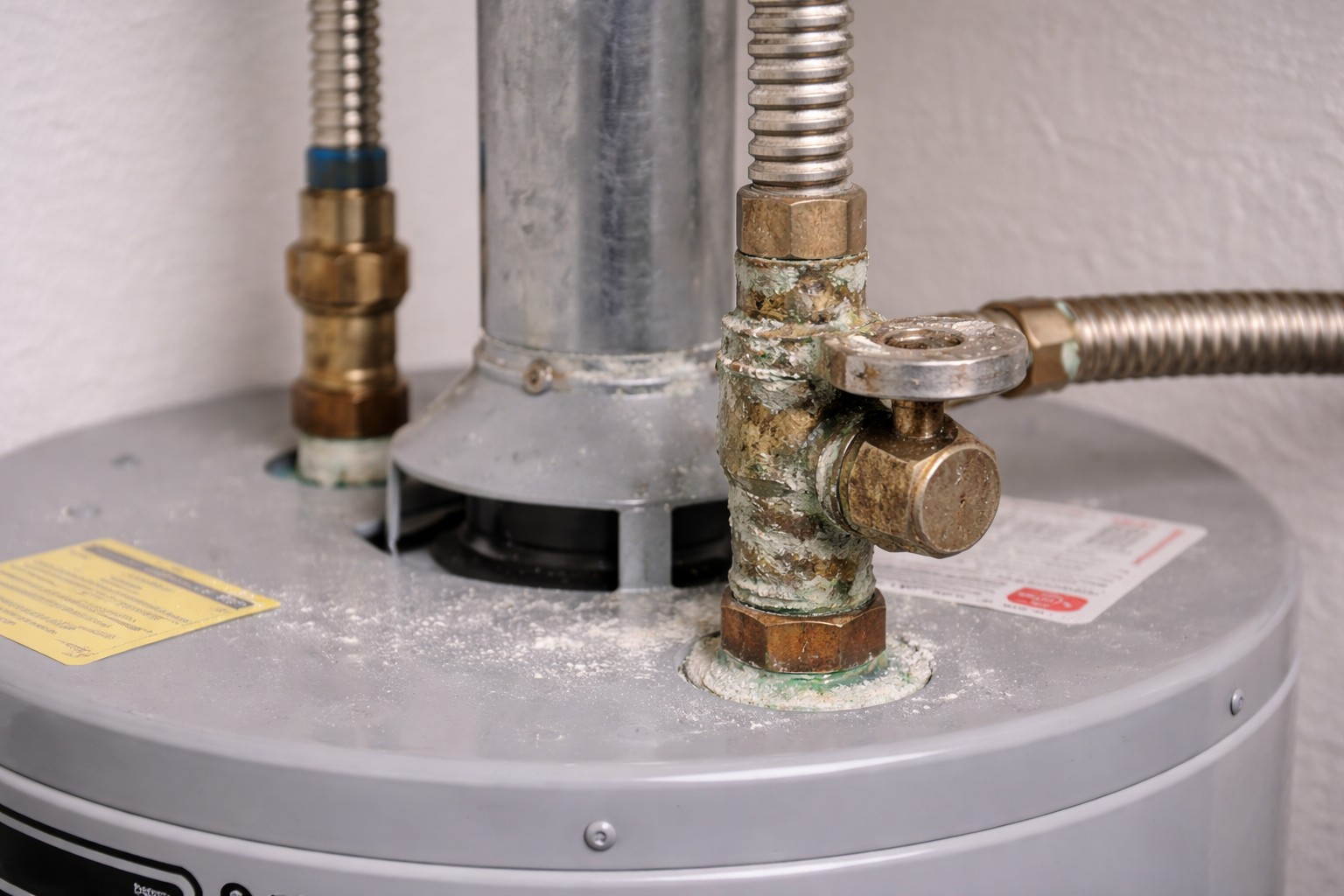
- Compare the heater size and recovery rate with your household’s simultaneous demand (showers, dishwasher, laundry). Tank heaters can run out; tankless units can be limited by maximum flow.
- Look for signs of scald protection or mixing valves reducing hot output at multiple points.
Look for cross-connections and mixing valves
- Temporarily turn off appliances one at a time (e.g., washing machine, dishwasher) and observe if hot flow returns. Some appliances or a failed mixing valve can pull away hot water or mix cold in under load.
- If the issue occurs specifically during filling tasks, also see Pressure collapse when bathtub fills for related troubleshooting ideas.
Check outdoor and hose use
- Outdoor hoses or irrigation can steal large volumes of cold water and reduce overall system pressure. If the pattern matches hose use, consult guidance such as Pressure weakens when hose is used.
What Not to Do
- Do not assume fixture failure when the pattern is demand-related. If each fixture works alone, it’s likely a supply or capacity issue rather than a single broken faucet.
- Do not crank the PRV above recommended settings without knowing local codes or system limits.
- Do not remove covers from gas or electrical appliances or attempt major repairs on the water heater unless you are qualified.
When to Call a Professional
- Repeated loss of hot water under normal household use after basic checks.
- Suspected PRV malfunction, visible leaks, or when pressure adjustments are needed.
- Trouble with a tankless heater’s flow computer, persistent cross-connections, or when you can’t identify the source of the pressure drop.
Safety Notes
- Turn off the main water supply before doing any work on valves or the PRV if you need to disassemble parts.
- Be cautious of hot water scald risk when testing temperature. Run short tests and avoid placing hands under high-temperature flow.
- If you’re not comfortable adjusting pressurized devices or diagnosing gas/electrical water heaters, call a licensed plumber or technician.
Common Homeowner Questions
- Why does one shower get hot but another goes cold when both run? If each shower is fine alone, the heater or supply can’t meet combined demand—either capacity or pressure limits.
- Will replacing the water heater fix this? Only if the heater is undersized or failing; first confirm demand vs. capacity and rule out PRV or supply issues.
- Can I just increase the PRV setting to fix it? Not without checking system limits and codes—raising PRV can cause leaks and stress plumbing if the system isn’t rated for higher pressure.
For more related articles, see the Pressure Drops When Multiple Fixtures Run hub.