Check for an emergency first
For a new, unexplained water-quality change: do not deliberately taste the water. Use bottled water or another known-safe supply for drinking, food preparation, teeth brushing and ice while you contact the supplier. Follow the actual local notice for other uses. Boiling does not make chemically contaminated water safe, and clear appearance or a fading odor does not certify safety.
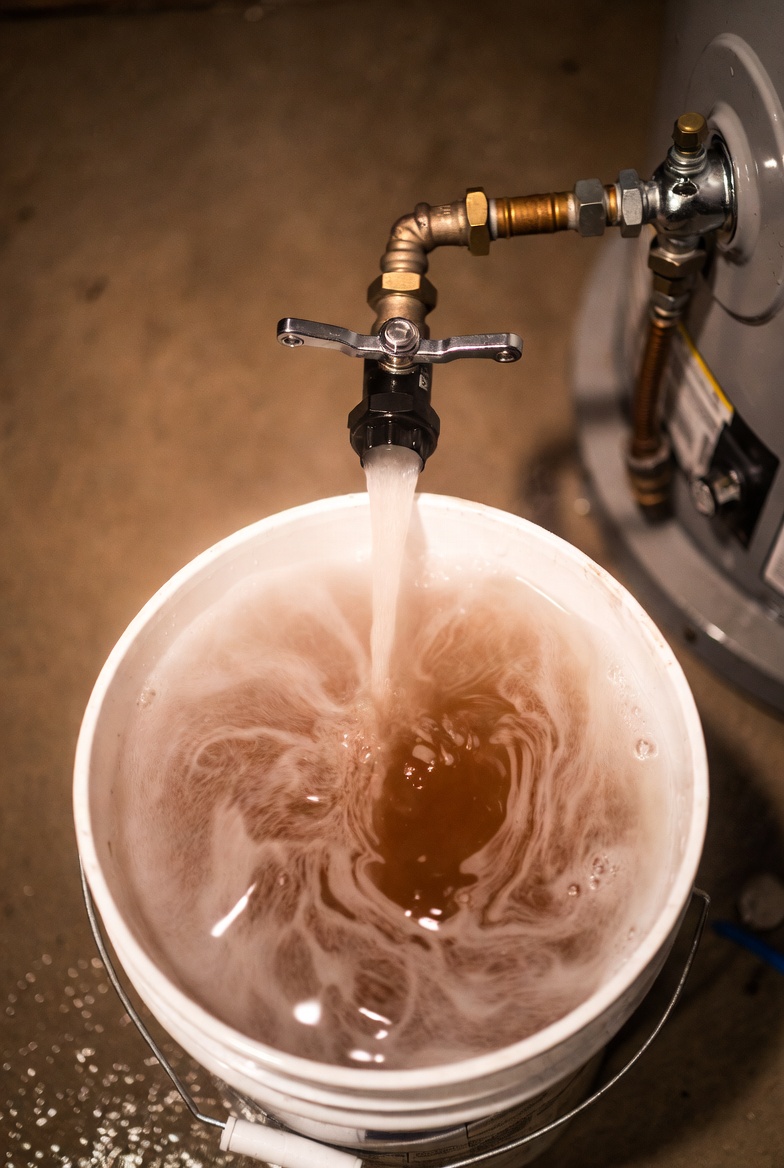
Morning-only cloudy hot water needs a record of time, use and appearance. Tiny air bubbles can create temporary milkiness, but a clearing glass does not certify water quality or prove the overnight tank chemistry. Avoid hottest-tap collections, mixing a sample for tasting or changing heater settings to reproduce the pattern.
Useful details to record
- Whether the first ordinary use or a later use was involved and time since the outlet was last used.
- Whether a safely available observation showed bubbles disappearing, particles settling or persistent color.
- Heater and fixture work, other affected outlets, leakage and any supplier notice.
What the pattern can tell you
- A previously collected sample cleared as bubbles rose. That is consistent with an air contribution, not a test for every contaminant.
- Particles or color remain. Report those separately; neither appearance nor settling identifies the material.
- Later ordinary use looked clear. The changed conditions are useful context without proving the heater is safe or corrected.
What to do next
- Contact the drinking-water supplier promptly about the new unexplained change and check for a current notice. For a private well, contact the local health department or a qualified well-water professional. Describe existing observations without another taste or a guessed contaminant.
- For consumption, use known-safe cold water rather than hot tap water, including hot water that was cooled. Heating, cooling or mixing samples does not remove dissolved contaminants. Avoid hottest-tap samples and direct skin temperature tests.
- Arrange any needed tests with a state-certified drinking-water laboratory or the supplier. Ask which substances, locations and collection conditions fit the history. Use the laboratory’s supplied containers and exact handling directions. Before flushing, removing an aerator or changing treatment, ask whether a first-draw or other specific sample is required.
- Do not collect a scalding first-morning glass or use your hand to determine safe temperature. A laboratory can select suitable collection if hot-side sampling is actually needed.
- Do not drain or disinfect a heater, remove its anode, change temperature settings or open relief devices to diagnose water quality. Required service must follow the actual model’s energy isolation, cooling, pressure, reassembly and restart requirements. A drained electric tank must be correctly filled and purged before power returns. Use qualified help for internal, fuel or uncertain work.
- Keep a short existing-use log and seek assessment for persistent or recurring changes, leaks or recent work. Do not wait for a midday comparison or use boiling as a fallback for unknown water.
- Flavor, odor, feel, clear appearance or a normal home strip cannot certify water quality. A laboratory result covers the substances, locations and conditions actually assessed. Ask the supplier or health authority how the findings apply to use; do not resume consumption through a sensory test or a fixed waiting period.
Does clearing from bubbles prove that morning hot water is safe to taste?
No. It explains one possible visual effect. It does not remove dissolved contaminants or assess all quality concerns. Hot tap water should not be chosen for consumption, and cooling or mixing it does not create an appropriate diagnostic taste sample.
Related situations
- Hot water contamination after repair
- Hot water smells bad but cold is fine
- Hot-Water-Only Contamination and Odor Problems
Safety sources
- CDC: drinking-water advisories
- CDC: chemical contamination, copper and lead in tap water
- EPA: certified drinking-water laboratories
- EPA: laboratory sample containers and handling
- Ohio EPA example: first-draw sampling precautions
- USGS: air bubbles and cloudy water
- Example electric-heater manual: filling and maintenance requirements
- EPA: sensory limits and testing drinking water for lead