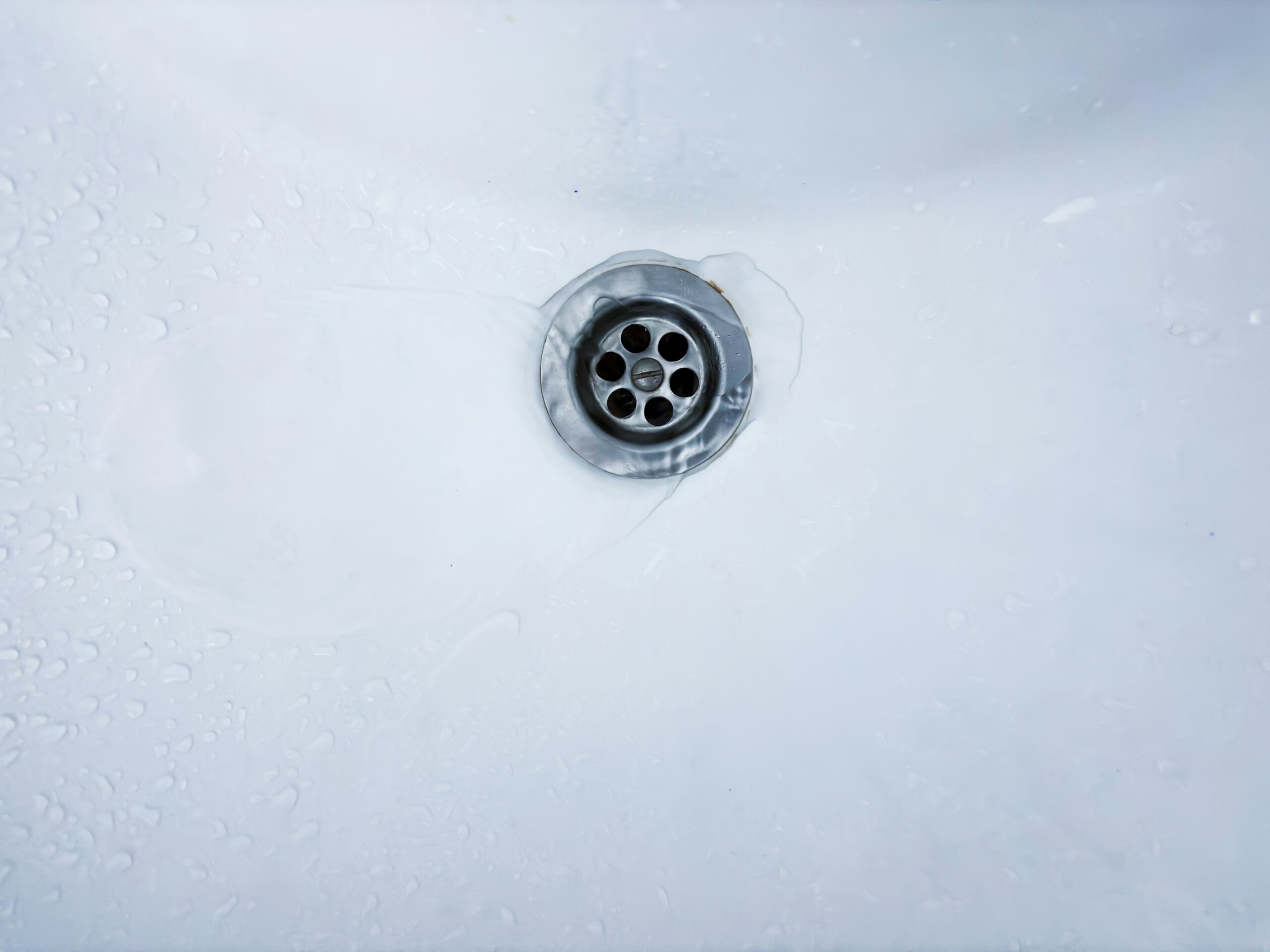
Wetness below a floor after fixture use needs source control and safe access before more water is added. A drain, overflow, supply leak or tracking water may be involved; existing timing alone does not locate the failing joint.
Safety before added water or tools
For strong, widespread or unexplained gas-like fumes, exposure symptoms, or suspected high sewer-gas concentrations in an enclosed space, leave the building immediately and call the fire department or emergency services from outside. Avoid flames, switches and other ignition sources; do not remain to ventilate, sniff drains or investigate. Smell intensity does not measure the concentration. A faint localized drain odor without those warning signs calls for a different plumbing investigation; it does not automatically establish a fuel-gas leak.
If fuel gas is suspected, leave the building or affected area immediately. Do not operate valves, switches, plugs, appliances or phones there. Call the gas emergency service from a safe location well away, and wait for responders’ clearance.
Keep away from wet electrical equipment. Do not touch wet appliances, plugs or switches, or enter water to reach a breaker. When no gas leak is suspected, power may be isolated only from a safely accessible dry location; otherwise call an electrician or emergency help. Wet equipment needs qualified assessment before it is used again.
For wastewater rising from a drain or affecting several fixtures, stop adding water and keep affected appliances from discharging using only safely accessible dry controls when no gas emergency is suspected. Avoid sewage contact, keep children and pets away and arrange prompt drainage help. Notify building management or the sewer agency as appropriate. Do not run fixtures to locate a shared blockage.
If a cleaner may be present, identify the exact product and follow its label. Do not add another cleaner, acid, bleach, ammonia, vinegar or an improvised neutralizer. Do not plunge, snake or open the trap while hazardous residue may remain; tell the provider what was used. A rinse or elapsed time is not proof all residue is gone.
Stop discharge and protect the area
Stop using the affected fixture and connected appliances from safe dry controls. Keep clear of sagging ceilings/floors or wet electrical equipment and arrange prompt appropriate help. Do not fill and dump the fixture or feed its overflow to reproduce a hidden leak. Existing photographs and original timing are enough to request assessment.
Separate paths without assuming a test result
Water can track or appear after a delay, and multiple faults can coexist. A closed stopper below an overflow does not test the drain the same way as actual drain discharge; an overflow route is model-specific. Filling-time wetness is not automatically a supply leak, nor is drain-time wetness unique proof of a trap. Describe what already happened rather than staging several hidden-wetting tests.
Safe access and suitable repair
Before opening a trap or retained drain part, keep the faucet and every connected appliance/input inactive, identify prior products and retained wastewater, and establish safe access and suitable capture. A bucket alone does not control shared inflow, sewage or chemical residue. Use the actual owner-serviceable assembly and compatible seals; stop for fixed, corroded, uncertain or binding parts. Fully refit and secure every drain connection and protective component before a suitable small attended water check. A separately planned captured service discharge does not test the missing downstream drain’s capacity.
A slip-joint washer face, compression connection and actual pipe thread require different repair methods and torque. Do not apply a generic finger-tight-plus-quarter-turn or smear tape/compound over an unknown leaking joint. Compatible approved temporary measures, where actually suitable, need their own limits and do not establish a permanent repair. Existing safe access differs from new floor/wall cuts requiring concealed-service, material and structural assessment.
Drying and a justified final check
After source control and electrical/contamination assessment, use suitable drying or qualified remediation. Do not power a fan from a wet outlet or cover wet/moldy materials. A necessary controlled assembled leak/overflow test belongs to an actual safe diagnostic or commissioning plan with bounded capture, attendance and stop limits; this guide is not permission to restart a known hidden leak. A short dry interval cannot certify the cavity.
Timing and records
Address leakage promptly; a quoted weeks-to-months damage range is not a safe waiting period. Keep source, repair and drying records from safe access. Any insurance response depends on the actual policy and circumstances, not this symptom or an assumed guaranteed cause.
Related situations
Safety sources
- Wisconsin DHS: sewer-gas exposure and emergencies
- Con Edison: suspected gas leaks
- CDC: electrical hazards near water
- Madison Metropolitan Sewerage District: stop discharge and report sewer backup
- Example drain-opener label: restrictions on plunging, disposal operation and mixing
- Oatey HDC9682 example: compatible assembly and refit before checking
- EPA: fix the source, dry materials and select appropriate cleanup help
- Oatey: trap water seal and wastewater passage