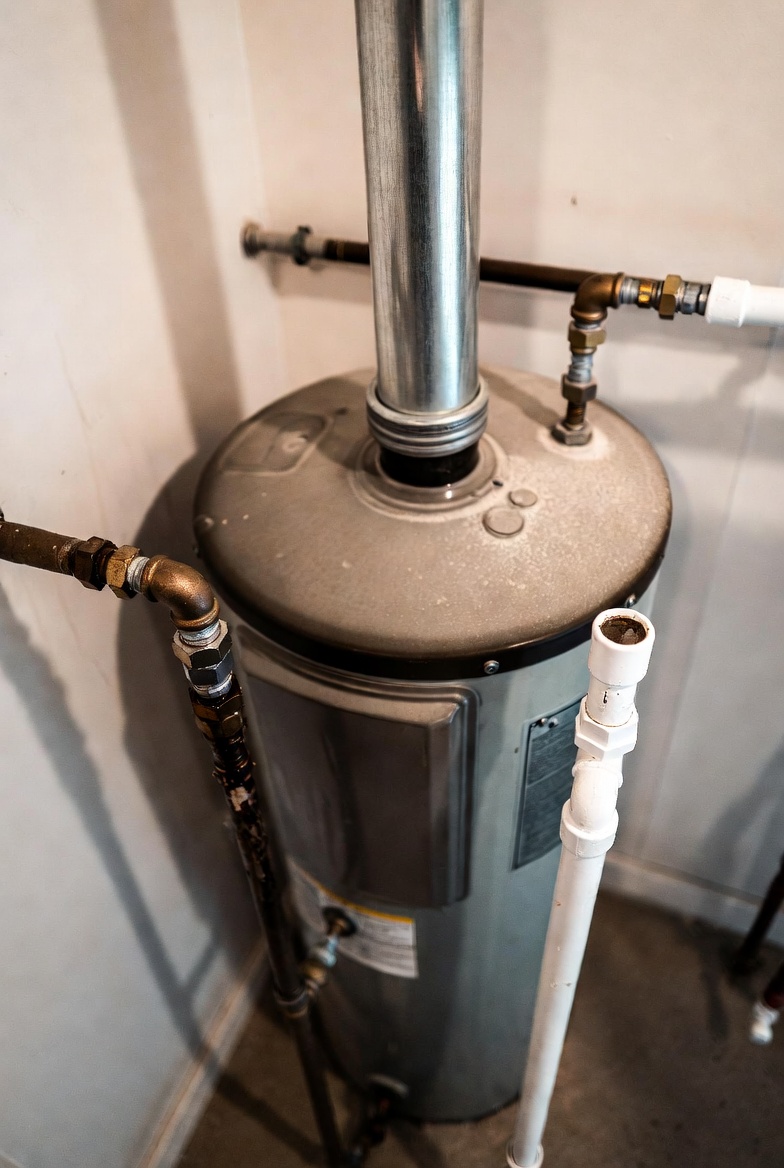
Quick Answer:
Brown or rusty water that appears only when you run hot water most often comes from the water heater or the hot-side piping. Do a quick visual check at the heater and at a nearby hot tap, run the hot for a few minutes to see if it clears, and inspect the heater outlet for signs of rust or sediment.
Why This Happens
When discoloration affects only hot water, the source is usually inside the water heater or the piping after the heater. Common causes include tank sediment stirred up by heating cycles, a failing sacrificial anode or internal tank corrosion, or rusting hot-side pipes and fittings. In some houses bacterial growth in a warm tank can add color or odor. For related issues, see Sediment only in hot water or Hot water smells musty.
Step-by-Step What to Do
1. Confirm the problem is hot-only
- Open a cold tap and a hot tap at the same sink. Note which one is discolored.
- Check another fixture (different bathroom or kitchen) to see if the hot water is discolored there too. This helps narrow whether it’s the heater or a single fixture.
2. Inspect the heater hot outlet for discoloration
- Locate your water heater and visually inspect the hot outlet pipe and the immediate connections for rust, brown stains, or flaky material.
- If you see brown build-up where the hot water leaves the heater, that points to tank sediment or local corrosion.
3. Run the hot water to see whether it clears
- At a sink, run the hot water for 3–5 minutes (use a bucket or observe color in the sink) to see if the discoloration flushes out. If it clears quickly, the issue may be loose sediment in the tank or in the hot-side plumbing.
- If discoloration returns after a short time, the tank or internal parts may be the source.
4. Check visible valves and fittings
- Look at the shutoff valve, mixing valves, and any visible hot-side piping for rust or deposits. A corroded fitting close to the heater can color hot water before it reaches fixtures.
5. Consider a controlled flush or simple maintenance
- If you’re comfortable with basic maintenance, flushing a few gallons of hot water from a drain valve can remove loose sediment. Follow the heater manufacturer’s basic instructions and shut off power or gas first.
- If you prefer not to work on the heater, schedule a service call for a proper flush and inspection.
What Not to Do
- Do not assume cold clarity means heater is safe. Cold water can be clear even when the heater or hot piping is corroding or full of sediment.
- Do not open the water heater or attempt internal repairs unless you are trained—internal components and gas/electric systems can be hazardous.
- Do not pour household chemicals into the drain to try to remove rust from the tank; this can be unsafe and ineffective.
When to Call a Professional
- If discoloration persists after flushing or appears to come directly from the heater outlet.
- If you see active corrosion, leaks, or flaky material on the tank fittings or outlet pipe.
- If you notice a metallic taste, staining of laundry, or any gas smell (for gas heaters), or if you are unsure about turning off power or gas safely.
Safety Notes
- Always turn off electrical power at the breaker or the gas supply according to your water heater manual before attempting any maintenance that involves the heater itself.
- Hot water can scald. Run water slowly and test temperature before full use.
- Wear gloves and eye protection if you inspect valves and fittings, and place a bucket under drains to avoid spills.
Common Homeowner Questions
- Why is only the hot water brown?
Because the heater or hot-side piping is the likely source—sediment or corrosion collects there and colors only hot water. - Will flushing the tank fix it?
A flush often removes loose sediment and can clear discoloration temporarily, but persistent problems may need a professional inspection or anode replacement. - Is discolored hot water dangerous?
Usually it’s more of a nuisance and a sign of wear; however, if staining, taste changes, or leaks occur, get it checked to avoid damage or bacteria concerns.