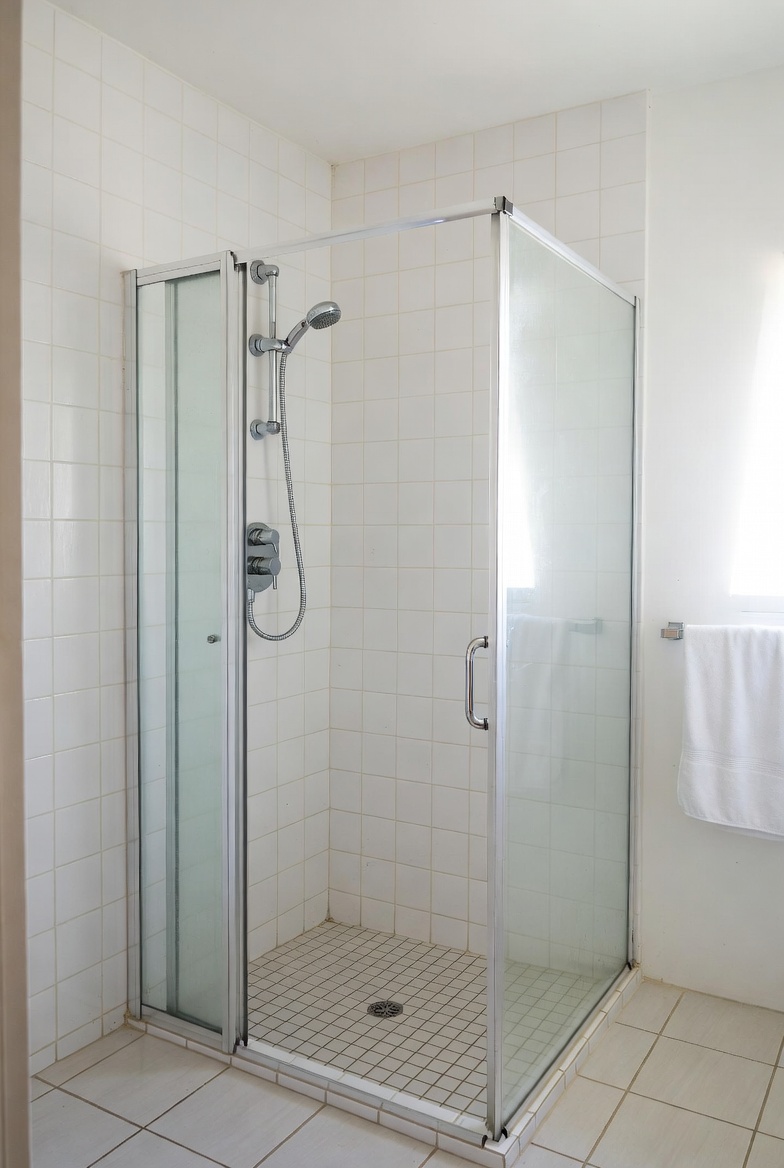
A delay beginning after plumbing work should be compared with the actual work record and connected path. A shower is not necessarily fed through nearby sink or toilet stops or braided faucet hoses. Timing is useful evidence, not proof of fault or responsibility.
If fuel gas is suspected, leave the building or affected area immediately. Do not operate valves, switches, plugs, appliances or phones there. Call the gas emergency service from a safe location well away, and wait for responders’ clearance.
Keep away from wet electrical equipment. Do not touch wet appliances, plugs or switches, or enter water to reach a breaker. When no gas leak is suspected, power may be isolated only from a safely accessible dry location; otherwise call an electrician or emergency help. Wet equipment needs qualified assessment before it is used again.
Stop shower use for unsafe or unstable temperature, an active leak, severe movement or inadequate drainage. Keep people out of unknown-temperature spray; do not reproduce the symptom with full-hot or multi-fixture challenges.
Record the actual conditions
- Exactly which fittings, hoses, valve, heater or branch were disturbed and whether work is released for use.
- Original flow/temperature/wait and other outlets already affected under comparable conditions.
- Actual shutoff labels, connector/product markings and visible damage photographed from safe access.
What the pattern can tell you
A normal-looking fitting does not prove unrestricted internal flow, and a visible kink is not automatically repairable by smoothing it. Some damaged hoses need replacement under their actual instructions. Sequential or simultaneous hot draws change prewarming and demand, so a nearby faucet does not uniquely locate a restriction.
Use observations from ordinary safe use first: time since the last hot draw, other demand, original setting, approximate wait, final stability and any visible fault. A sink run immediately before the shower may prewarm their shared pipe and activate a heater; a simultaneous draw changes demand. Neither is an independent cold-start comparison. Equivalent cooldown, actual hot-flow rate and connected paths matter; there is no universal under-one-minute normal limit.
What to do next
- Ask the worker which controls were used and for the actual completion checks. Do not turn every nearby valve counterclockwise or apply penetrating oil to unidentified seals or potable-water parts.
- Inspect only safely visible connections without moving pressurized or hot lines. Use the actual connector’s material, bend-radius and replacement guidance; do not straighten a damaged hose as a generic repair.
- Before any fitting is loosened, identify and isolate the real feeds, cool/control the water, relieve the actual segment and verify depressurization. Comfort with undoing a fitting is not the service procedure.
- Return persistent changed behavior to the installer with the record. Do not open heater covers, relight, or assert a particular bad fitting from post-work timing.
Before adjustment or parts work
Identify the valve, trim and head before owner care or adjustment. A maximum-temperature travel stop, volume control and source-isolating service stop do different jobs. Use only known owner controls by their actual design, without force; a sink or toilet stop need not isolate the shower. Do not reopen a control isolating an unresolved defect.
Before opening a cartridge retainer, filter housing or other pressure boundary, isolate every feed, control temperature, relieve the actual segment through its controlled outlet and verify depressurization. A nearby faucet may not relieve chambers beyond closed stops or checks. Secure compatible seals and pressure retainers before restoration. Intended head care starts outlet off, parts cooled and residual water controlled, using the actual retention and finish instructions. A screen is not automatically a removable flow-regulating insert; vinegar is not every finish’s approved cleaner.
Do not remove protective thermostatic parts for an ordinary hot-delivery test. An explicitly prescribed service flush is different: use the actual receiving, safe-temperature and source transitions, with source off before extraction or refitting. Approved external trim calibration can include water-on checks, but needs the model’s direction, refitted protection and measured maximum outlet endpoint before bathing. A wrist test, small hotter turn or low flow does not calibrate protection.
Heater and equipment checks
Read only safely accessible normal heater or pump status and intended owner instructions. Do not open electrical/burner covers, relight or repeatedly reset equipment. Heater service needs the actual energy isolation, cooling, pressure relief, controlled drainage, filled-state and restart sequence. A steady stream or generic 20–60-minute wait does not certify startup. Do not raise the heater setpoint to force faster arrival; 120°F reduces scald risk but is not burn-free or a universal household calibration.
When to get help
Stop for leaks, corroded/stuck controls or unsafe temperature. A general-purpose external lubricant may be allowed on an identified product, but generic penetrant use is not a safe substitute for its instructions.
Related guides
- Shower takes forever to get hot
- Shower Takes Too Long to Heat Up
- Shower heats slow after repair
- Shower takes forever to get hot
Safety sources
- Con Edison: suspected gas leaks
- CDC: electrical hazards near water
- EPA, May 2026: cooled pipe volume, distribution layout and recirculation
- BrassCraft: water supply stop instructions
- Whirlpool: model-specific installation and damaged inlet hoses
- Example electric-heater manual: filling and maintenance requirements
- CPSC: lower settings reduce scald risk but are not universally burn-free