Quick Answer:
Most often this is caused by the new disposal outlet or tailpiece not lining up with the shared trap, creating a path for water to move between bowls. First turn off power to the disposal, then check the drain layout under the sink. Confirm disposal outlet height and alignment with the shared trap before making any adjustments.
Why This Happens
Two-bowl sinks commonly share a single trap and a short T-connection or sanitary tee. A new disposal changes where water leaves one bowl and enters the drain system. If the disposal outlet is too high, too low, or offset, water can travel from one basin to the other instead of going directly down the trap. Air gaps, improperly installed adapters, or a misaligned tailpiece make that cross-path easier. If you’ve noticed occasional swapping of water between basins, it’s usually a physical alignment or connection issue rather than a change in the house plumbing system. For related situations, homeowners sometimes see similar behavior in other seasons like **Cross-flow after winterization** and should compare the setups.
Step-by-Step What to Do
1. Cut power and prepare
- Turn off the disposal at the wall switch and at the circuit breaker or unplug it if accessible. Never work on the unit while it has power.
- Place a bucket and towels under the trap to catch any water when you loosen fittings.
2. Run a simple visual test
- Put the sink stoppers in place and pour a small cup of water into one bowl while watching the other bowl. Note which way water moves.
- Do not run the disposal for this test — you only need gravity flow to see the problem.
3. Inspect the plumbing layout under the sink
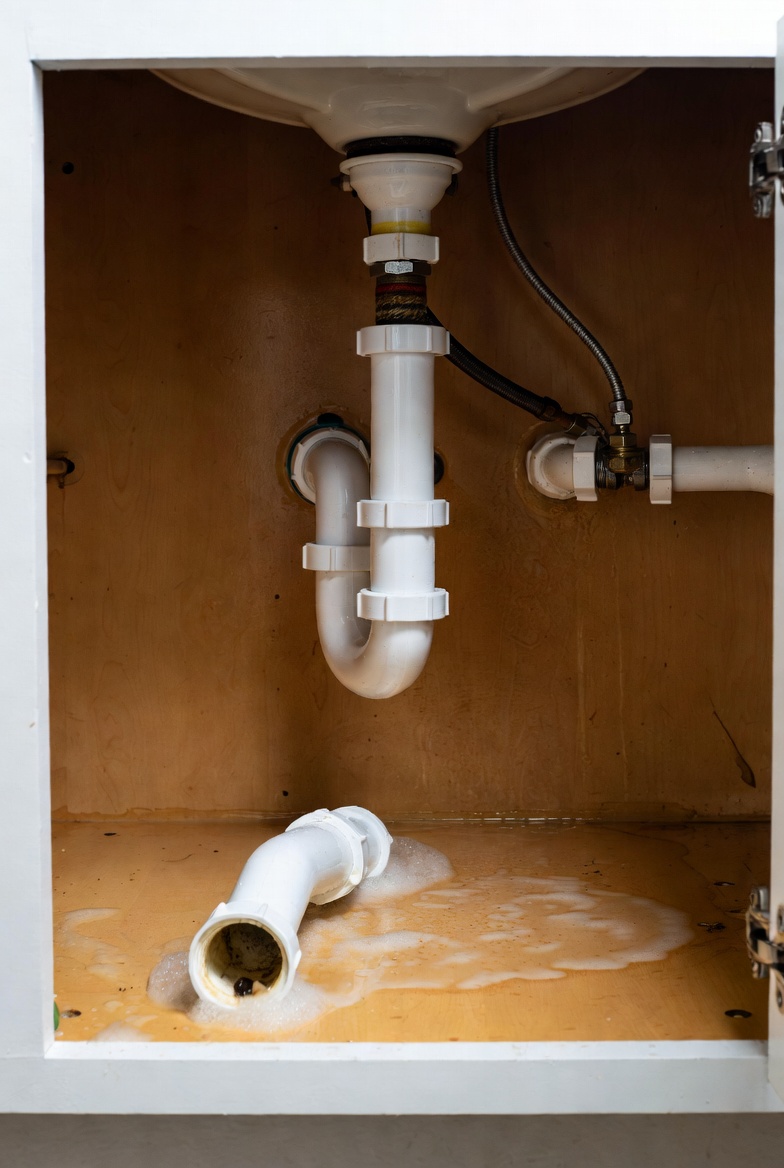
- Open the cabinet and look at how the disposal tailpiece, the other sink tailpiece, and the P-trap connect to the shared tee. Confirm disposal outlet height and alignment with the shared trap.
- Look for an adapter on the disposal outlet and any extra elbows or long trap arms that could raise or lower the flow path.
4. Make small adjustments
- If fittings are clearly misaligned, you can often loosen the slip nuts on the trap and reposition the trap arm or tailpiece so both sinks feed the tee cleanly. Do this slowly to avoid stripping threads or breaking plastic parts.
- Ensure the trap outlet slopes toward the wall and that slip joints seat squarely — a crooked trap can let water run sideways between bowls.
5. Reassemble and retest
- Tighten slip nuts hand-tight plus a quarter turn. Restore power and run small amounts of water into each bowl to confirm the problem is resolved.
- If you still see cross-flow, stop and consider the next steps below.
What Not to Do
- Do not grind excess food to test drainage.
- Do not stick your hand into the disposal or start it while you are working under the sink.
- Do not rely on chemical drain cleaners to fix alignment or mechanical problems.
When to Call a Professional
- If the disposal outlet is hard-mounted in a way that prevents a correct alignment with the trap.
- If you find cracks, stripped threads, or leaking parts that won’t tighten securely.
- If you’re uncomfortable turning off electrical power or working under the sink; a plumber or appliance technician can realign or replace the trap and fittings safely.
Safety Notes
- Always switch off the breaker or unplug the disposal before inspecting or touching any part of it.
- Wear gloves and eye protection when loosening plumbing to avoid contact with wastewater or sharp edges.
- If you must remove the trap, expect water to spill; use a bucket and clean up immediately.
- Do not use the disposal as a diagnostic tool by running it with misaligned plumbing — that can damage parts or push debris into the wrong path.
Common Homeowner Questions
- Will running the disposal fix the cross-flow?
No. Running the disposal can make the problem worse and risks pushing solids into the wrong path. Turn it off and inspect alignment first. - Can I fix the alignment myself?
Sometimes. If the trap and tailpieces are standard slip-joint fittings, a careful homeowner can realign them. Stop and call a pro if you hit hard-to-remove parts, leaks, or electrical concerns. - Could the dishwasher cause this?
Yes—an improperly installed or unsealed dishwasher inlet or a missing knockout plug can change flow. Check hose connections, but prioritize turning off power and water before working near the disposal.
For broader reading on similar sink behavior, see Water moves between bowls randomly if that matches what you observed.