Check for an emergency first
For a new, unexplained water-quality change: do not deliberately taste the water. Use bottled water or another known-safe supply for drinking, food preparation, teeth brushing and ice while you contact the supplier. Follow the actual local notice for other uses. Boiling does not make chemically contaminated water safe, and clear appearance or a fading odor does not certify safety.
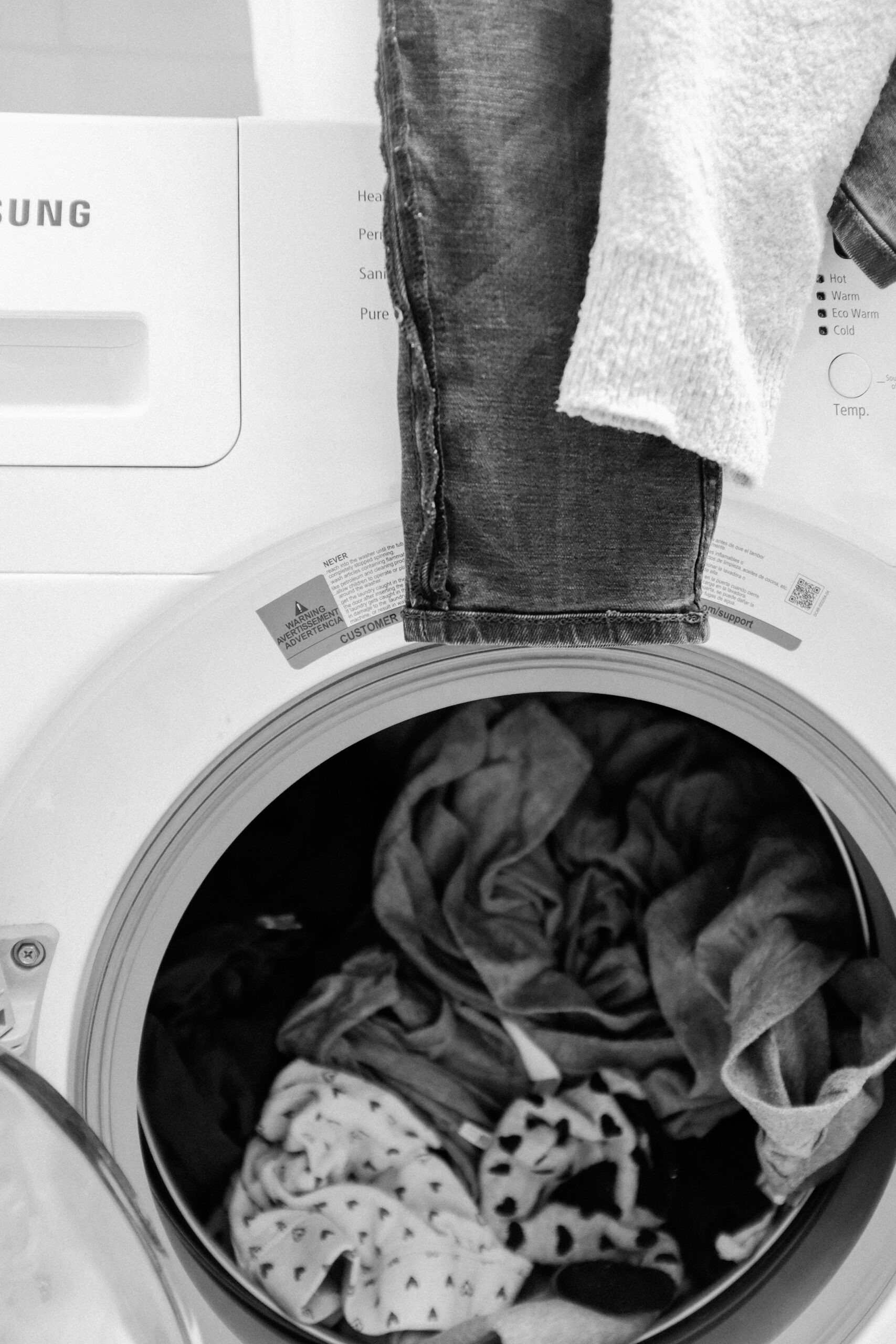
Never taste laundry water, including a tiny sip that is spat out. Washer fill and wash water can involve different materials and residues and are not diagnostic drinking samples. If a metallic odor or staining was already noticed, stop the affected laundry use and record the cycle and actual source.
Useful details to record
- Whether the observation concerned incoming fill water, water in the drum or clothing after a cycle.
- Cycle and temperature selection already used, detergent and treatment products and any staining.
- Washer, hose or heater work and other household water changes already noticed.
What the pattern can tell you
- The issue concerns water in the drum. That includes the appliance and wash process; do not assume it represents incoming tap water.
- Several hot outlets had an existing complaint. Report the scope without tasting or disconnecting hot supplies.
- Clothing is stained. Keep a photo and product record. The stain does not identify copper, stray electrical current or an anode fault.
What to do next
- Contact the drinking-water supplier promptly about the new unexplained change and check for a current notice. For a private well, contact the local health department or a qualified well-water professional. Describe the existing observations without tasting more water or assuming the material from its flavor.
- Do not disconnect fill hoses to collect hot/cold samples, force hose valves or run repeated hot cycles as a purge. Use the actual appliance instructions and a qualified provider for uncertain connections.
- Arrange sampling with a state-certified drinking-water laboratory or the supplier as appropriate. Ask which contaminants and locations fit the history, and use the supplied containers and exact collection, storage and delivery directions. Before flushing or removing an aerator, ask whether a first-draw or another specific sample is needed; those actions can change what the sample represents.
- Give the lab the distinction between tap water and wash-process water. It can choose an appropriate sampling location; a stored drum sample is not automatically representative or suitable.
- Do not perform electrical tests on metal plumbing or replace a heater component based on odor. Have actual leakage, equipment condition or corrosion concerns assessed by the appropriate provider.
- Do not decide that water is safe because the flavor or odor disappears, the water looks clear, a home strip looks normal or a flush timer has elapsed. A report or sample covers the locations, substances and conditions actually assessed; ask the supplier or health authority what the result means for use.
Can spit-out tasting safely distinguish the hot supply?
No. Spitting out a sample does not turn intentional exposure into a water-quality test. Keep existing temperature and cycle information, and use appropriate laboratory investigation rather than ingestion or smell-based source certainty.
Related situations
- Metallic taste in tap water
- Copper taste after pipe replacement
- Metallic Taste, Copper Taste, or “Pennies” Smell
Safety sources
- CDC: drinking-water advisories
- CDC: chemical contamination, copper and lead in tap water
- EPA: lead cannot be identified by taste, odor or appearance
- EPA: certified drinking-water laboratories
- EPA: laboratory containers and sample collection instructions
- Ohio EPA example: first-draw lead/copper sampling precautions