Quick Answer:
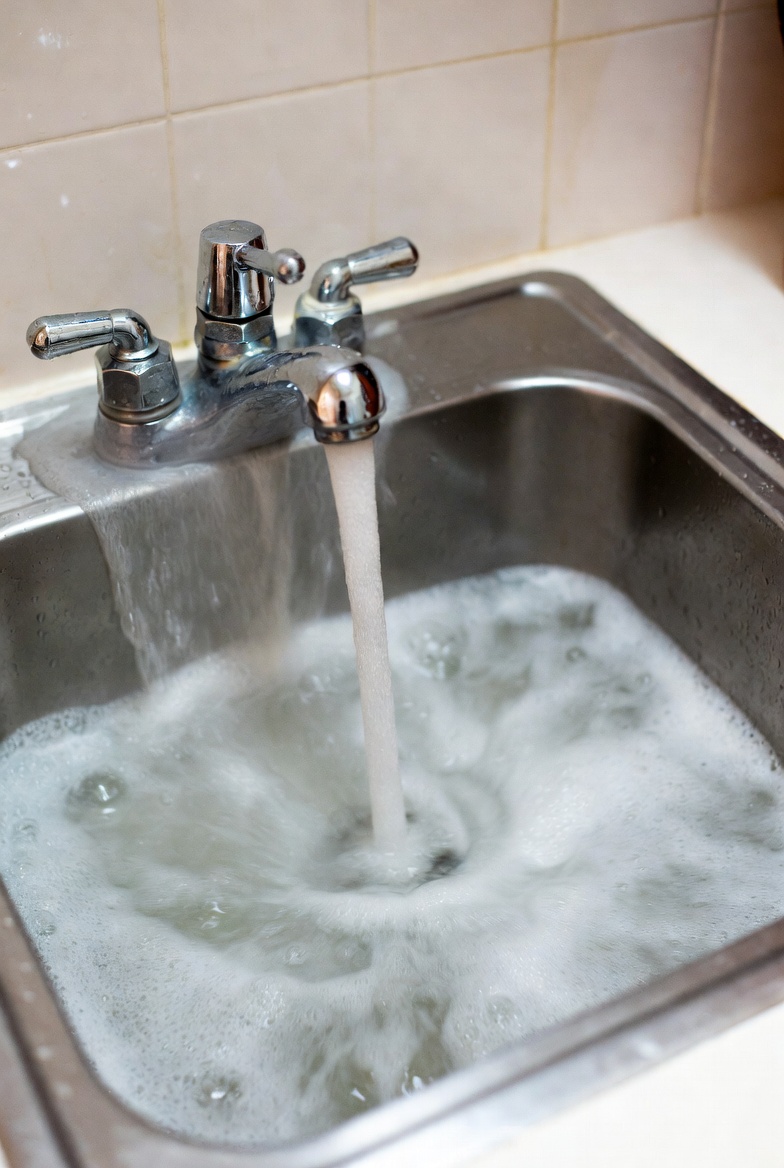
Cloudy or milky-looking tap water after a city outage is most often air trapped in the pipes. Run a cold tap for about 10 minutes while checking a clear glass for clarity. If the water clears from the bottom up or the cloudiness disappears after running it, it was likely air and is safe. If it stays cloudy, is discolored, or smells, stop using it and follow the steps below.
Why This Happens
When the city shuts down or restores service, pressure changes can let air into the distribution lines or your home plumbing. Tiny air bubbles scatter light and make water look white or cloudy. In some rare cases, sediment disturbed in mains or a plumbing issue can cause persistent cloudiness. If you recently had work on your water heater or plumbing, a different issue could be present—see Odor after water heater install for that specific situation. For the common white appearance, also consider that people often have Air bubbles mistaken for sediment when they first look at the glass.
Step-by-Step What to Do
Step 1: Check more than one tap
- Open a cold faucet on the lowest level of the house and one on the highest level to see if both show cloudiness.
- If only one fixture is cloudy, the issue is likely local to that faucet or its aerator.
Step 2: Run the water for 10 minutes and check clarity
- Run a cold tap at full flow for about 10 minutes. Use a clear glass and fill it partway every few minutes to watch for changes.
- If the cloudiness clears within that time and the water looks normal, it was likely air and is no concern.
Step 3: Observe how it clears
- If the glass clears from the bottom up as the bubbles rise and dissipate, that confirms air.
- If the water remains cloudy, has particles that settle, or has color, treat it as contamination and stop using it for drinking or cooking.
Step 4: Check aerators and filters
- Unscrew faucet aerators and rinse them. Sediment trapped there can look like cloudiness at the tap.
- If you have whole-house filters, check or replace the cartridge if it’s clogged.
What Not to Do
- Do not use cloudy water for cooking.
- Do not assume boiling solves unknown cloudiness—boiling will not remove chemical contamination and may concentrate some pollutants.
- Do not perform major plumbing changes or open gas-fired appliances without professional help.
When to Call a Professional
- If cloudiness does not clear after running cold water for 10 minutes.
- If the water is discolored (brown, yellow, or red), has visible particles that do not settle, or has an unusual smell.
- If multiple fixtures remain affected, or you suspect a damaged pipe or contaminated supply—contact your water utility first, then a licensed plumber if the issue appears inside your home.
Safety Notes
- If you or household members are elderly, pregnant, infants, or immunocompromised, avoid using cloudy water for drinking or food preparation until it’s confirmed safe.
- Flush only cold water for these checks—hot water can draw contaminants from your water heater and complicate diagnosis.
- When in doubt, use bottled water or a known safe source for drinking and cooking until the issue is resolved.
Common Homeowner Questions
- Will the water clear on its own? — Often yes; trapped air usually clears after running the tap for several minutes.
- Is cloudy water dangerous? — Air bubbles are not dangerous, but persistent cloudiness, color, or smell can indicate contamination.
- Who do I call first? — Contact your water utility to report the problem; they can confirm if the issue is in the mains before you call a plumber.