Quick Answer:
If you smell chemicals after a sudden water-pressure change, it’s usually a temporary issue from disinfectant or trapped residues being stirred in the pipes rather than a dangerous chemical leak. The smell can feel concentrated because turbulence and pressure swings move and release residual disinfectants or sediments. Take a few calm checks, log the pressure behavior, and avoid tinkering with controls until you know more.
Why This Happens
Municipal water is treated with disinfectants (like chlorine or chloramines) to keep it safe. When pressure drops or surges, flow can reverse or become turbulent and stir settled material, concentrating the disinfectant briefly at a tap or fixture. Corrosion, rubber parts in plumbing, or tanked water heaters can also release odors when flows change. Sometimes the effect is local to one fixture or happens only after specific actions — for example, people report it may briefly Taste like pool water because of the same disinfectant chemicals.
Step-by-Step What to Do
1. Note where and when it happens
- Check whether the smell is at one faucet, several, or the whole house.
- Does it happen after certain actions — for example, when a toilet is flushed or after running a particular tap? If the Smell appears only after flushing toilet, that points to a local trap, vent, or fixture issue.
2. Record the pressure
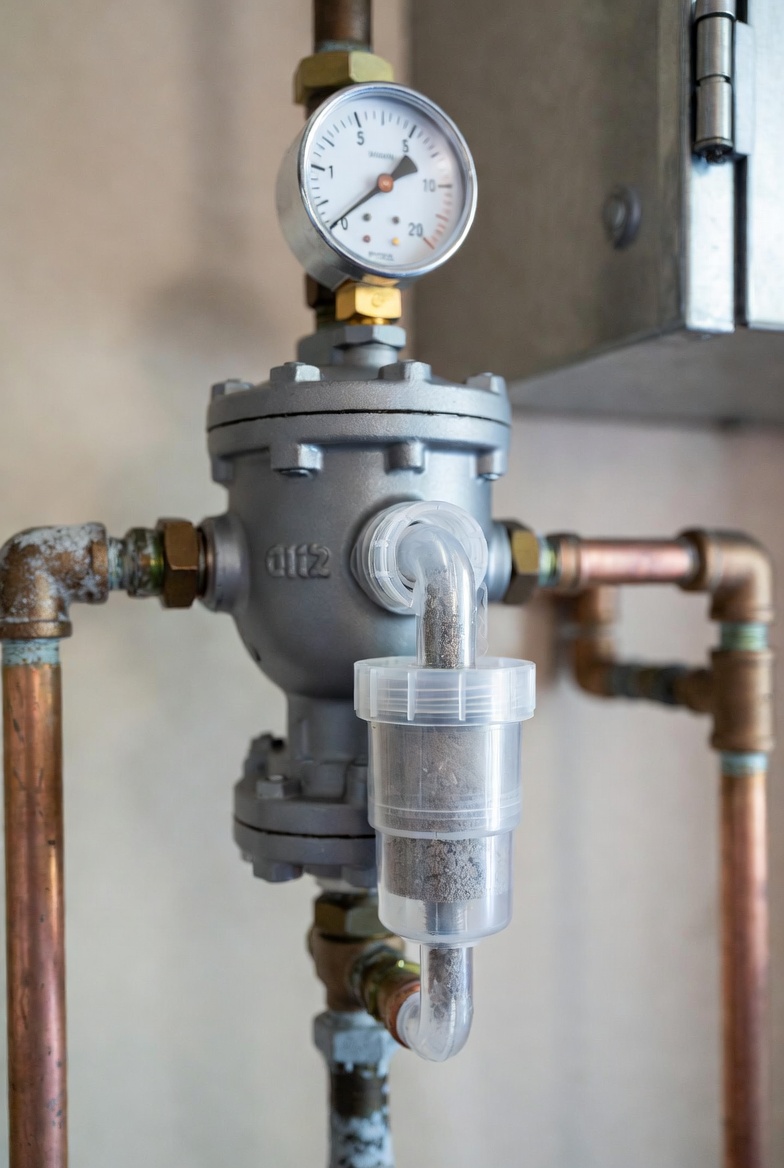
- Attach a pressure gauge and log swings. Write down the pressure at quiet times and right after you notice the smell. Note the time and any nearby plumbing use (washing machine, sprinkler, etc.). This record is one of the most useful things to show a plumber or water utility.
3. Flush and isolate
- Run cold water at the affected tap(s) for several minutes to clear the lines. Avoid using hot water first because heat can release and concentrate volatile compounds.
- Turn off other major water uses while testing to see whether the smell returns when the system is idle or when a specific device runs.
4. Check neighbors and source
- Ask neighbors whether they have the same issue; if yes, contact the water utility. If it’s only your house, focus on internal plumbing or devices (water softeners, filters, heaters).
5. Limit use until resolved
- Use bottled or boiled water for drinking and cooking if the smell is strong or tastes bad. Avoid long showers if odor is offensive. Keep detailed notes of what you did and when to speed diagnosis.
What Not to Do
- Do not adjust PRV settings to chase taste.
- Don’t add chemicals or home remedies to your plumbing to “neutralize” smells — that can make things worse or unsafe.
- Avoid making major changes (replacing parts, altering valves) until you’ve identified whether the issue is with the public supply or private plumbing.
When to Call a Professional
- Contact your water utility if multiple houses are affected, if the smell is strong at the street connection, or if pressure swings are large and frequent.
- Call a licensed plumber if the smell is limited to your home, shows up at specific fixtures, or persists after flushing and pressure logging.
- Seek immediate help if anyone becomes ill, experiences breathing difficulty, or if you see signs of contamination (discolored water, visible particles).
Safety Notes
- Do not drink or cook with water that smells strongly chemical until you are sure it’s safe.
- Use cold water for testing; hot water can release more odor and is more likely to carry contaminants from a water heater.
- Wear gloves if you handle parts that might be chemically coated or corroded, and keep children and pets away from affected water.
- Keep your pressure log and any observations handy when you call a professional — it speeds diagnosis and avoids unnecessary work.
Common Homeowner Questions
- Why did the smell start after the pressure changed? — Pressure swings can dislodge and concentrate residual disinfectants or sediments in the pipes, producing a brief chemical odor.
- Is the water safe to drink right away? — If the smell is mild and brief, it’s often safe, but use bottled or boiled water until you confirm the source if the smell is strong or persistent.
- Will a plumber need to inspect the whole system? — Not always. Your pressure log and where the smell is localized will help decide whether the issue is municipal or inside your plumbing and whether a targeted inspection is enough.
Related Articles
If you’re troubleshooting a similar symptom, these guides may help:
For the full directory, see Chlorine or Chemical Taste and Odor.