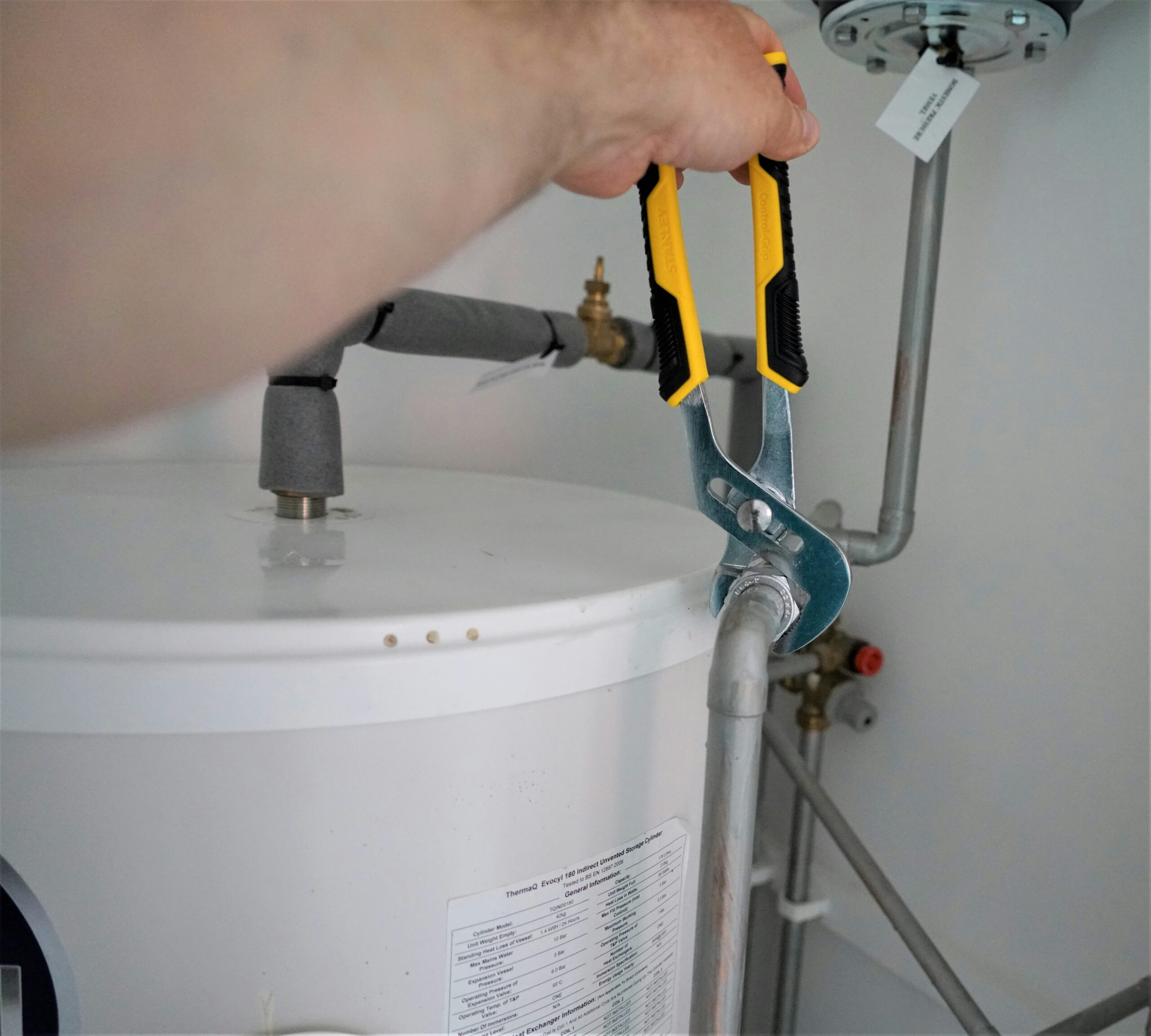
Quick Answer:
If you see brown water after draining your water heater for maintenance, it usually means leftover rust or sediment is still in the tank or drain line. First check the drain flow for rust particles. Then fully refill the tank and purge the hot lines by running hot water at the furthest fixtures until it runs clear.
Why This Happens
Hot water tanks collect mineral scale and rust over time. Draining removes much of that material, but flakes can settle near the drain valve or in pipe low spots. When you refill the tank and open faucets, those particles can dislodge and flow out as brown water. Sometimes the water briefly clears, then turns brown again as more rust moves — this is a common sign of loose corrosion or remaining sediment. For related situations see the bolded note below.
Water clears then turns brown again
Step-by-Step What to Do
1. Stop and inspect the drain flow
- Place a bucket under the drain valve and open it slightly so water flows into the bucket.
- Look for visible rust flakes or brown particles in the stream. If the drain stream is brown or has particles, keep it open and let it run until it clears.
2. Flush the tank more thoroughly if needed
- If the drain water stays brown, open the drain fully and allow a stronger flow for several minutes to dislodge sediment.
- Gently agitate sediment by briefly turning the cold supply on and off (short pulses) while the drain is open to stir and remove settled material.
3. Refill the tank fully
- Close the drain only when the outflow is mostly clear of particles.
- Open the cold water inlet to the heater and let the tank fill until water runs steadily from an open hot faucet (air is purged).
- Restore power or relight the pilot only after the tank is full and you’ve checked for leaks.
4. Purge hot lines at the far fixtures
- Go to the farthest hot-water fixture(s) from the heater—tubs, outdoor taps, or upper floor sinks.
- Run hot water until it runs clear, then move to the next farthest fixture. This removes any residual brown water sitting in the house supply lines.
5. Check and replace the drain valve if necessary
- If rust continues to appear, the drain valve may be corroded or partially blocked with flakes. Replacing the valve is inexpensive and prevents repeat problems.
- Inspect fittings and the temperature-pressure relief valve for signs of corrosion and leaking.
What Not to Do
- Do not close the heater drain if rust or brown water is still flowing. Closing it traps sediment and lets it settle back into the tank or push into your pipes.
- Do not run the heater’s burner or element while the tank is empty—this can damage the unit.
- Do not use harsh chemicals in the tank without guidance; improper chemicals can damage the heater and create hazards.
When to Call a Professional
- If brown water persists after repeated flushes and purging of lines, call a plumber—this can indicate serious internal corrosion or a failing tank.
- If the drain valve leaks, is stuck, or breaks when you try to use it, a professional can replace it safely.
- If you see rusty water after other work in the house, like repiping, compare notes with the plumber; sometimes pipe work causes temporary discoloration. For that scenario consider reading more on Brown water after replacing pipes.
Safety Notes
- Turn off power to electric heaters or set gas units to “pilot” before draining.
- Allow the tank to cool to avoid scalding; hot water from the tank can cause burns.
- Relieve pressure by opening a hot faucet and the pressure-relief valve before working on the drain.
- Wear gloves and eye protection when handling rusted fittings or replacing valves.
Common Homeowner Questions
- Why is my water brown only sometimes? Short answer: Sediment shifts when you use water or after maintenance; flushing and purging usually clears it.
- Will cleaning the tank fix it permanently? Short answer: Flushing helps but advanced corrosion may require valve replacement or a new tank.
- Can I use the hot water while this is happening? Short answer: You can use it, but run faucets until clear; avoid using hot water for washing until discoloration stops.
For more related articles, see the Brown or Rust-Colored Water Events hub.