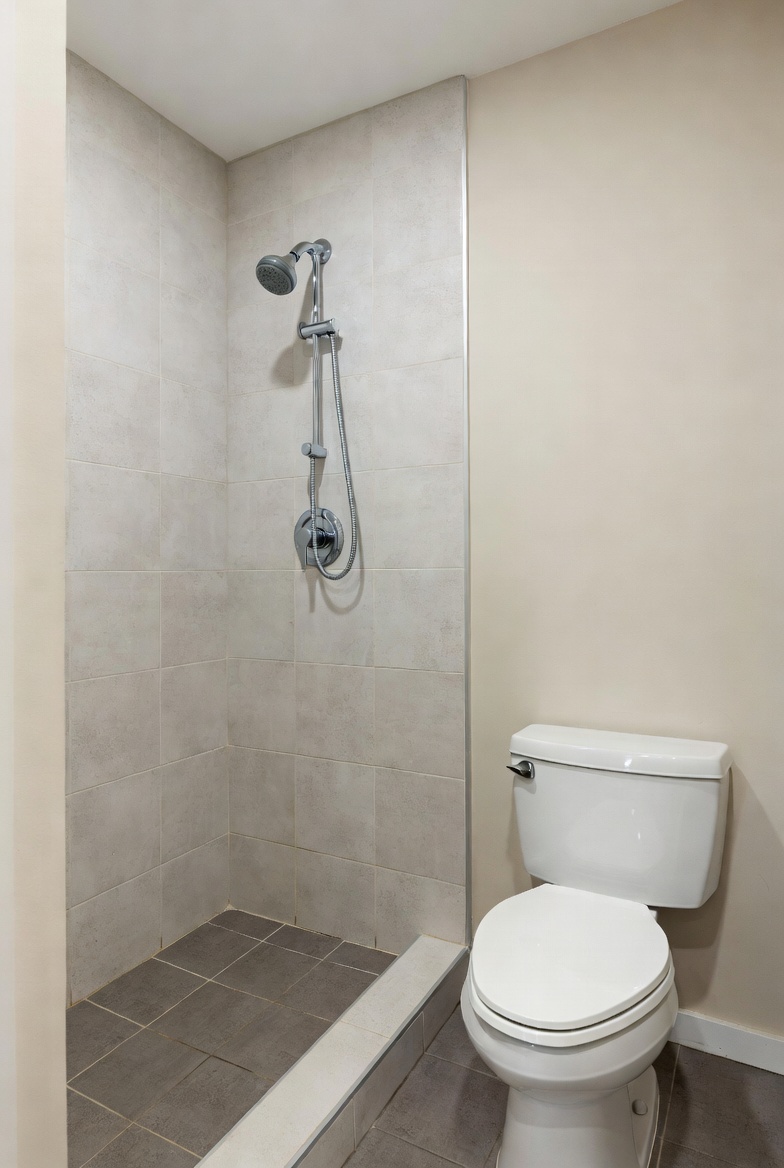
A bowl drop after water-heater replacement needs the actual work and toilet refill record. Do not run full hot/cold fixtures, washer drain and the toilet together to prove a new vent tie-in caused it.
Check hazards before collecting more evidence
For strong, widespread or unexplained gas-like fumes, exposure symptoms, or suspected high sewer-gas concentrations in an enclosed space, leave the building immediately and call the fire department or emergency services from outside. Avoid flames, switches and other ignition sources; do not remain to ventilate, sniff drains or investigate. Smell intensity does not measure the concentration. A faint localized drain odor without those warning signs calls for a different plumbing investigation; it does not automatically establish a fuel-gas leak.
If fuel gas is suspected, leave the building or affected area immediately. Do not operate valves, switches, plugs, appliances or phones there. Call the gas emergency service from a safe location well away, and wait for responders’ clearance.
Keep away from wet electrical equipment. Do not touch wet appliances, plugs or switches, or enter water to reach a breaker. When no gas leak is suspected, power may be isolated only from a safely accessible dry location; otherwise call an electrician or emergency help. Wet equipment needs qualified assessment before it is used again.
For wastewater rising from a drain or affecting several fixtures, stop adding water and keep affected appliances from discharging using only safely accessible dry controls when no gas emergency is suspected. Avoid sewage contact, keep children and pets away and arrange prompt drainage help. Notify building management or the sewer agency as appropriate. Do not run fixtures to locate a shared blockage.
If a cleaner may be present, identify the exact product and follow its label. Do not add another cleaner, acid, bleach, ammonia, vinegar or an improvised neutralizer. Do not plunge, snake or open the trap while hazardous residue may remain; tell the provider what was used. A rinse or elapsed time is not proof all residue is gone.
If a carbon monoxide alarm sounds or you suspect carbon monoxide exposure, get everyone outside immediately and call emergency services from safety. Carbon monoxide has no smell; an odor comparison cannot rule it out. Do not restart or repeatedly cycle a fuel-burning heater to investigate a possible combustion problem.
For a new, unexplained water-quality change: do not deliberately taste the water. Use bottled water or another known-safe supply for drinking, food preparation, teeth brushing and ice while you contact the supplier. Follow the actual local notice for other uses. Boiling does not make chemically contaminated water safe, and clear appearance or a fading odor does not certify safety.
Use the actual starting and later states
First distinguish a bowl that is already low when ordinary refill finishes from one that reaches its normal settled level and falls later. A normal flush itself lowers the bowl before refill. Use safe existing photos or ordinary-use observations of this same toilet, with times, actual model, completed refill and any intervening use. Do not overfill to an assumed line, add a cup as a cause test or flush while another appliance discharges. Extra water can pass over the trap’s normal retaining level or initiate flushing; its disappearance does not prove a leak, siphon or absence of evaporation.
Keep the event already observed
- Actual heater/source/toilet work and installer commissioning record, including any designed discharge.
- Normal settled bowl versus incomplete refill, original timing and visible safe observations.
Supply, combustion and drainage are different systems
A common shutdown may affect refill; a real relief, pan, condensate or fixture discharge can add water to a receiver. Supply pressure or recirculation does not simply make bowl water slope away until venting rebalances. A heater combustion flue is not a sanitary vent. Ask what actually changed rather than assuming a tie-in was moved or that hot-side sediment is on the toilet feed.
Restore actual equipment under its own procedure
Do not blindly open house, heater inlet/outlet or fixture valves, approach wet power, or operate protective controls during a gas emergency. Keep the original no-heater-temperature/pressure-tuning, no-gas/electrical alteration and no-owner-roof-work safeguards. Actual heater safe fill, air release and energy commissioning remains separate from the toilet record. Ask the installer for a callback without requiring reproduction or concealed-pipe exploration.
Identify the model before service
A conventional gravity tank, pressure-assisted vessel and powered/direct-feed toilet need different procedures. Only lift a normal removable ceramic cistern lid under its safe handling method, supporting it securely. For an identified owner-serviceable refill problem, compare the actual tube, clip/canister port and water-line settings with that model’s instructions. Do not push a refill tube below the tank waterline, cut an overflow or apply a universal float or bowl-refill ratio. Tank loss through a refill-hose siphon is a different path from water leaving the bowl trap.
Before hands-on service, identify the actual segment, independently isolate source/required energy, and release and verify retained pressure under the maker’s method. A drained gravity tank does not prove all hoses or pressure vessels unloaded. Water must be off before access and refit. Use compatible parts, cleaners and specified torque; do not tighten closet or tank bolts by guesswork, rock the toilet, caulk over wetness or remove the fixture to find the cause. Stop using a cracked, leaking or unstable toilet and arrange service. Suitable assessment determines whether an actual camera, clearing, vent check or replacement is needed.
Assessment and return to use
A proper functional check can be appropriate after actual correction or assessment, complete protected assembly, safe source and known accepting receiver conditions. Do not use a full tub, washer cycle, other-fixture challenge, roof visit or opened cleanout as a prerequisite to asking for help. Keep cleanouts closed and use appropriate qualified vent/access work. Persistent loss, visible leakage, recurring gurgling or several affected fixtures warrants assessment without waiting for an overnight or multi-day log. Source and electrical hazards must be controlled before cleanup.
Related situations
Safety sources
- Wisconsin DHS: sewer-gas exposure and emergencies
- Con Edison: suspected gas leaks
- CDC: electrical hazards near water
- Madison Metropolitan Sewerage District: stop discharge and report sewer backup
- Example drain-opener label: restrictions on plunging, disposal operation and mixing
- Korky: bowl-refill path and settled-level distinction
- Kohler: model differences and tank refill-hose siphoning
- CDC: drinking-water advisories
- CDC: carbon monoxide alarms and wet electrical devices
- Example electric-heater manual: filling and maintenance requirements
- Watts WAS example: intentional toilet anti-sweat tempering