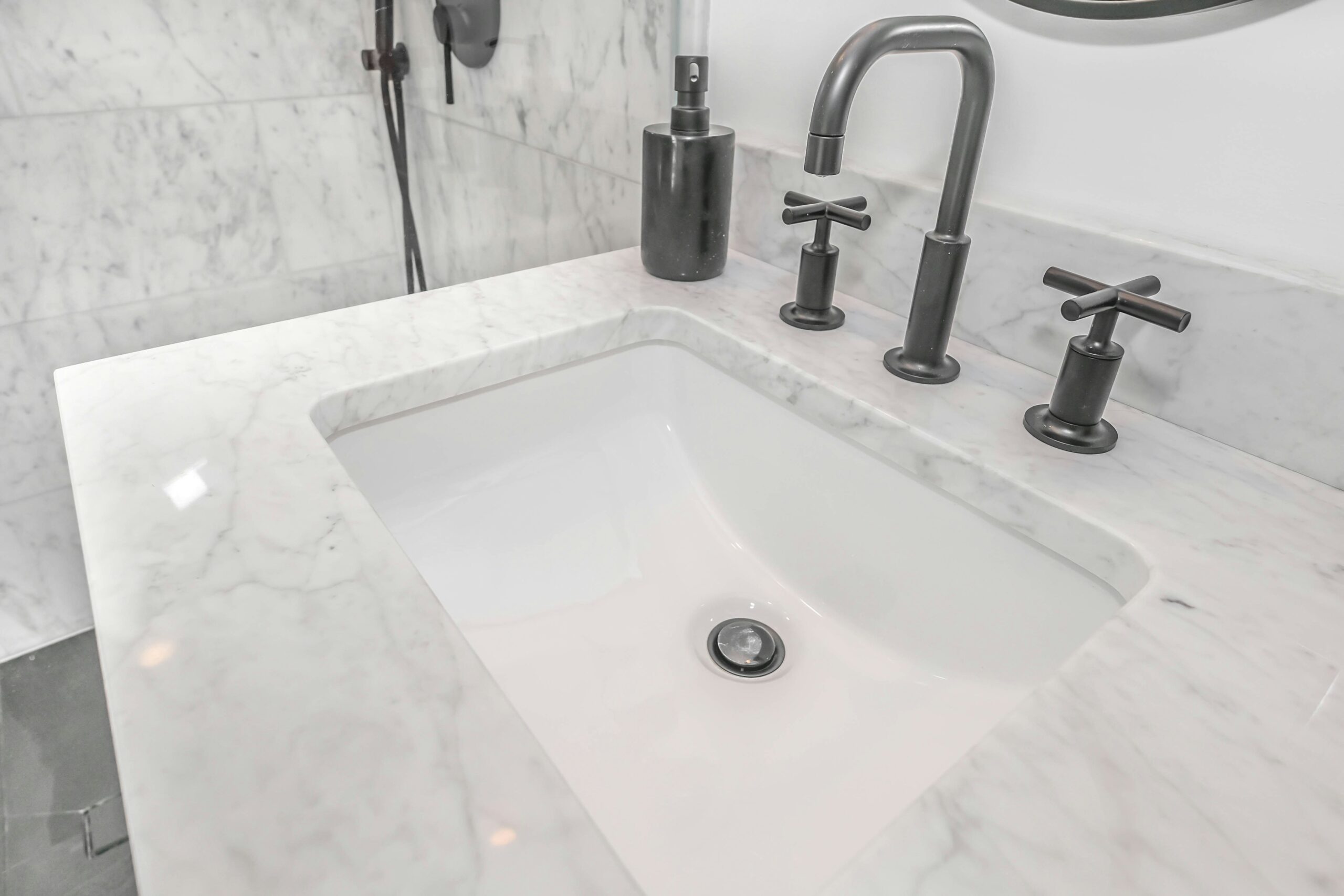
Quick Answer:
If the faucet stops when you turn the handle but continues to drip for several seconds, the most common causes are a worn cartridge or washer not seating properly, or a loose packing nut on the stem. Start by shutting off the water, checking the cartridge and washer seating, and then try tightening the packing nut before replacing parts.
Why This Happens
A brief drip after you turn a faucet off usually means water is still leaving the valve because the seal is not closing cleanly. With cartridge faucets, the cartridge can wear so it no longer compresses seals evenly. With older compression-style valves, the washer or its seating can be worn or misaligned. A slightly loose packing nut around the valve stem can also allow a small flow until pressure equalizes.
If you notice other symptoms — like water under the cabinet after each use — check related issues such as Bathroom sink leaks under cabinet. If the handle is hard to move, it may point to a different problem like mineral buildup or a stiff stem; see the note about faucet handle hard to turn.
Step-by-Step What to Do
1. Shut off the water and prepare the area
- Close the shutoff valves under the sink. If there are no local shutoffs, turn off the house main.
- Open the faucet to relieve pressure and catch any remaining water with a small bowl or towel.
- Place a bucket or towel in the cabinet to protect it from drips and dropped parts.
2. Check cartridge wear
Remove the faucet handle and take out the cartridge (or ceramic disk cartridge) following the manufacturer’s steps. Look for scoring, cracks, or worn sealing surfaces.
- If the cartridge looks damaged or the seals are flattened, replace the cartridge. A worn cartridge commonly causes a brief drip after shutoff.
- Reinstall the cartridge correctly and test before fully reassembling.
3. Inspect washer seating
On compression-style faucets, remove the valve stem and examine the washer and the seat where the washer presses. The washer should be flat and the seat smooth and free of debris.
- If the washer is compressed, hardened, or uneven, replace it.
- Use a cloth to wipe mineral buildup from the seat; small particles can prevent a tight seal.
4. Tighten the packing nut
Locate the packing nut on the valve stem. Use an adjustable wrench to turn it a small amount (a quarter to a half turn) to compress the packing material. This can stop a slow bleed that causes a short drip after shutoff.
- Test the faucet after a small adjustment. If the problem stops, don’t tighten more than needed.
- If tightening the packing nut doesn’t help, loosen it back to the original position to avoid causing stiffness.
5. Reassemble and test
- Put the faucet back together and turn the water back on slowly.
- Open and close the faucet several times to confirm the drip stops promptly.
- If the drip persists after these checks, plan to replace the cartridge, seats, or washers as appropriate.
What Not to Do
- Do not overtighten valve stems.
- Do not force stuck parts with excessive leverage — you can break stems or fittings.
- Do not use superglue or sealants on valve seats or cartridges; they can prevent proper sealing and make repairs harder.
When to Call a Professional
Call a plumber if you:
- Replace the cartridge or washer and the drip continues.
- See corrosion or damaged valve bodies that you cannot safely remove.
- Don’t have the tools or confidence to remove cartridges or stems without causing damage.
Safety Notes
- Always shut off water supply before disassembling a faucet.
- Use the correct-size wrench to avoid rounding nuts or stems.
- Wear gloves and eye protection when working in cramped spaces to avoid cuts from sharp components.
Common Homeowner Questions
- Why does the faucet drip only for a few seconds? A worn seal, cartridge, or a small amount of water left in the line will cause a short-lasting drip until pressure equalizes.
- Can I fix this with tape or sealant? No — tape or sealant on moving seals or seats usually makes the problem worse and can prevent proper sealing.
- Will replacing the cartridge fix it? Often yes for cartridge faucets; replacing a worn cartridge or seals is a common and effective fix.