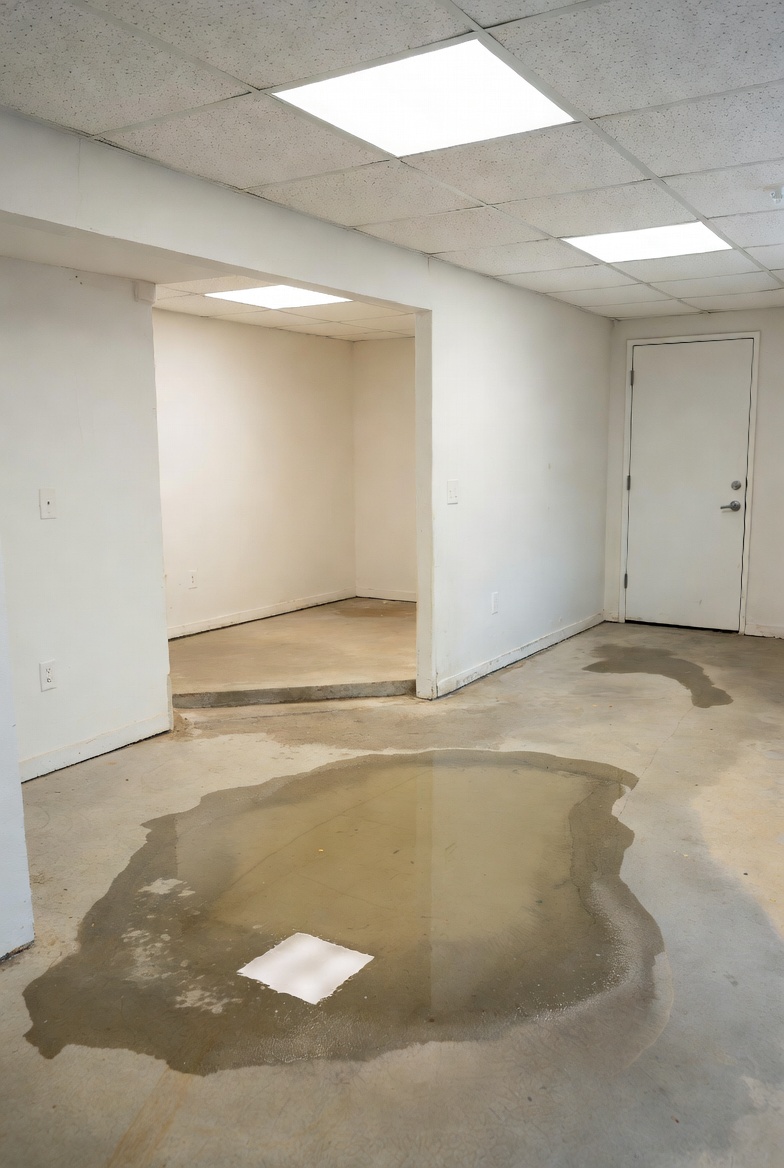
Basement flooding after cleaning needs prompt safety and source assessment. Clear appearance or lack of odor does not certify harmless water. During wastewater return, stop connected discharges; do not open a basement cleanout while someone runs an upstairs fixture.
Protect people and stop contributing discharge
For suspected fuel gas, or strong, widespread or unexplained gas-like fumes, exposure symptoms or suspected concentrated sewer gas, leave the affected building and call emergency help from safety. Do not operate switches, plugs, valves or phones there, or stay to sniff or ventilate. Follow responder clearance.
Stay out of water near electrical equipment. Do not touch wet appliances, plugs or controls; isolate electricity only from safe dry access when no gas emergency is suspected, or get utility/electrician help. During wastewater return, stop connected taps, toilets and appliance discharges using safely accessible controls. Keep people and pets away from sewage. Closing a supply valve cannot stop every shared sewer or groundwater inflow.
Identify the original water path and equipment function
- Water location: Record safely visible entry at a drain, wall, floor joint, appliance or supply part. No discharge at a particular opening would not exclude another path, and a cap discharge during use would not uniquely prove collapse.
- Pump and valve: Groundwater sumps, sewage ejectors and backwater valves have different duties. Keep sealed lids closed and use existing alarms and model records. A correctly closed backwater valve may be protecting against surcharge; do not manipulate it or add pit water during unresolved flooding.
- Cleanup: Ordinary protective gear or a wet/dry vacuum does not by itself make sewage pumping safe. Electrical clearance, approved equipment, material, disposal route, exterior water level and structural state matter. Do not dump sewage onto the lawn or into another failing drain.
Must I finish the valve and bucket checks before requesting help?
No. Ongoing flooding, sewage, wet equipment, structural concern or an unidentified source warrants prompt suitable help. Protect people and document from safety without delaying mitigation. An inspection may guide repair but does not automatically require excavation or guarantee every defect is visible.
Ask what the service and inspection actually established
Keep the work date, method, access used, tool model and any actual missing-part report, original symptoms, product history and available before-and-after records. Report new or worsening symptoms promptly without another flush, appliance load or cap-opening test. Timing can justify investigation without proving that cleaning caused damage or merely revealed an old defect.
Keep unknown cleanout caps and sealed basins closed. A slow turn, gloves, distance, a bucket or a plan to reclose after sewage emerges does not establish controlled release. Do not enter pits, tanks, manholes or excavations. Complete applicable locates, including relevant private services, and ground/footing assessment before any digging or probing. Do not touch unknown wet joints to trace a leak.
Identify every cleaner or root-control product already used. Do not mix products, improvise neutralization or use a guessed wait or rinse as clearance for opening or tools. A machine’s actual pipe, cable, cutter, glove and worksite limits matter; GFCI protection and gentle operation do not authorize working in water or flammable gas. Do not force, reverse or retrieve a damaged cable by a generic recipe.
Request the inspected extent, reference location, observed material and defects, obscured portions and available video. A camera may not pass a blockage or see through standing water, and does not certify every leak, gas seal, grade or ownership issue. Clearing, spot repair, lining and replacement need the actual condition, shape, grade, connections and site assessed. Complete suitable correction, source controls and secure assembly before an appropriate bounded check with an accepting receiver. Stop on leakage or renewed rise; arrange suitable safe cleanup and prompt drying.
Related guides
When to get prompt basement drainage help
Sources and limits
- Wisconsin DHS: sewer gas, exposure and leaving an unsafe area
- Con Edison: suspected fuel-gas leak response
- CDC: electrical hazards near water
- Madison Metropolitan Sewerage District: stop discharge and report backup
- Example drain-opener label: remaining-product restrictions
- Seattle Public Utilities: repair choices and sewer-camera limits
- EPA: prompt drying, electrical safety and flood cleanup limits
- Government of Canada: backwater valve types, maintenance and closed-valve use
- Zoeller Aquanot Fit example: power sources, maintenance and alarm functions
- Environment Agency: floodwater levels, pumping and structural protection
Examples do not identify your installed system, defect or local responsibility. Independent professional review and household field tests have not been obtained.