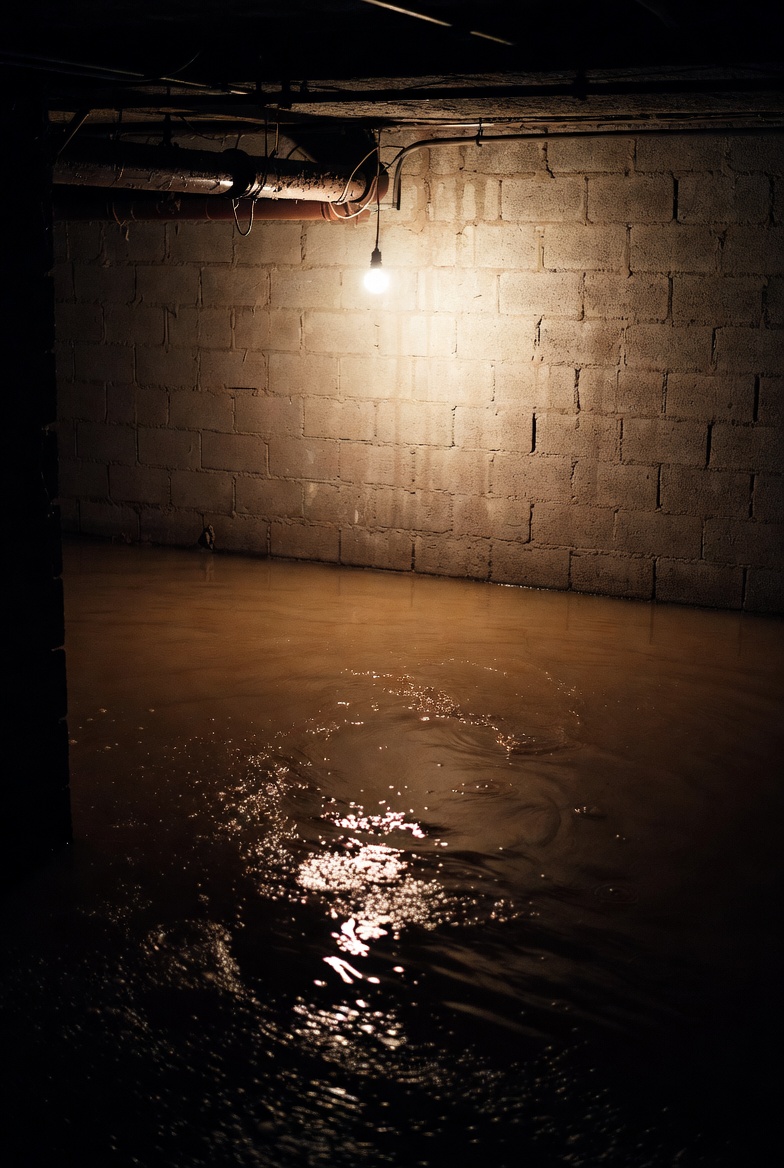
Quick Answer:
If your basement drain floods overnight while the house is unused, start by checking the sump pump and power to the unit. Note the exact time flooding starts, test the pump by pouring water into the pit, and inspect the backwater/preventer valve for stuck flaps by removing the access cover. Also look for wet walls that point to groundwater or rain-related issues and compare flooding times to recent weather or city sewer notices.
Why This Happens
- Sump pump or float switch failure: the pump may lose power, the switch can stick, or the pump may be worn out.
- Backflow from the municipal sewer or a stuck backwater/preventer valve: sewer flow can push water back through the floor drain when the valve flap sticks closed or open improperly.
- Groundwater or surface water infiltration: heavy rain or saturated soil can push water through drain openings or seep through walls overnight.
- Timing-related system loads: sewer flow and groundwater pressure often vary by time of day, which is why some backups occur only at certain hours.
Step-by-Step What to Do
1. Check power to the sump pump and the pump itself
- Confirm the pump has power: check the outlet, cord, and any GFCI or breaker that serves the pump. If you’re not comfortable with electrical checks, call an electrician.
- Listen for the pump motor or click of the float switch. If it is silent when flooding starts, the pump or power supply is suspect.
2. Tag the time when flooding begins
- When you discover overnight flooding, write down or photograph the clock time and the water level. This helps identify patterns and whether the problem is recurring at the same hour.
- Compare these times with recent weather or municipal alerts—heavy rain or sewer maintenance often coincides with backups.
3. Test the sump pump by pouring water into the pit
- Pour a bucket of water into the sump pit and watch whether the pump activates and clears the water promptly. This is a quick functional test.
- If the pump runs but water still rises later overnight, the pump may be undersized, or the inflow (groundwater or sewer) may exceed its capacity.
4. Inspect the backwater / preventer valve
- Remove the access cover and check the valve flap for debris, corrosion, or a stuck position. The flap should move freely and create a seal when closed.
- If the valve appears jammed or damaged, avoid forcing repairs beyond simple cleaning—this is a common cause of sewer backflow and should be handled by a plumber if it won’t move smoothly.
5. Examine for groundwater seepage and external causes
- Look for wet or stained walls, rising moisture marks on the concrete, or damp soil smells—these point to groundwater rather than a sewer backflow.
- Note whether evenings with flooding follow rain events or city system notices. For timing patterns, also read related articles like “Basement drain floods after turning water back on” and “Drain backs up only at night“.
6. Record what you find and plan next steps
- Keep photos, times, and brief notes to show to a plumber or city inspector if needed.
- If the pump works during your water test but flooding still starts overnight, watch for conditions when flooding begins and check whether it occurs only at night or after turning water back on in other situations.
What Not to Do
- Don’t ignore ongoing overnight flooding. Repeated flooding can damage structure, insulation, and stored items.
- Don’t rely on towels or buckets alone as a long-term fix. They mask the problem and don’t stop sewage or groundwater from coming in.
- Call a pro when flooding happens while the pump is running, when the backwater valve seems stuck, or if you can’t determine whether the problem is sewer backup versus sump/pump failure.
When to Call a Professional
- Immediate call: if you see sewage in the basement or the backwater valve appears jammed and won’t move.
- Call a plumber if the sump pump fails the bucket test, the float switch is erratic, or flooding recurs even when the pump runs.
- Consider a drainage contractor if groundwater is entering through walls or exterior grading appears to be the cause.
- Bring your notes and time-tagged photos to the appointment so the pro can diagnose time-of-day patterns quickly.
Safety Notes
- Turn off power to basement outlets only if you can do so safely and without stepping into water. If water reaches electrical devices or outlets, shut off the main breaker and call an electrician.
- Wear gloves, boots, and eye protection when checking drains; sewage can carry pathogens and contaminants.
- Avoid standing water that might hide electrical hazards. If in doubt, wait for a professional.
Common Homeowner Questions
- Q: How can I tell if this is a sewer backup or groundwater?
A: Sewage backups often smell strongly and contain waste; groundwater is clearer and usually follows heavy rain or rising water lines. - Q: Is it okay to run the pump continuously to keep water down?
A: No — continuous running can overheat the pump and mask the source; test and diagnose instead. - Q: Will a new backwater valve stop all overnight backups?
A: It can stop sewer backflow but won’t stop groundwater infiltration or a failing sump pump; diagnose the root cause first.
For a broader overview on related problems consult the hub topic: Basement Floor Drain Backups.