Quick Answer:
If your tap water tastes off right after installing a pressure‑reducing valve, it’s usually from trapped air, loosened mineral deposits, or valve lubricant. Don’t drink the water until you’ve flushed the affected lines and the PRV bypass loop. In most cases a careful flush clears the taste within minutes to a few hours.
Why This Happens
Installing a PRV disturbs water in the pipe: air pockets move through the system, mineral scale can be dislodged, and small amounts of factory lubricant or metal ions from new parts can enter the flow. Those things can change taste or smell without meaning the water is unsafe long term. If the issue started after other nearby work, compare with similar situations like **Taste change after meter work** or seasonal problems such as **Discoloration after winterization** to help diagnose the cause.
Step-by-Step What to Do
Step 1 — Stop using the affected taps
- Put any open drinking containers away. Avoid using water for cooking or making baby formula until you’ve flushed the lines.
Step 2 — Locate PRV and bypass loop
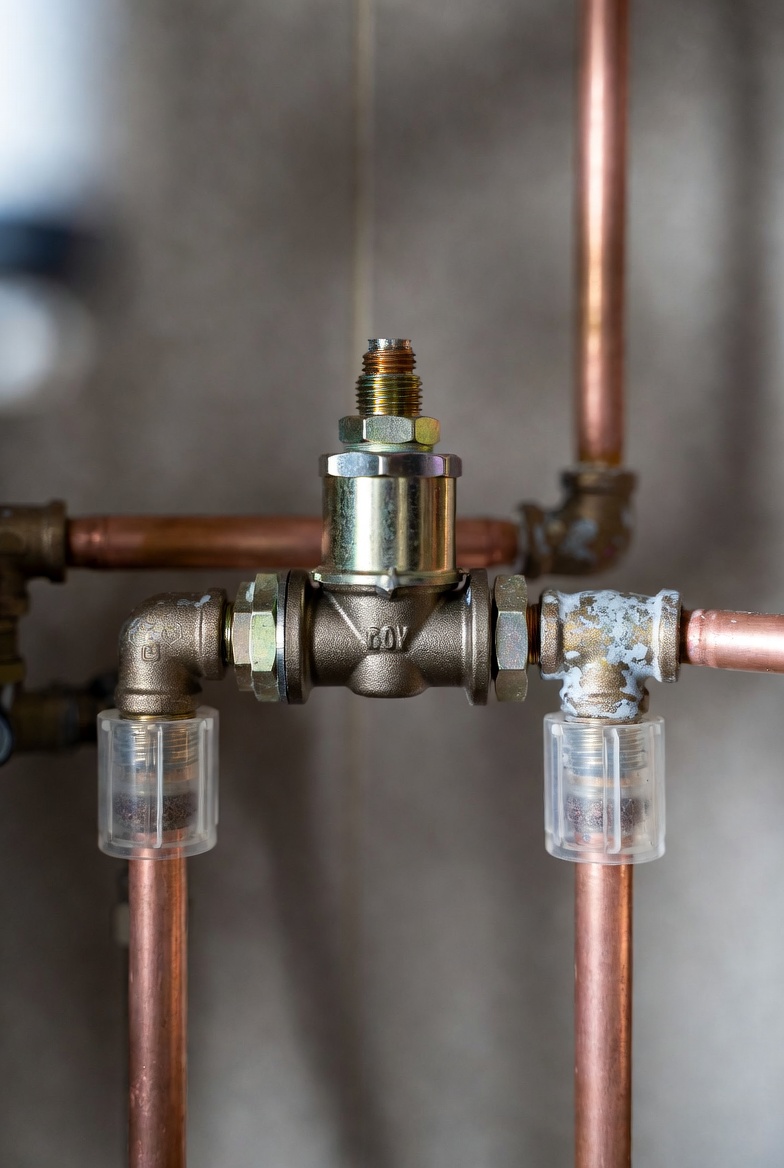
- Find the PRV assembly and its bypass valves. The bypass loop is a short section of pipe that lets water flow around the PRV when opened.
- Have a bucket and towels ready for any drips.
Step 3 — Flush PRV bypass loop
- Open the bypass valves so water flows around the PRV. Run an indoor cold tap nearest the PRV and then a tap at the far end of the house until the water runs clear and tastes normal.
- Flush for at least 5–10 minutes initially. If taste persists, continue flushing in 5–10 minute intervals up to 30 minutes.
- After flushing the bypass, close the bypass and run a final flush through the PRV with the normal flow so any remaining debris is pushed through.
Step 4 — Check other fixtures
- Run water from several taps (hot and cold) for a few minutes to make sure air or sediment hasn’t traveled elsewhere.
- If only hot water tastes bad, the issue may be in the water heater, not the PRV.
Step 5 — Observe and document
- Note how long flushing took and whether taste, color, or pressure returned to normal. If the problem returns, that information will be useful to a plumber or utility.
What Not to Do
- Do not drink water before flushing PRV.
- Don’t try to disassemble the PRV unless you know the model and have shut off the main water—this can cause leaks or loss of pressure.
- Avoid running hot water at high temperatures to force out taste—scalding is a risk and may not resolve the issue.
When to Call a Professional
- If taste or discoloration persists after thorough flushing.
- If you see brown or clearly contaminated water, or if multiple fixtures are affected and pressure is low.
- If the PRV leaks, rattles, or you’re unsure how to operate the bypass valves safely.
Safety Notes
- Run cold water only during flushing to reduce scald risk.
- Wear gloves if you need to handle valves or collect water samples.
- If you suspect contamination beyond taste (strong chemical odor, visible particles), stop using the water for consumption and contact your water supplier or a plumber.
Common Homeowner Questions
-
How long before the taste goes away?
Often minutes to a few hours after a proper flush; if it lasts more than a day, get help.
-
Is it safe to drink after I flush?
Yes, once the water looks clear and tastes normal after flushing, it’s typically safe to drink.
-
Can I fix this myself?
Yes—flushing the bypass loop and affected taps is a standard homeowner step. Call a pro for leaks, persistent taste, or if you’re unsure.