Quick Answer:
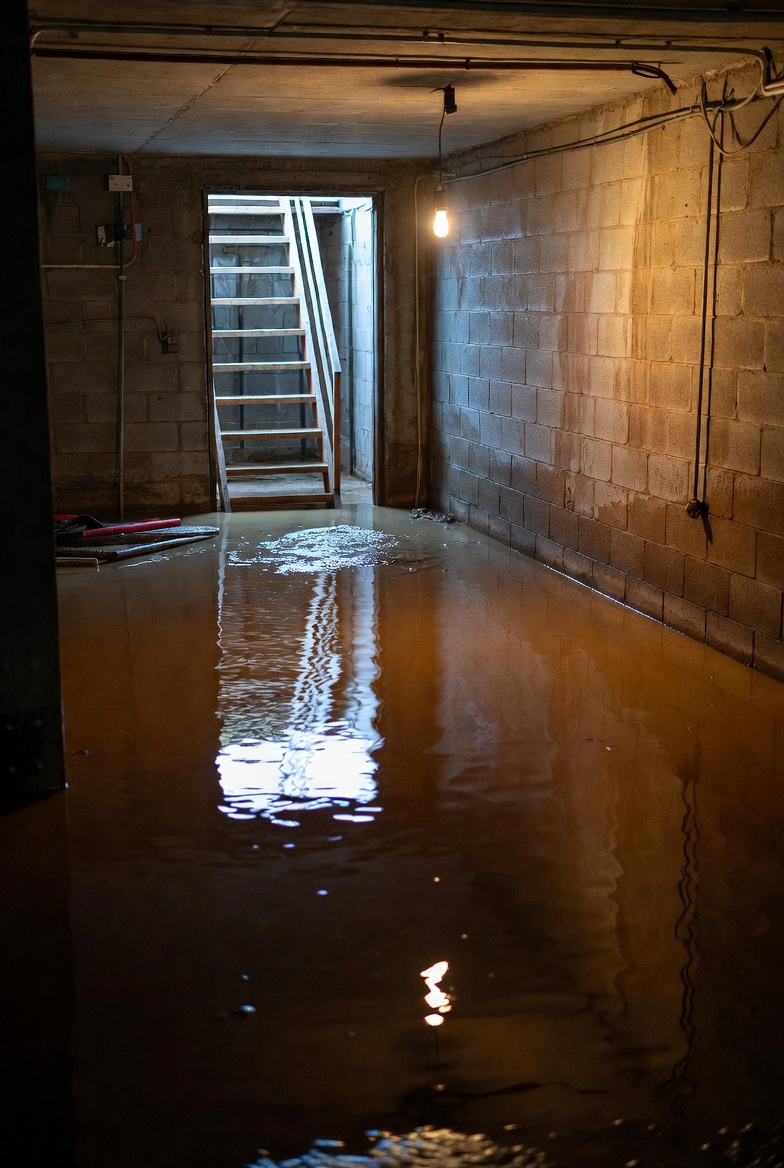
If your basement drain slows or backs up only while you’re watching a storm, it’s most often a surface runoff or municipal system overload issue, not an immediate collapse of the pipe. Start by checking whether backups match the timing and intensity of rainfall, look at the exterior sewer cleanout during the storm for surcharge, and document what you see. Temporarily avoid running washing machines or other high-volume appliances while it’s raining and take photos to share with a plumber or your municipality if the problem repeats.
Why This Happens
During heavy storms the municipal storm or combined sewer system can fill faster than it can drain. That can push water back into low points of your plumbing network—basement floor drains, laundry drains, or exterior cleanouts. Other common contributors are poor yard grading that channels runoff toward foundation drains and clogged catch basins or downspouts that overload the system near your property.
Step-by-Step What to Do
Step 1 — Correlate backups with rainfall
- Note the start and end time of each backup and compare it to how hard and how long it rained. Short, intense storms can overload systems quickly; light rain usually won’t unless there’s a separate issue.
- Keep a simple log (date, storm intensity, how long before backup started) so you can see a pattern over several storms.
Step 2 — Inspect the exterior cleanout during the storm
- If it’s safe, look at the exterior sewer or storm cleanout while the problem is happening. Surcharging (water coming up the cleanout) is a clear sign the public system or a downstream line is overloaded.
- Do not remove or work on the cleanout if sewage is actively flowing or if conditions are unsafe—take photos instead.
Step 3 — Check yard grading and low spots
- Walk the yard for places where water pools or flows toward the foundation. Low spots, compacted soil, or clogged swales can concentrate runoff toward your drains.
- Make simple fixes like clearing debris from gutters and downspouts; consider longer-term grading or drainage improvements if the yard funnels a lot of water toward your house.
Step 4 — Document timing and take photos
- While the backup is happening, take photos or short video showing the drain or cleanout condition and note the exact time.
- Keep these records to share with your municipality or a plumber—good documentation speeds diagnosis and can be useful if the problem is on public property.
Step 5 — Temporarily reduce in‑home water use during storms
- Avoid running washing machines, dishwashers, or other high-volume appliances until the storm passes. Reducing household flow can prevent a minor surcharge from becoming a full backup.
- Run appliances only when the drain is flowing normally and the storm has passed.
If you want more context about similar patterns, see Basement drain backs up after rain or Drain backs up during heavy rain for related guidance.
What Not to Do
- Do not repeatedly run high-volume appliances (washers, dishwashers) during storms or while the drain is slow; that increases the risk of a full backup.
- Do not pour grease, harsh chemicals, or large amounts of solvent down drains to try to clear slow flow—these can damage pipes or make blockages worse.
- Do not attempt to dig up or repair municipal lines yourself. Call the appropriate authority or a licensed plumber. Call a pro when backups repeat in multiple storms or occur during light rain.
When to Call a Professional
- Call a plumber if backups happen repeatedly, occur during light rain, or if you see sewage coming from a cleanout.
- Contact your local municipality if you have photos showing clear surcharging at the property line or if the issue appears to be in the public storm system.
- Ask for a camera inspection if a plumber suspects a blocked or collapsed private line—this identifies exactly where the problem is.
Safety Notes
- Avoid contact with standing sewage—use gloves and keep children and pets away. Sewage can carry pathogens.
- Do not enter a basement with standing water if electrical appliances or outlets are submerged. Turn off power to the area at the main breaker if it can be done safely, or call an electrician.
- If conditions look unsafe during a storm (fast-moving water, flooding), prioritize personal safety and document remotely rather than trying to fix anything in bad weather.
Common Homeowner Questions
- Q: Is the municipal sewer broken if the drain only backs up during storms?
A: Not necessarily—more often the public system is temporarily overloaded or surface runoff is entering the system and causing surcharge. - Q: Can my sump pump handle storm backups?
A: Sump pumps help ground water but won’t stop sewage surcharging from public lines; they’re useful for groundwater, not for sewage backups. - Q: How long should I wait before calling a plumber?
A: Call if the issue repeats, if backups occur during light rain, or if you see sewage at the cleanout; otherwise document a few events first to show a pattern.
More in this topic
For more related fixes and similar symptoms, see Basement Drain Backs Up Only After Rain.