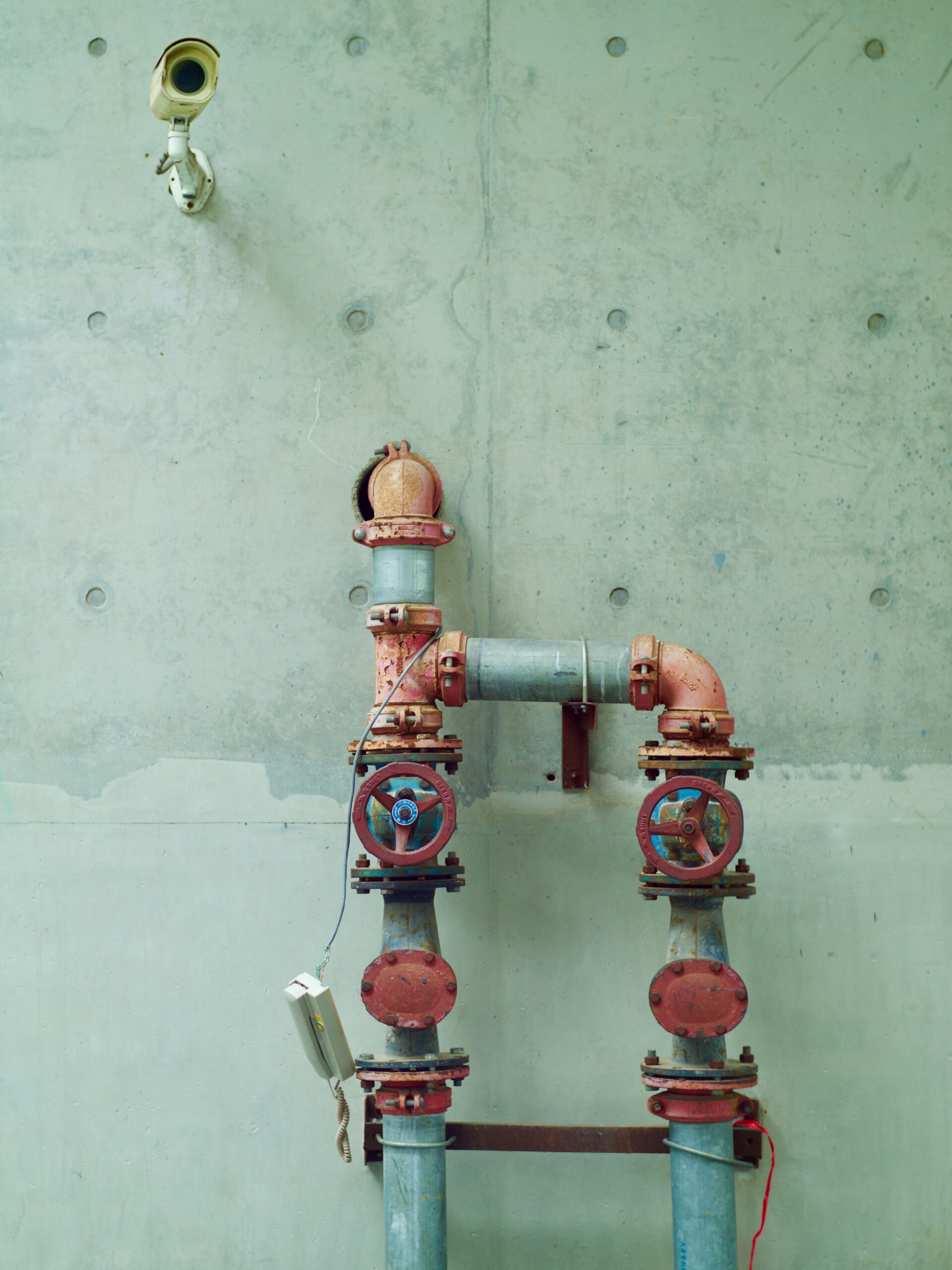
Quick answer
Buzzing while water runs is a useful timing clue, not proof that the backflow preventer is the source. Record when it happens and whether there is leakage, pipe movement or reduced delivery. Do not cycle protective valves, tighten pressure fittings or open the assembly to silence it.
Stop conditions and safe limits
- For uncontrolled water, a visible cracked pressure body or suspected contamination, obtain prompt appropriate help. Keep away from standing water and wet electrical equipment; do not reach through water to operate a switch.
- Operate only a clearly identified private shutoff when permitted and safely accessible. Unknown utility, shared and fire-service valves need the responsible provider.
- Do not bypass protection, cap a relief/air opening or open assembly test ports as a diagnostic experiment.
What this pattern can tell you
Vibration can be generated in a valve or transmitted along connected piping. A sound loudest beside the assembly can originate elsewhere. Changes in demand, a restriction, loose support or an internal component can require different remedies.
A hum sustained during flow differs from a single bang when a valve closes. Keep those observations separate so a technician can assess steady vibration versus a transient event.
Safe observations to make
- Record the ordinary fixture or irrigation event already occurring when the hum begins and stops. A short recording from a dry, stable position can capture timing without recreating a severe event.
- Look externally for visibly moving pipework, a wet joint or damaged support. Photograph it; do not brace a pressure assembly by hand or tighten its unions and fittings.
- Note whether a leak, supply loss or recent installation accompanies the sound. Keep the make/model and last service record ready. Do not change pump, PRV or backflow settings as a listening experiment.
What happens next
Contact the installer after new work, or a suitable plumber/backflow service provider for persistent buzzing. They can locate the vibration, check supports and actual operating conditions, and use the correct assembly test if needed. Silencing noise alone does not verify backflow protection.
Common questions
Should every isolation valve be fully open?
Its required position depends on the identified installation and commissioning instructions. Do not reopen a valve that was closed for a fault, winterization, fire service or maintenance.
Is buzzing an emergency?
Seek prompt help for accompanying flooding, damaged piping, loss of supply or contamination concerns. Noise alone does not determine the severity.
Related guides
- Water hammer after backflow install
- Intermittent Water Pressure Loss With a Backflow Device
- Backflow device only leaks at night
See all scenarios in Backflow Preventer Malfunctions.
Sources and device instructions
- EPA cross-connection and backflow resources
- Watts 009-series manual: an example of a model-specific service and testing process
- Watts vacuum-breaker guide: device classes have different applications
Identify your own make/model and use its instructions and local water-provider requirements. These references do not diagnose the installation described by a symptom or certify its water quality.