Quick Answer:
If several faucets sputter air after you turn the water back on, start by confirming the main shutoff is fully open and then open fixtures in a controlled order: one cold faucet slowly, a second cold faucet, then hot. If air clears within a few minutes it was trapped air; if it keeps returning, the shutoff may have been closed or opened too fast, or there may be ongoing air entry or a partial restriction in the line.
Why This Happens
When the main shutoff is closed, water movement stops and pockets of air can collect in the pipes. Reopening the valve suddenly or leaving it partially closed can dislodge those pockets or create pressure changes that force air into fixtures. If the air returns after you think you’ve cleared it, that suggests one of three common issues: the shutoff was operated too quickly, air is still entering the system (from a pump, leak, or supply work), or there is a partial restriction that traps and releases air later.
If you recently worked on piping or had repairs, see Air in pipes after plumbing repair for more context. If the problem started after work on drains or vents, check Air noise in pipes after drain work.
Step-by-Step What to Do
1. Confirm the main shutoff is fully open
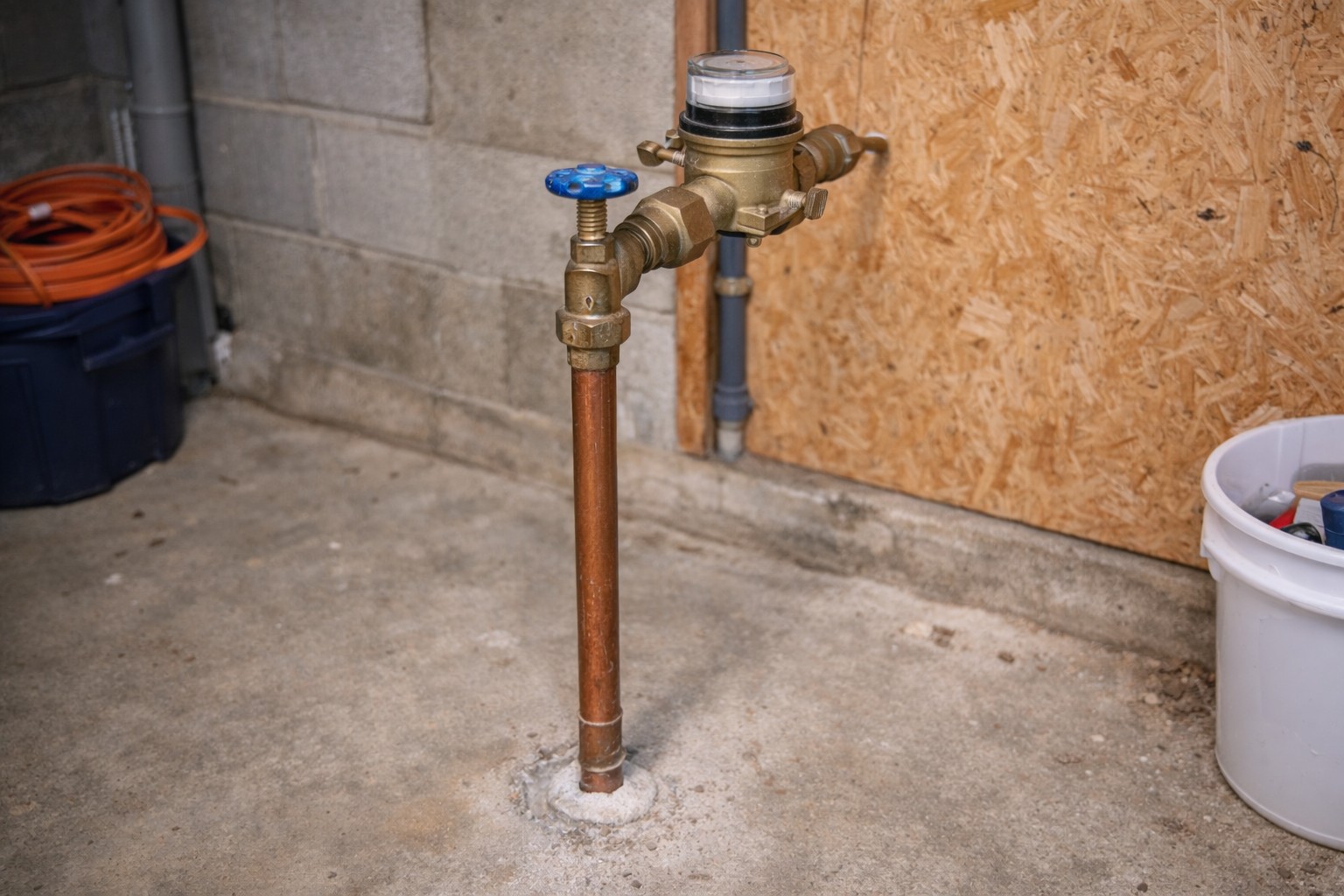
- Locate the main shutoff (usually near where water enters the house or at the meter) and make sure the handle is turned all the way to the “open” position. A partially open valve can mimic a blockage.
2. Open one cold faucet slowly
- Start at a low point like a basement sink or a laundry tub. Open the cold-side only and do it slowly so air can escape without splashing.
- Watch for sputtering to stop; this may take a minute or two as trapped pockets work out.
3. Open a second cold faucet
- Open another cold faucet slowly. This helps flush different branches of the system and confirms whether air is localized or throughout the house.
4. Open a hot faucet
- After cold lines clear, open a hot faucet slowly. Air can be trapped separately in the hot side because of the water heater and its check valves.
5. Observe for a few minutes
- If air clears and does not return, you’re likely done. If air keeps returning, note this—it’s an important clue.
6. If the air keeps returning
- Consider these possibilities: the main valve was closed or opened too fast and left pockets, there is ongoing air entry (well pump, damaged check valve, supply-side work), or a partial restriction (sediment, a half-open valve, or a faulty pressure-reducing valve) that traps air and releases it later.
- Try opening a large-volume outlet (bathtub or exterior hose bib) to purge more water and force air out of the system. Do not open hot water at full blast without checking water temperature to avoid scalding.
- Check outdoor hose bibs, irrigation supply lines, and any recent repair points for loose fittings or signs of air entry.
What Not to Do
- Don’t leave the main shutoff partially open to ‘control’ sputter; a half-open valve can create noise and restriction.
- Don’t open or close the main valve quickly several times—this can make air pockets worse.
- Don’t dismantle main plumbing parts or the water meter if you aren’t trained; that can create more leaks or violate local rules.
When to Call a Professional
- Call a plumber if air keeps returning after you’ve flushed multiple fixtures and confirmed the main is fully open.
- Contact a contractor when you suspect a failing check valve, damaged pressure-reducing valve, or persistent restriction from sediment.
- For well systems: call a pump technician if the pump is cycling, sucking air, or dropping pressure. For municipal supply problems, contact your water provider if the issue appears upstream.
Safety Notes
- Be cautious with hot water. Open hot faucets slowly and check temperature to avoid scalding.
- Avoid working on the main shutoff or water meter if you are unsure—some valves are hard to operate and can break. Call a pro for stuck valves.
- If you smell gas or see damage to a water heater or pump while troubleshooting, stop and get professional help.
Common Homeowner Questions
- Why did this start after I closed the main for a minute? Closing and reopening the main can trap and then release air pockets; reopening slowly usually clears it.
- How long should sputtering last? If it’s just trapped air, it usually clears within a few minutes of flushing; persistent or returning air needs further checks.
- Could the water supplier cause this? Yes—work on supply lines or a failing supply-side component can introduce air into your plumbing, in which case contact the supplier.
Related Articles
If you’re troubleshooting a similar symptom, these guides may help:
For the full directory, see Air in Pipes After Shutoff.