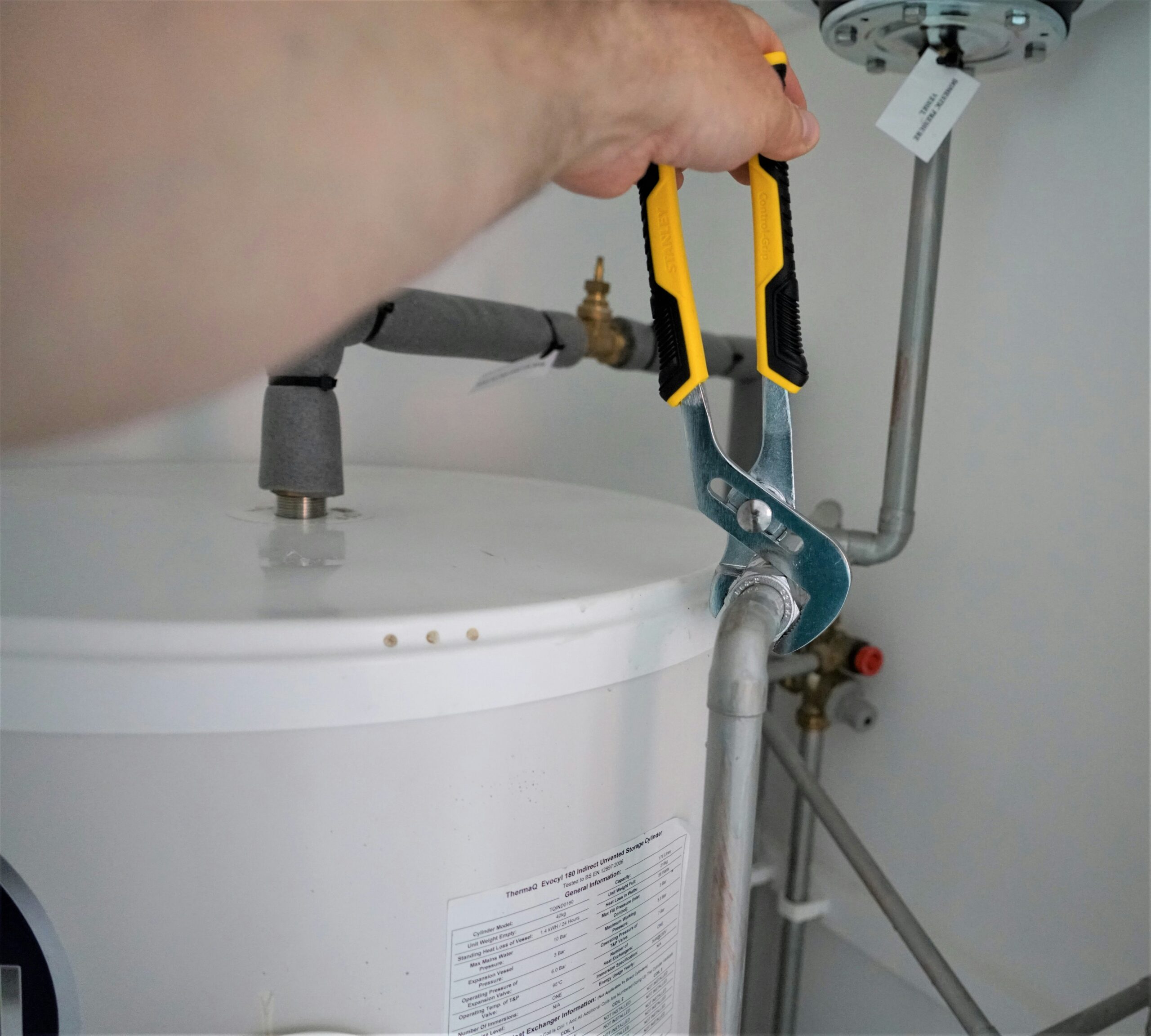
Clarify whether the heater was actually drained and filled after service. Normal incoming replacement water during hot-water use is a different event. A post-service spurt does not by itself establish tank fill, harmless air or safe restart.
Choose the response before running water
For suspected fuel gas, a carbon monoxide alarm or exposure symptoms, leave immediately and call the appropriate emergency service from safety. Do not operate switches, phones, taps, valves or appliances in the affected area. Do not assume an unfamiliar gas-like discharge is harmless air. Keep away from wet electrical equipment, steam, hot discharge and severe uncontrolled movement; obtain prompt appropriate help.
For an actual water-quality advisory, follow its specific restrictions. A new unexplained quality change needs supplier or health-authority advice; do not taste it to test it. Use a known-safe drinking supply while the concern is assessed. Clear appearance, no odor and a steady stream do not certify drinking-water safety or lift a notice. Boiling does not make chemically contaminated water safe.
Verify the heater’s actual filling and commissioning state
- Before energy returns: For an electric storage tank, correct filling and required air removal must be established under its instructions before power is applied. Tankless, fuel and circulation equipment have different procedures. If an unverified tank was energized or service state is uncertain, stop diagnostic trials and obtain qualified help.
- Outlet and temperature: Use the actual specified safe filling or outlet-check procedure after a suitable source and receiver are established. A cold tap running clear does not certify the heater is full or make a hot purge safe. Do not hold a bucket under unpredictable hot spray.
- Protection and recurrence: Keep relief protection intact; do not use its lever as a generic air-release test or plug its discharge. Give the technician the service record, model and original affected outlets. Recurrence, leakage, abnormal pressure or hot discharge needs assessment rather than another whole-house purge.
Does one steady hot outlet prove the heater and every branch are ready?
Not without the actual commissioning criteria. Sound and floor comparisons do not verify all equipment or water quality. Do not dismantle cartridges based only on comfort with reassembly; service requires the correct isolation, temperature and pressure control.
When a controlled outlet check is appropriate
Use flushing only when it fits the actual supplier, installer and equipment directions, with assembled sound plumbing, known safe temperature, a suitable accepting drain and continuous attendance. A full-flow step may be appropriate in a specified procedure; a trickle, hot purge, floor order or minute count is not universally correct. Stop for leaks, backup, severe noise, unexpected spray or another hazard. An initial cold or brief hot trial does not guarantee safe hot-water temperature.
Keep the original outlet, hot/cold or mixed setting, time, recurrence, work history and existing alerts or readings. Those are clues, not unique proof of a heater, PRV or street-side fault. Do not cycle the main, open protective test ports or loosen a fitting to chase air. Internal work needs actual source isolation and controlled pressure, temperature and energy, followed by correct reassembly and commissioning. A drain vent, combustion vent and an actual installed air-control device have different jobs; supply sputter alone does not justify a drain-vent repair or roof access.
Related guides
Sources and limits
- CDC: follow the actual drinking-water advisory
- Denver Water example: cold-outlet directions after a supply outage
- Example electric-heater manual: actual fill/restart and long-idle hydrogen precautions
Supplier and manufacturer examples are not instructions for every home. Use the actual notice, equipment and service procedure. Professional review and field testing have not been obtained.