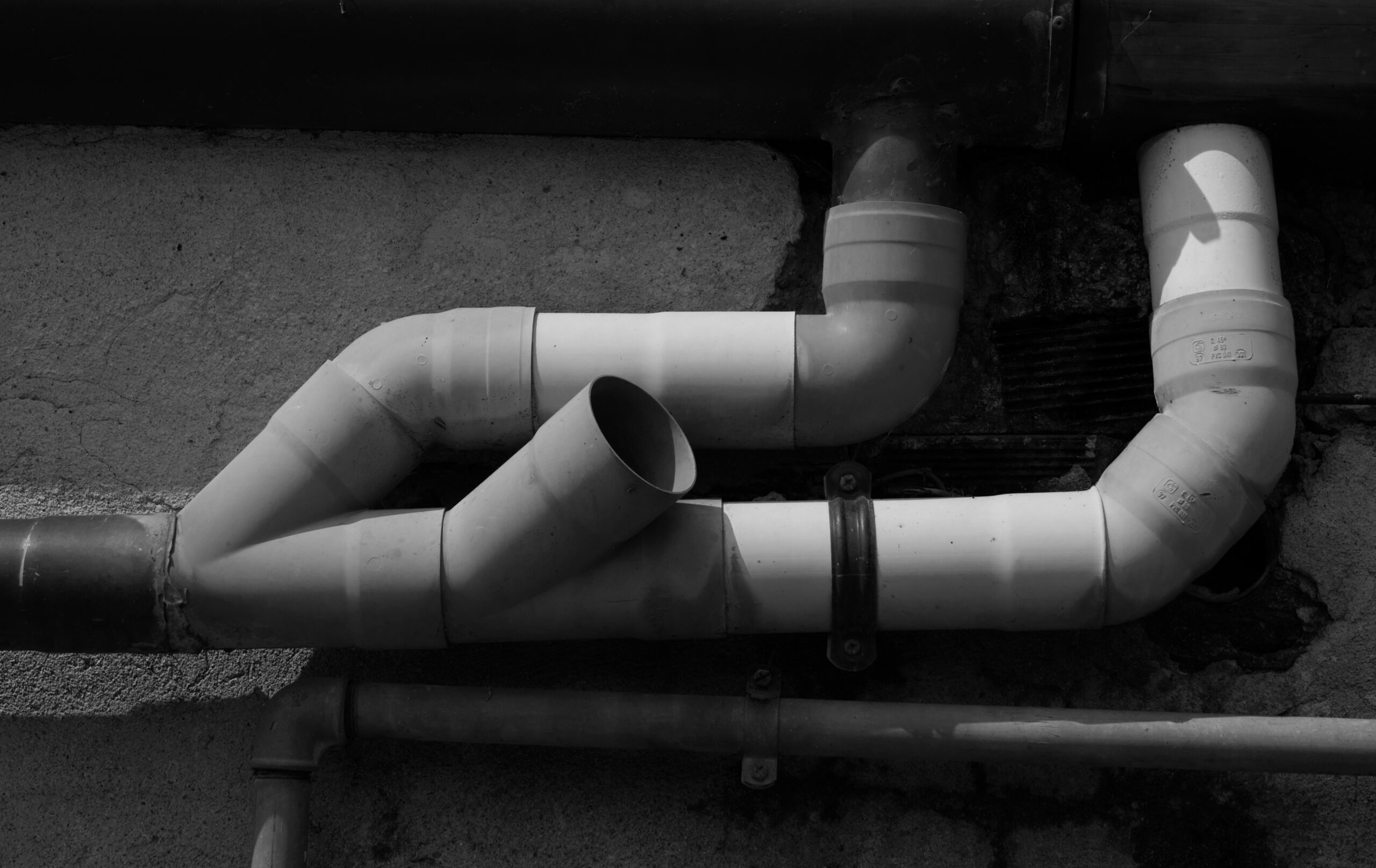
After meter replacement, report sputtering with the actual work date, supplier notice and first affected outlets. Air may be involved after opened supply work, but timing and multiple floors do not prove the meter or public main is at fault.
Choose the response before running water
For suspected fuel gas, a carbon monoxide alarm or exposure symptoms, leave immediately and call the appropriate emergency service from safety. Do not operate switches, phones, taps, valves or appliances in the affected area. Do not assume an unfamiliar gas-like discharge is harmless air. Keep away from wet electrical equipment, steam, hot discharge and severe uncontrolled movement; obtain prompt appropriate help.
For an actual water-quality advisory, follow its specific restrictions. A new unexplained quality change needs supplier or health-authority advice; do not taste it to test it. Use a known-safe drinking supply while the concern is assessed. Clear appearance, no odor and a steady stream do not certify drinking-water safety or lift a notice. Boiling does not make chemically contaminated water safe.
Keep meter authority and customer restoration separate
- Work record: Ask the responsible provider what work and restoration occurred, which notice applies and what customer-side checks are appropriate. Do not disturb meter seals, utility valves or test fittings; authorization depends on the actual service arrangement.
- Outlet procedure: Do not prescribe the lowest sink, nearest tap or every floor as a universal purge. Denver Water’s example calls for a suitable cold bathtub or weather-permitting outside outlet after restoration; that is an example, not a replacement for your supplier’s actual directions.
- Equipment readiness: Give the provider any existing leak, abnormal delivery or treatment-system concern. Connected appliances and filters can have their own restoration requirements. A steady stream does not verify their condition or water quality.
Should I adjust the PRV if the new meter seems to reduce pressure?
Do not adjust from the sound or apparent flow alone. Appropriate measurement and actual model requirements come first. Report the facts and use suitable authorized service without assigning fault or repeatedly cycling the main.
When a controlled outlet check is appropriate
Use flushing only when it fits the actual supplier, installer and equipment directions, with assembled sound plumbing, known safe temperature, a suitable accepting drain and continuous attendance. A full-flow step may be appropriate in a specified procedure; a trickle, hot purge, floor order or minute count is not universally correct. Stop for leaks, backup, severe noise, unexpected spray or another hazard. An initial cold or brief hot trial does not guarantee safe hot-water temperature.
Keep the original outlet, hot/cold or mixed setting, time, recurrence, work history and existing alerts or readings. Those are clues, not unique proof of a heater, PRV or street-side fault. Do not cycle the main, open protective test ports or loosen a fitting to chase air. Internal work needs actual source isolation and controlled pressure, temperature and energy, followed by correct reassembly and commissioning. A drain vent, combustion vent and an actual installed air-control device have different jobs; supply sputter alone does not justify a drain-vent repair or roof access.
Related guides
Sources and limits
- CDC: follow the actual drinking-water advisory
- Denver Water example: cold-outlet directions after a supply outage
Supplier and manufacturer examples are not instructions for every home. Use the actual notice, equipment and service procedure. Professional review and field testing have not been obtained.