Quick Answer:
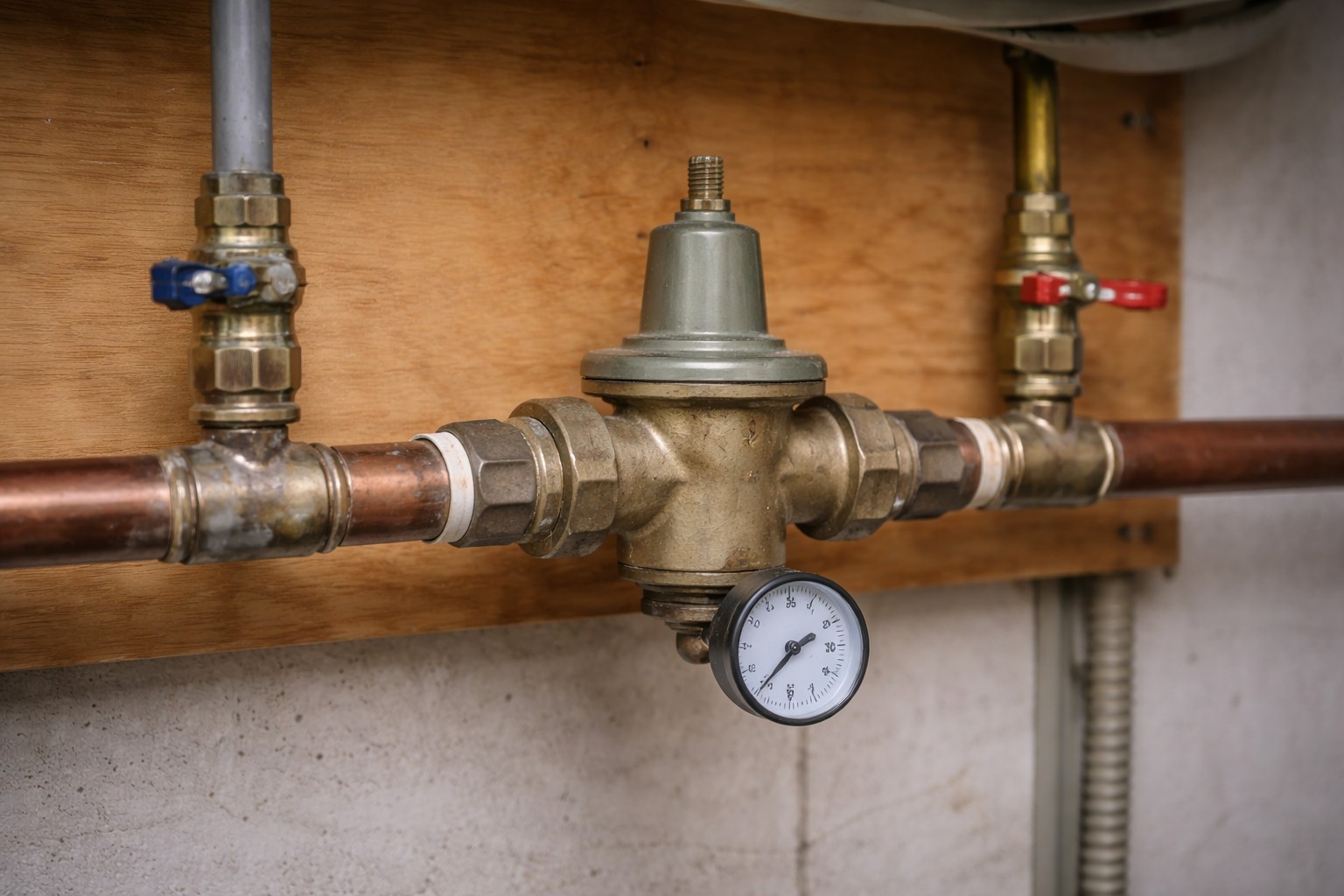
Shortly after you adjust a pressure reducing valve (PRV) you may get sputtering taps and odd pressure behavior as trapped air moves through the system. Run a cold faucet slowly to purge air and watch the pressure. If the sputter started right after the adjustment and pressure swings or spikes, stop and get a professional to check the PRV. For related situations, see Air blasts from faucet after water restored and Air in upstairs fixtures only.
Why This Happens
- Adjusting a PRV changes valve position and system pressure. That sudden change can dislodge air pockets trapped in pipes.
- If the PRV setting is unstable or the valve is worn, the outlet pressure can swing as the valve hunts for the setpoint. Those swings force air ahead of the water and cause sputtering.
- Domestic systems often have high points and low flow fixtures where air collects; a change in pressure moves that air around until it is vented or purged.
Step-by-Step What to Do
1. Confirm timing and scope
Note whether the sputtering began immediately after the PRV adjustment and which fixtures are affected. If it started right after the adjustment, the PRV setting is the likely cause.
2. Check pressure stability
If you have a simple water pressure gauge, attach it to an outside hose bib or a laundry bib and watch the reading while someone slowly opens a cold tap. Look for steady pressure or rapid swings. If you don’t have a gauge, watch how faucets behave as you open them slowly for signs of surging or sudden spikes.
3. Purge air from a cold faucet
- Choose a low fixture (kitchen sink or laundry tub) and open the cold tap slowly. Let it run until the flow becomes steady and the sputtering stops. This vents air gradually and reduces water hammer risk.
- After that, open other fixtures one at a time to clear remaining pockets.
4. Observe results and watch for pressure problems
If pressure now fluctuates or spikes, or the PRV continues to “hunt,” the valve may need professional setting or replacement. Also watch for loud banging (water hammer) or a persistent drop in flow at multiple fixtures—signs of unstable control.
5. If needed, restore the previous setting and call for help
If you can safely return the PRV to the previous position (one careful turn) and the system calms, stop there. If you can’t or if the problem persists, call a licensed plumber to test and, if necessary, replace or re-set the PRV.
What Not to Do
- Don’t keep turning the PRV screw back and forth; pressure instability is a reason to pause and call a plumber.
- Don’t attempt major PRV disassembly unless you are trained—springs and seats can be under pressure and parts are easy to damage.
- Don’t open multiple high-flow fixtures all at once to “flush” air; that can create water hammer and mask pressure instability signs.
When to Call a Professional
- Sustained pressure swings or repeated spikes after purging indicate the PRV may be faulty or improperly sized.
- Visible leaks at the PRV, or water that won’t clear from fixtures after purging, are reasons to call a plumber.
- If you’re unsure how to safely use a gauge or restore a previous PRV setting, get a pro to avoid causing more instability.
Safety Notes
- Turn off the main water supply before doing any work that requires removing or opening the PRV body.
- Release pressure in the system by opening a faucet before touching plumbing fittings.
- Wear eye protection and be cautious of hot water when purging—use cold taps only for venting air.
Common Homeowner Questions
- Can I clear the air myself? Yes—slowly opening a low cold faucet usually vents the air; stop and call a plumber if pressure keeps fluctuating.
- Will the PRV reset itself? Sometimes the system stabilizes after air is purged, but recurring instability suggests the PRV needs a professional adjustment or replacement.
- Is this urgent? If pressure spikes, banging pipes, or loss of control continues, arrange a professional inspection promptly to avoid damage.
Related Articles
If you’re troubleshooting a similar symptom, these guides may help:
For the full directory, see Air in Pipes After Shutoff.