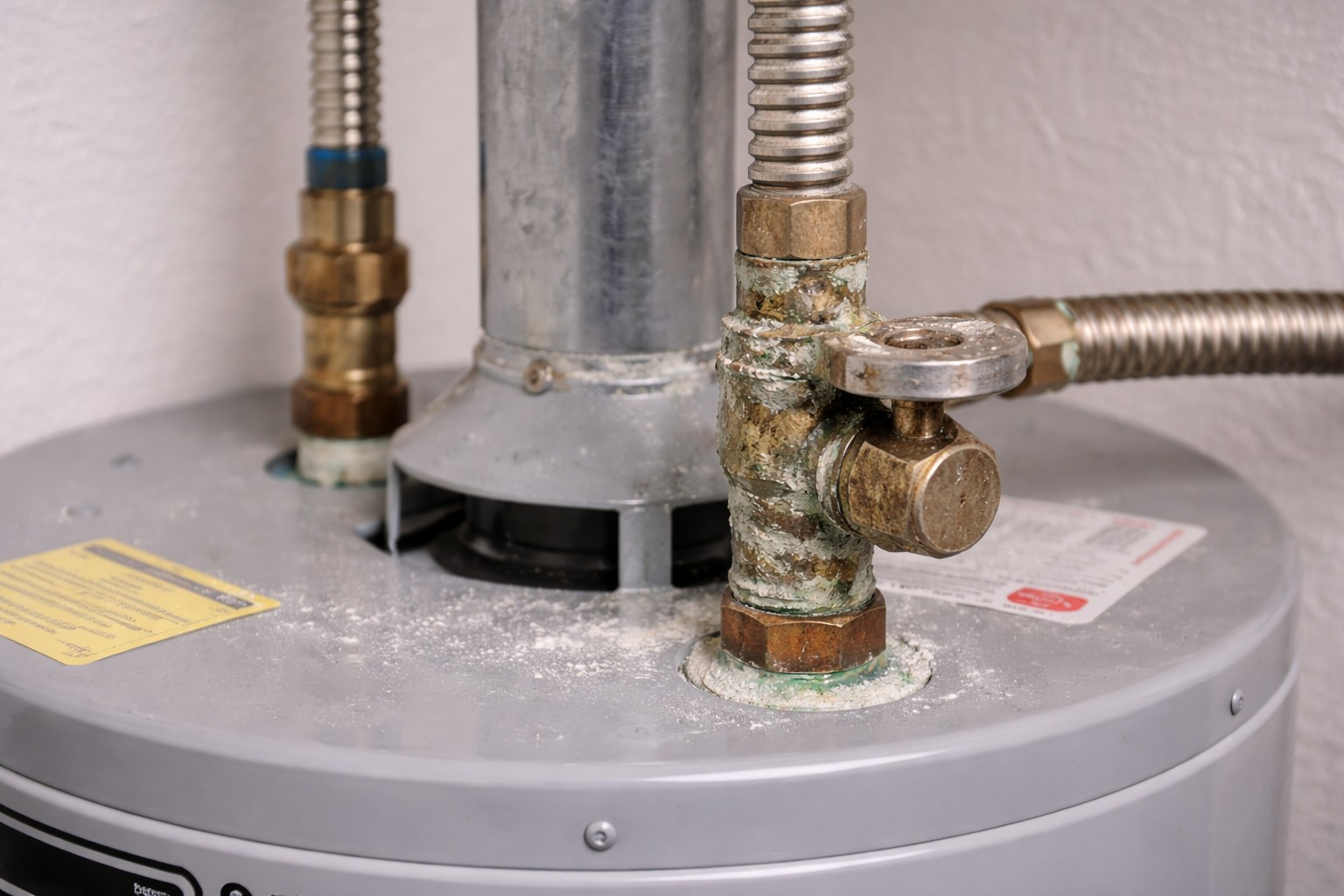
Check for an emergency first
If you smell fuel gas or suspect a gas leak, leave the building or affected area immediately and take others with you. Do not operate switches, plugs, phones, appliances, thermostats or valves in the affected area, light flames, or stay to ventilate or investigate. From a safe location well away, call the local gas emergency service or emergency services. Do not re-enter until responders say it is safe. Plumbing checks and normal maintenance must wait.
If a carbon monoxide alarm sounds or you suspect carbon monoxide exposure, get everyone outside immediately and call emergency services from safety. Carbon monoxide has no smell; an odor comparison cannot rule it out. Do not restart or repeatedly cycle a fuel-burning heater to investigate a possible combustion problem.
Keep away from wet electrical equipment. Do not touch wet appliances, plugs or switches, or enter water to reach a breaker. When no gas leak is suspected, power may be isolated only from a safely accessible dry location; otherwise call an electrician or emergency help. Wet equipment needs qualified assessment before it is used again.
After a new heater installation, confirm the actual commissioning sequence before any heating or repeated hot-water use. For an electric storage heater, the tank must be filled and air purged under its instructions before power is applied. “Turn the breaker on, then run a tap until smooth” reverses that essential order.
Useful details to record
- The heater type and model, installation date and installer’s startup record.
- Whether the tank was filled and purged before power was restored, and any uncertainty about that sequence.
- Sputtering, leaks, banging or error indications already observed. Do not force a recovery cycle or approach hot discharge to collect more evidence.
What the pattern can tell you
- Filling or purging is uncertain. Do not energize an electric tank to make it recover. Get the installer to establish the required condition and correct startup.
- The heater was powered before confirmed filling. Tell the installer exactly what happened. Do not assume later smooth flow proves the elements and installation are sound.
- There is leakage or relief discharge. Stop the trial and obtain qualified service. A towel or bucket is not protection against a pressurized failure or wet electrical equipment.
What to do next
- Use the emergency response above for gas or carbon monoxide suspicion, before operating fuel or electrical controls. Keep clear of wet or arcing equipment.
- For a non-emergency commissioning issue, use the exact manufacturer procedure with the installer. Heater filling, air purging and applying heating energy must occur in the required order.
- Keep any prescribed purge controlled and attended, with a safe discharge. Do not add generic remote-tap or full-flow steps to an unidentified model’s procedure.
- Have persistent sputtering, loud banging, leaks or abnormal readings assessed. Do not strike pipes, bypass protection or repeatedly heat and drain the system as a test.
Can I tell the tank is safe to heat because one tap has stopped sputtering?
Use the actual manual’s completion conditions, not a generic observation. The installer should establish that the tank and connected plumbing are properly filled, purged and ready for service, and address any damage or error that may have followed an incorrect startup.
Related guides
- Air blasts from faucet after water restored
- Air sputters after main shutoff used
- Why Your Water Heater Isn’t Working After Turning the Water Back On
- Air in Pipes After Shutoff