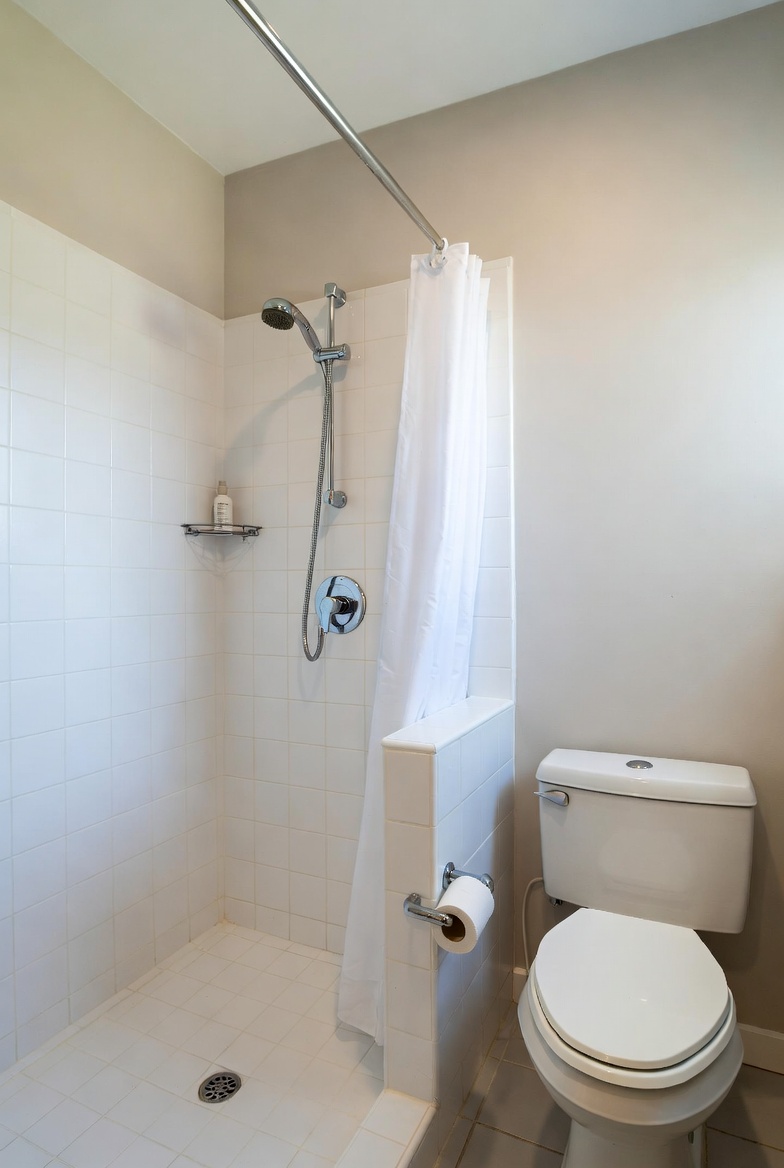
After winterization, establish the actual product, source and freeze condition before adding test water. Inspect suspected damaged supply or porcelain before any purge, not after several flushes.
Check the condition before adding water
For a high/rising bowl, shared wastewater return, active external leak, cracked porcelain or instability, stop affected use and get prompt appropriate help. Do not flush again or add a bucket to test capacity. Keep people away from sewage, wet electrical equipment and damaged ceilings. Control an active incoming leak only with an identified owner-operated valve reached safely from dry access without force; supply closure does not stop every wastewater source. Preserve required shared/fire services.
For wastewater rising from a drain or affecting several fixtures, stop adding water and keep affected appliances from discharging using only safely accessible dry controls when no gas emergency is suspected. Avoid sewage contact, keep children and pets away and arrange prompt drainage help. Notify building management or the sewer agency as appropriate. Do not run fixtures to locate a shared blockage.
If a cleaner may be present, identify the exact product and follow its label. Do not add another cleaner, acid, bleach, ammonia, vinegar or an improvised neutralizer. Do not plunge, snake or open the trap while hazardous residue may remain; tell the provider what was used. A rinse or elapsed time is not proof all residue is gone.
For a new, unexplained water-quality change: do not deliberately taste the water. Use bottled water or another known-safe supply for drinking, food preparation, teeth brushing and ice while you contact the supplier. Follow the actual local notice for other uses. Boiling does not make chemically contaminated water safe, and clear appearance or a fading odor does not certify safety.
Keep the original evidence
- Actual approved winterizing product, use/dose, equipment drained or isolated, and freezing exposure.
- Maker/provider removal/disposal and commissioning instructions, known damage and receiving conditions.
Separate refill, discharge and drainage
Identify a conventional gravity tank, pressure-assisted vessel, direct-feed or powered toilet and its actual flush mode. Needing another handle press to clear waste differs from two discharges after one press, and a short refill sound is a third observation. For a gravity toilet, establish the normal completed tank and bowl refill before judging the next flush. Slow refill can weaken a flush attempted too soon; it does not automatically weaken a later flush from the same correctly filled stored charge. Pressure-assisted/direct systems have their own supplied-state requirements.
Put the original damage guard first
Keep an actually damaged or brittle supply isolated for its appropriate replacement before testing. Any visible porcelain crack, leakage or instability needs prompt assessment. Do not use hot water on cold porcelain, and keep children and pets away from residue or unsafe water. Do not tighten tank bolts incrementally to investigate a leak or assume cheap rubber swaps certify every seasonal fault.
No universal antifreeze flush count or odor clearance
Three to five flushes, disappearing odor or a clear appearance does not establish every product removed or safe disposal. Use the actual approved product and fixture instructions, supplier/septic/sewer requirements and an accepting receiver. Unknown residue or strong fumes calls for appropriate product/poison/emergency advice from safety; do not remain to ventilate or flush an unidentified chemical. Cold stiffness alone does not prove permanent damage, and silicone/vinegar compatibility cannot be assumed.
Clean the actual component
Identify the actual bowl design and permitted cleaning path: rimless, washdown and other models do not all have identical rim jets or need a uniform stream from each hole. Use the maker-compatible tool, cleaner and dwell for the specific surface. A permitted gentle tool on a passage is different from wire scraping a delicate seal, drilling/widening holes or pushing a deep improvised cable. Vinegar or a mild descaler is not automatically compatible with the finish, parts or retained cleaners. Do not mix products; a rinse or elapsed time is not chemical clearance.
Safe service and completion
Use the actual toilet and part instructions for compatibility, flush volume/mode, waterline, valve critical-level datum, chain/lever settings and clip or designed canister port. Do not raise or lower a correct waterline to cure inlet speed. Only handle a normal removable lid safely and set it securely on a protected stable surface. For service, identify relevant feeds/energy, isolate independently, release retained pressure by the actual controlled method and verify the worked segment unloaded. A drained open gravity tank is not a depressurized supply hose or pressure vessel. Keep water off before retained inlet access and refit; restore only after complete protected assembly.
A functional check can follow actual correction, safe source conditions, completed assembly and a known accepting receiver, allowing the actual full refill between checks. Observe the correct flush mode, bowl clearance, later refill/shutoff and repaired joints. Stop immediately for rising water, leakage or abnormal behavior. Do not use repeated loads, several quiet minutes or a day of logging as proof of all faults absent. Continuing or recurring trouble warrants assessment without another guessed part, roof visit or reproduction test first.
Related situations
- Partial flush after installing new parts
- Partial flush after city outage
- Phantom flush after winterization
- Browse double-flush and partial-flush situations
Safety sources
- CDC: electrical hazards near water
- Madison Metropolitan Sewerage District: stop discharge and report sewer backup
- Example drain-opener label: restrictions on plunging, disposal operation and mixing
- Kohler: poor-flush evidence and component-specific assessment
- Kohler pressure-assisted example: a different vessel and troubleshooting procedure
- Korky example: actual waterline, locking, refill routing and joint requirements
- Kohler: actual refill-hose support and canister-port differences
- CDC: drinking-water advisories