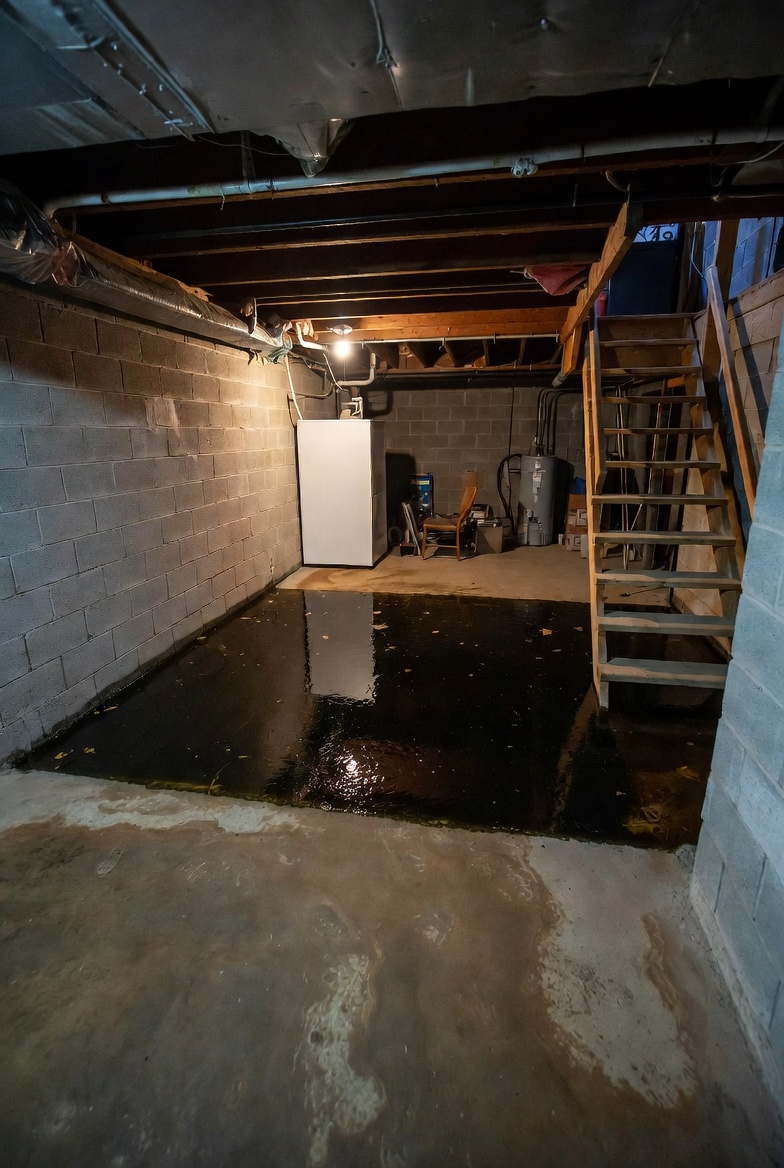
Check for an emergency first
For strong, widespread or unexplained gas-like fumes, exposure symptoms, or suspected high sewer-gas concentrations in an enclosed space, leave the building immediately and call the fire department or emergency services from outside. Avoid flames, switches and other ignition sources; do not remain to ventilate, sniff drains or investigate. Smell intensity does not measure the concentration. A faint localized drain odor without those warning signs calls for a different plumbing investigation; it does not automatically establish a fuel-gas leak.
If fuel gas is suspected, leave the building or affected area immediately. Do not operate valves, switches, plugs, appliances or phones there. Call the gas emergency service from a safe location well away, and wait for responders’ clearance.
Keep away from wet electrical equipment. Do not touch wet appliances, plugs or switches, or enter water to reach a breaker. When no gas leak is suspected, power may be isolated only from a safely accessible dry location; otherwise call an electrician or emergency help. Wet equipment needs qualified assessment before it is used again.
A leak or drain symptom after filter installation needs the exact filter function and work record identified. A drinking-water filter, appliance filter and wastewater filter are different equipment. A supply filter is not a section of the sanitary sewer lateral, and wet cabinets do not prove roots or sewage migrating along a pipe.
Useful details to record
- Actual filter model/function, changed connections and installer commissioning record.
- First wet location or original drainage symptom, recorded separately from supply behavior.
- Any documented root inspection, previous backups and every product used.
What the pattern can tell you
- A drinking-water connection leaks. Use an identified safe owner isolation if appropriate and obtain prompt installer help; do not run a bypass/large flush.
- Wastewater returns. Stop added discharge and arrange drainage assessment.
- Roots were actually documented. Provide the actual inspection evidence without assigning the filter installation as the cause.
What to do next
- For wastewater rising from a drain or affecting several fixtures, stop adding water and keep affected appliances from discharging using only safely accessible dry controls when no gas emergency is suspected. Avoid sewage contact, keep children and pets away and arrange prompt drainage help. Notify building management or the sewer agency as appropriate. Do not run fixtures to locate a shared blockage.
- Use the original event and ordinary-use history; do not fill a basin, flush toilets, start an appliance or run several fixtures to reproduce the symptom. Do not put your face or ear near a drain to distinguish “suction” from “pushback.” Sound alone cannot locate a restriction, measure pressure or verify vent performance.
- Keep cleanout caps closed. Do not loosen a cap to check a water level, watch a basin dump or release pressure; sewage and gas may escape. Do not climb to vents, enter pits or tanks, or use a flame to investigate an odor. Those checks need the appropriate qualified provider and controls.
- If a cleaner may be present, identify the exact product and follow its label. Do not add another cleaner, acid, bleach, ammonia, vinegar or an improvised neutralizer. Do not plunge, snake or open the trap while hazardous residue may remain; tell the provider what was used. A rinse or elapsed time is not proof all residue is gone.
- Before any internal service or fitting removal, identify and isolate every supply that can pressurize the section, release trapped pressure through the appropriate controlled outlet and verify depressurization. Account for hot water and possible alternate feeds. Lowering a PRV setting, reducing flow or wearing gloves does not make a pressurized assembly safe to open. If isolation cannot be established, leave it assembled and obtain qualified help.
- Do not bypass treatment that serves a water-quality purpose, flush a significant volume while someone watches sewer openings, collect unknown leak samples in a bucket or repeatedly tighten fittings. Identify the actual water/waste function and maintain required protection.
- If roots or damage are suspected, ask an appropriate qualified provider what inspection is suitable and request the actual location, accessible length, visible findings and limitations. Keep available video and written records. Portland’s example illustrates identifying entry points, observations and footage, but its submission rules are local; they are not a household instruction to add water or a guarantee every defect will be visible. A symptom or nearby tree alone does not prove intrusion, ownership or the repair required.
- Keep wet electrical equipment off limits and arrange source/electrical control before cleanup. A camera may be appropriate for a sewer concern, but it is not automatically the first check for a filter supply leak.
Can a filter bypass test show whether roots damaged my sewer lateral?
No generic relationship supports that test. Identify the actual filter and separate any supply leak from drainage symptoms. Installation timing and wetness alone do not establish root intrusion or a pipe breach.
Related situations
Safety sources
- Wisconsin DHS: sewer-gas exposure and emergencies
- Con Edison: suspected gas leaks
- CDC: electrical hazards near water
- Portland example: useful sewer-video identification, scope and observed-condition records
- Madison Metropolitan Sewerage District: stop discharge and report sewer backup
- Example drain-opener label: restrictions on plunging, disposal operation and mixing
- CDC: selecting and maintaining a water filter
- Watts 25AUB example: regulator service, pressure measurement and limitations