Quick Answer:
If several fixtures back up at once, stop using water immediately and note which fixtures are affected. Check the exterior cleanout by loosening the cap slightly to see if there is flow or an obvious blockage. Look for recent digging, heavy equipment, tree removal, or other work near the sewer line. If the cleanout shows no flow but fixtures still back up, avoid probing deep with long augers—record what you see and call a plumber for a camera inspection.
Why This Happens
- Block or collapse in the main sewer line — sudden simultaneous backups often mean the problem is past the house branch lines and in the main lateral or public sewer.
- Debris or a severe clog — a large object, root mass, or grease can block the line quickly when multiple fixtures are used.
- Ground movement or construction damage — nearby excavation, tree removal, heavy loads (construction vehicles parked over the sewer path) can crack or shift the pipe.
- Public sewer problems — sometimes the municipal sewer is blocked or surcharged, which can cause multiple fixtures to back up inside the home.
Step-by-Step What to Do
1. Stop all water use and document affected fixtures
- Turn off taps, washing machines, dishwashers, and irrigation systems. Do not flush toilets.
- Write down or take photos of which fixtures are backing up (toilet(s), basement floor drain, sinks, shower). This helps the plumber diagnose where the blockage is.
2. Check the exterior cleanout
- Locate the cleanout (usually a capped pipe near the foundation, driveway, or yard). Wear gloves and eye protection.
- Loosen the cap slowly and only a turn or two at first. Step back and watch for flow, gurgling, or sewage odor. If water or sewage squirts out, close the cap and call a pro—do not stand over it.
- If you see active flow or solids coming out, that confirms a main-line problem rather than an isolated trap or branch clog.
3. Inspect recent site activity near the sewer path
- Look for recent ground work, tree removal, new construction, or heavy equipment use near where the sewer line runs. These activities can crush or shift pipes.
- If neighbors had similar issues, the public sewer may be at fault—contact your water/sewer authority to report it.
4. If the cleanout is dry but fixtures back up
- Do not probe deep with long augers. Avoid pushing a snake aggressively past a suspected damaged spot because that can worsen a partial collapse.
- Record the cleanout condition, which fixtures back up, and any odors or unusual sounds. These notes speed up diagnosis.
- Call a plumber and request a camera inspection of the main line. A camera will confirm collapse, roots, or blockages without risking more damage.
What Not to Do
- Do not repeatedly snake without using the cleanout first—this can push a partial collapse into a worse state.
- Do not ignore the problem or keep using water while waiting; further use can push sewage into low fixtures or the basement.
- Do not try to force open a sealed cleanout cap with tools if you are unsure—if the cleanout is inaccessible, call a pro when multiple drains clog at once with no prior symptoms or if the cleanout is inaccessible.
When to Call a Professional
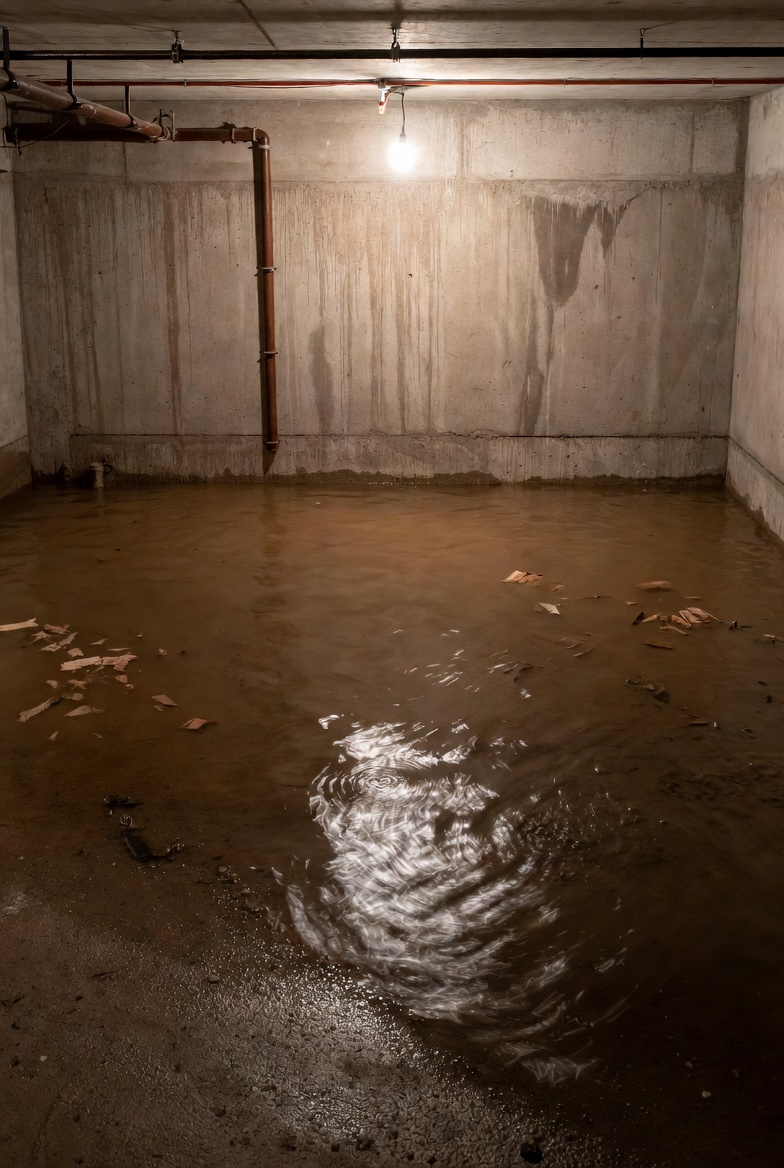
- Call a plumber immediately if multiple fixtures clog at once with no prior warning, or if sewage appears in the basement or floor drains.
- Request a camera inspection when the cleanout is dry but backups continue or when you suspect a broken or collapsed pipe.
- If you find evidence of recent digging or heavy equipment near the sewer line, contact both your plumber and the contractor who did the work so the cause can be verified and repaired.
- For intermittent or location-specific issues, see Multiple drains back up intermittently or Multiple drains back up only upstairs for related scenarios and next steps.
Safety Notes
- Avoid standing over an open cleanout—sewer gas can be harmful and pressurized flow can eject sewage.
- Wear gloves, eye protection, and old clothes when inspecting or handling any sewer fixtures. Wash hands thoroughly afterwards.
- If there is sewage in the home, do not use household electrical appliances in flooded areas and keep children and pets away until cleaned by professionals.
- When in doubt, call a licensed plumber rather than attempting risky repairs yourself.
Common Homeowner Questions
- Q: Can I clear this myself with a drain snake?
A: Only use a snake after checking the cleanout; if several drains are affected, a snake can make an unseen collapse worse—call a pro. - Q: Will my insurance cover a collapsed sewer line?
A: Coverage varies—contact your insurer and document visible damage and any nearby work that may have caused it. - Q: How urgent is a camera inspection?
A: It’s urgent when multiple fixtures back up with no obvious cause; a camera avoids unnecessary digging and finds collapses or root intrusion.
More in this topic
For more related fixes and similar symptoms, see Multiple Fixtures Backing Up Together.