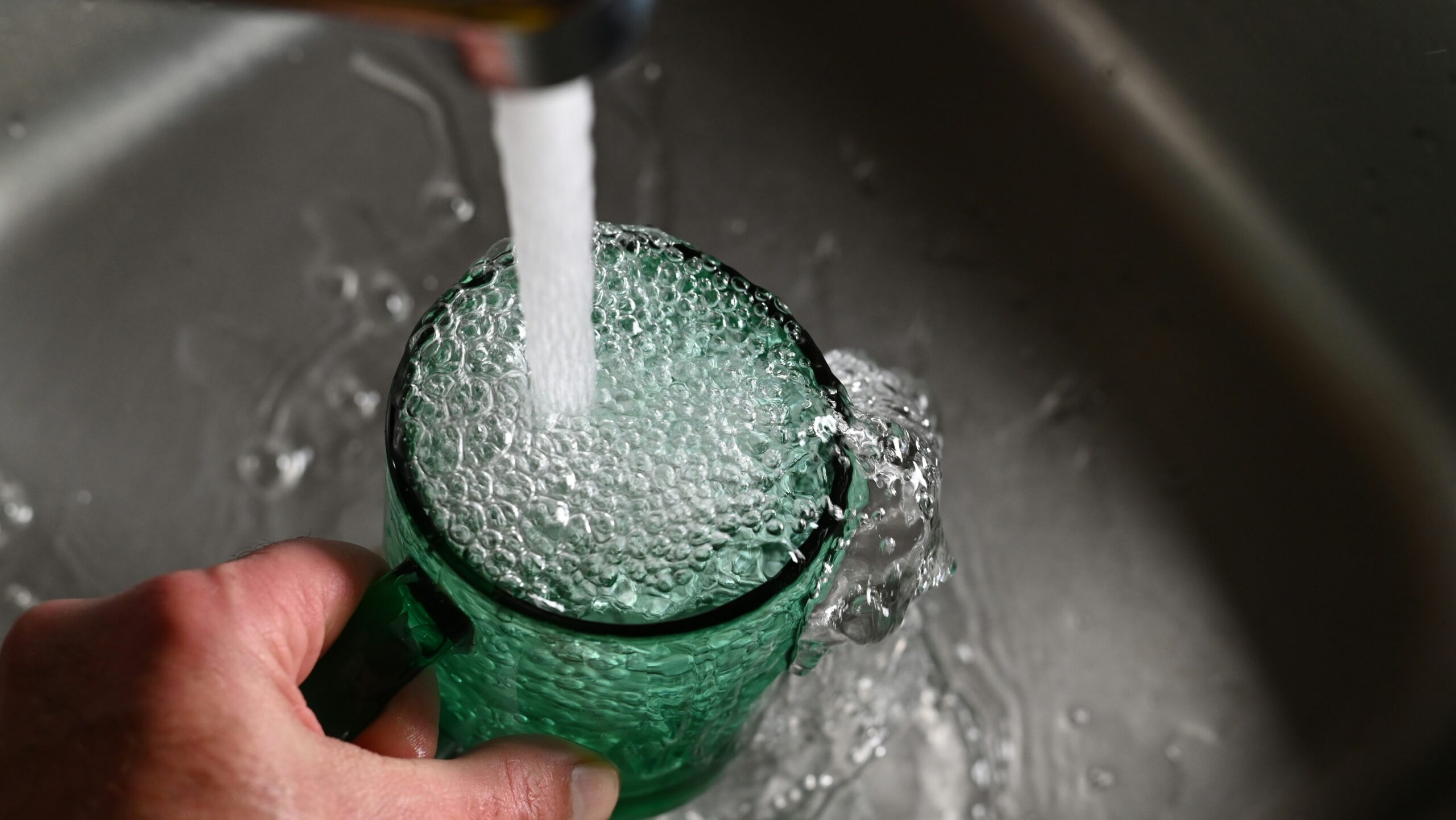
If only one faucet in your house has low water pressure — especially after you shut the water off and turned it back on — it can be confusing and frustrating. The good news is that when the problem affects just one fixture, the cause is usually local and easy to fix.
In most cases, this is not a whole-house plumbing issue.
Quick Answer:
When only one faucet has low water pressure after a shutoff, the most common cause is debris or air trapped in the faucet aerator or supply line. Cleaning the aerator or running the faucet for a few minutes usually restores normal pressure.
Why This Happens
After a water shutoff, air and sediment move through your plumbing system when water is restored. That debris often ends up caught at the smallest restriction point — the faucet aerator or internal cartridge.
This typically affects:
- One sink
- One shower
- One side (hot or cold) of a faucet
This problem commonly appears after turning your water back on after shutting it off, especially if you’ve already noticed faucets spitting air after water restoration.
Step-by-Step: How to Fix Low Pressure at One Faucet
Step 1: Confirm It’s Only One Faucet
Check nearby fixtures:
- Other sinks
- Showers
- Toilets
If everything else has normal pressure, the issue is isolated to that fixture.
Step 2: Remove and Clean the Aerator
Most faucets have a small aerator screwed onto the tip.
- Unscrew it by hand or with pliers (use a cloth to avoid scratches)
- Rinse out sediment or debris
- Reinstall and test the faucet
This is the most common fix.
Step 3: Run the Faucet Fully Open
With the aerator removed:
- Turn the faucet on fully for 30–60 seconds
- Let water flush the line
This helps clear air or remaining debris, especially if you recently experienced low water pressure after turning the water back on.
Step 4: Check Hot and Cold Separately
If the faucet has two handles:
- Test hot only
- Test cold only
If only one side has low pressure, the issue may be inside the faucet cartridge or valve on that side.
Step 5: Inspect the Shutoff Valve Under the Sink
Under the sink:
- Make sure the supply valve is fully open
- Turn it counterclockwise until it stops
Sometimes the valve was only partially reopened after the shutoff.
What Not to Do
- Don’t assume there’s a pipe blockage in the wall
- Don’t increase house pressure to fix one faucet
- Don’t replace the entire fixture immediately
- Don’t ignore debris — it can damage cartridges over time
When only one faucet is affected, the fix is almost always local.
When to Call a Professional
Call a plumber if:
- Cleaning the aerator doesn’t help
- Pressure remains low on both hot and cold
- The faucet leaks after cleaning
- Multiple fixtures slowly develop low pressure
If more than one fixture becomes affected, the issue may relate to problems after restoring water to the house, not the faucet itself.
Safety Notes
- Restore water slowly at the main valve
- Keep one faucet open during restoration
- Check all fixtures after water is turned back on
- Avoid running appliances until pressure stabilizes
These steps reduce sediment movement and pressure shocks.
Common Homeowner Questions
Why did this only affect one faucet?
Sediment and air usually get trapped at the smallest openings, which are unique to each fixture.
Will this fix itself over time?
Sometimes, but cleaning the aerator speeds things up and prevents damage.
Is low pressure a sign of pipe damage?
Not when only one faucet is affected — that’s almost always a fixture-level issue.