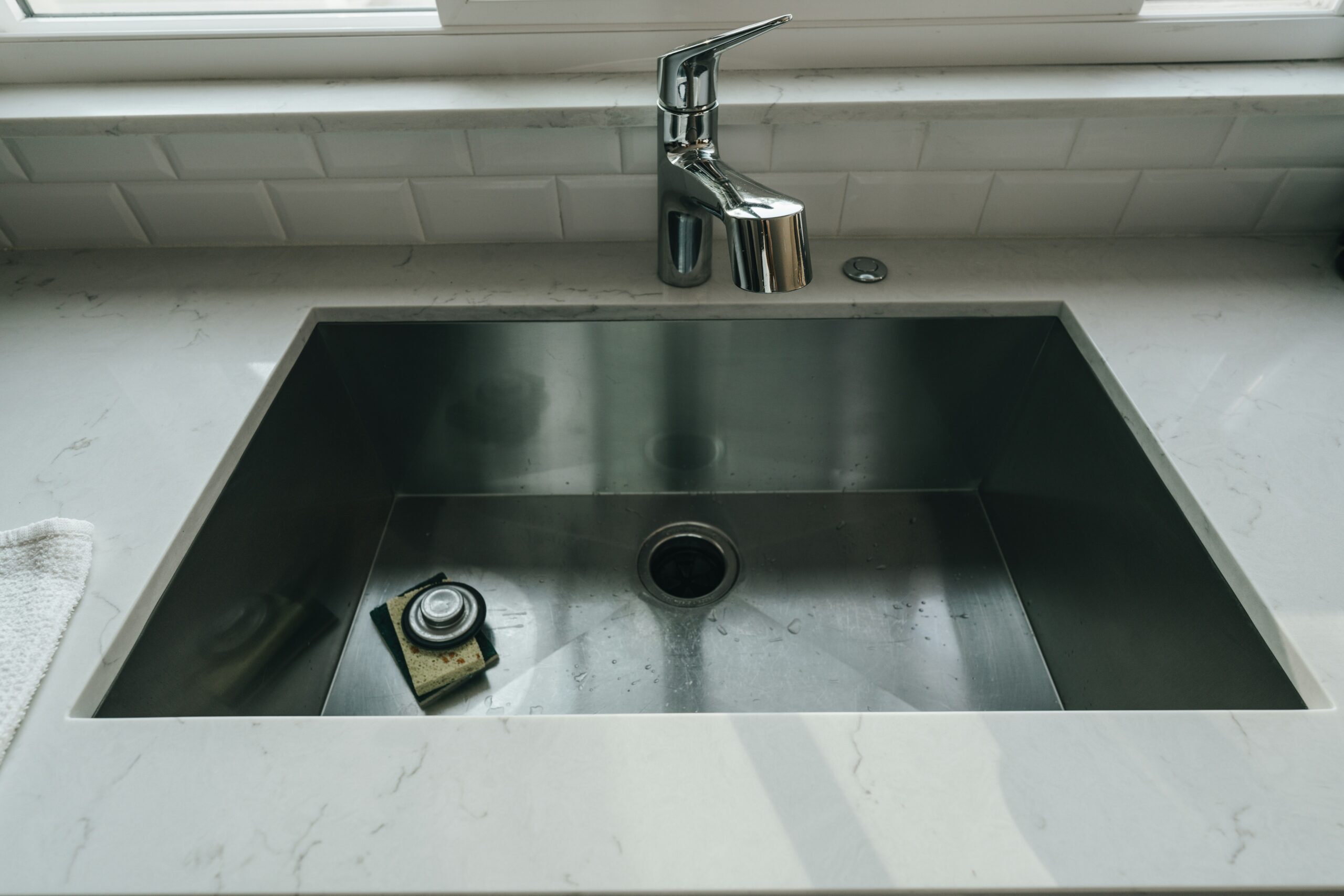
Quick Answer:
A faucet that continues to drip for minutes after you shut it off is usually a sign of trapped water, worn internal parts, or backpressure from connected appliances or the drain/vent system. Start simple: time the drip, check the aerator and spout, and run targeted diagnostics for kitchen sink faucet drips for minutes after shutoff, checking connected appliances, venting behavior, and fixture-specific components. Many problems are repairable without a full replacement.
Why This Happens
- Worn cartridge, valve seat, or O-rings allow slow leakage past the closed mechanism.
- Trapped water in the spout or aerator drips out until it clears; this can look like a continuing leak even after the handle is off.
- Backpressure or cross-connection from appliances (dishwasher or disposal) can push water back through the faucet.
- Poor drain venting or a failing air admittance valve can create pressure that forces water to move unexpectedly.
- Hot-water delivery delays and thermal expansion can change pressure briefly after shutoff; if your hot water takes a long time to reach the sink it can affect behavior elsewhere (see Kitchen Sink Takes Over a Minute to Get Hot Water).
- Debris or mineral buildup can prevent a cartridge from seating fully.
- If the drip only appears when an appliance runs, that points to the appliance or its check valve — relate this to Kitchen Sink Leaks Only When Dishwasher Is On.
Step-by-Step What to Do
1. Observe and record the behavior
- Turn the faucet on and off several times and time how long the drip continues.
- Note whether the drip is from the spout, handle area, or beneath the sink.
- Check whether the drip follows a particular action (running the dishwasher, using disposal, or hot/cold only).
2. Run targeted diagnostics
Run targeted diagnostics for kitchen sink faucet drips for minutes after shutoff, checking connected appliances, venting behavior, and fixture-specific components.
- Turn off dishwasher/disposal and see if drip pattern changes.
- Shut off the water supply to the faucet under the sink and see if the drip stops — if it does, the faucet is the source; if not, it’s likely piping or appliances.
3. Check the aerator and spout
- Unscrew the aerator and inspect for debris or sediment; flush the spout briefly with the aerator removed.
- Clean mineral buildup with vinegar (soak removable parts) or a soft brush.
4. Inspect valves, cartridge, and O-rings
- Turn off the water at the shutoff valves, remove the handle, and inspect the cartridge or valve stem for wear or debris.
- Replace worn O-rings and cartridges as needed — these are common and inexpensive repairs.
5. Check connected appliances and check valves
- Look at dishwasher inlet hoses and check valves; a failed check valve can let water push back into the sink line.
- If your garbage disposal is installed, verify its connections and run it briefly to confirm it isn’t causing backflow.
6. Verify venting and drain behavior
- Slow draining or gurgling suggests a vent or partial clog. A blocked vent can change pressure and affect faucet behavior.
- Listen for gurgles at other fixtures when you run the sink; that helps isolate vent issues.
7. Test after each change
- After cleaning the aerator, replacing a cartridge, or fixing a check valve, retest the faucet several times and time any residual drip.
- Document what change stopped or reduced the drip to understand the real cause.
What Not to Do
Avoid forcing fittings, using caustic drain chemicals, or ignoring early warning signs tied to kitchen sink faucet drips for minutes after shutoff. Also avoid these mistakes:
- Do not overtighten fittings or parts — that can crack components and cause larger leaks.
- Do not pour strong drain cleaners into a sink where you will be disassembling plumbing soon; chemicals can damage seals and are hazardous to handle.
- Do not ignore small, persistent drips — they often precede bigger failures and water damage under the sink or in cabinets.
When to Call a Professional
- If the drip persists after replacing a cartridge or tightening fittings.
- If you find leaks inside walls, repeated backing up of drains, or unexplained pressure issues — these can indicate hidden pipe or vent failures.
- If the problem ties to complex venting, inaccessible piping, or if appliances are involved and you can’t isolate the source.
- If you’re uncomfortable shutting off water, working with plumbing tools, or detecting gas/electrical hazards near the work area.
Safety Notes
- Turn off the water supply before disassembling faucet parts.
- Disconnect electrical power to garbage disposals before working nearby.
- Be cautious with hot water to avoid scalds; run cold water first when testing.
- Use appropriate gloves and eye protection when cleaning mineral buildup or handling small parts.
- Avoid mixing chemicals and never use caustic drain cleaners if you plan to open the trap or work on seals.
Common Homeowner Questions
- Why does the faucet drip only a little after I shut it off? Small residual drips are often trapped water in the spout or a slightly worn valve seat that lets a tiny amount through until pressure equalizes.
- Can mineral buildup cause a slow drip? Yes. Mineral deposits can prevent a cartridge or seat from sealing fully; cleaning or replacing parts usually fixes it.
- Will replacing the cartridge stop the drip? Often yes for single-handle and cartridge-style faucets; if the drip continues, check supply lines, check valves, and venting.
For more related articles, see the nan hub.