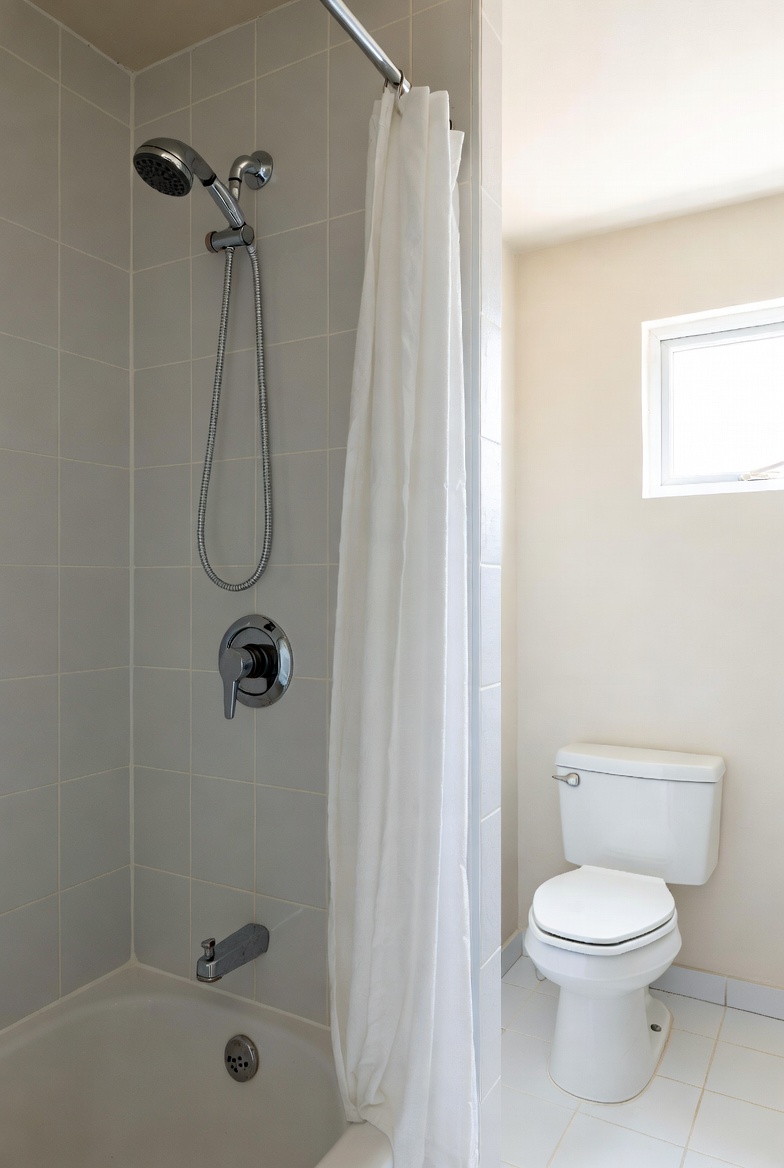
After a city outage, identify the supplier restoration notice and actual toilet mechanism before screen service. A random refill can involve tank loss; a restricted inlet by itself does not identify why tank water left.
Address an active problem first
Stop affected use and obtain prompt help for external leakage, a cracked/unstable fixture, a high or rising bowl, sewage return or uncontrolled filling. Control incoming water only with an identified owner-operated valve reached safely from dry access, without force. Keep away from wet electrical equipment and damaged ceilings. Do not flush to investigate a high bowl or enter water to reach controls. Supply closure does not stop every wastewater source; preserve required shared/fire services.
For a new, unexplained water-quality change: do not deliberately taste the water. Use bottled water or another known-safe supply for drinking, food preparation, teeth brushing and ice while you contact the supplier. Follow the actual local notice for other uses. Boiling does not make chemically contaminated water safe, and clear appearance or a fading odor does not certify safety.
Keep the original observation
- Source notice/work and first normal refill, actual later event and particles already observed.
- Installed fill-valve serviceability, actual isolation and external/overflow condition.
Identify the actual control and water path
Identify an ordinary gravity cistern versus a pressure-assisted or powered/direct-feed toilet. Only remove a normal removable ceramic lid by its safe handling method and place it securely on a protected stable surface. In a conventional gravity tank, its float responds to tank level, not bowl level. An inlet adds water; a falling tank needs an actual loss path. Overflow, outlet-seal leakage, refill-hose siphoning and external escape require separate evidence.
A nonremovable screen is not permission for an open purge
Use the actual maker’s covered/captured cleaning procedure if it applies. The named American Standard method is an example, not every model’s cap or screen instruction. Prepare a real controlled discharge and receiver; turn water off again before wiping, later access or refit as required. A drained tank and slightly open stop alone do not establish capture or safety.
Do not infer the cause from return of service
A screen may be integral, retained or unrelated to the assumed fault. Keep no-force/model-removability limits, complete reassembly before reopening and supplier water-use guidance. Do not call the event nonurgent by default if there is active leakage, failed isolation, abnormal pressure or a high bowl. A day or two without recurrence is useful observation, not universal clearance.
Safe service and completion
Use the actual owner-service instructions and compatible parts. For retained inlet access or disconnection, independently isolate the relevant feeds/energy, release and verify pressure at that segment; draining a gravity tank or opening a remote tap is not proof every hose/vessel is safe. Keep water off before opening and refit. Use each joint’s specified torque, actual waterline/critical-level references and required tube support. Do not force controls, pry an integral screen or substitute an inch/chain-slack rule for the model. Existing chemicals need label/material assessment; a rinse is not clearance and cleaners must not be mixed.
After actual correction, safe source/receiver conditions and complete assembly, restore the identified control by its own design and observe connections, refill and shutoff. Stop for leaks or abnormal behavior. An uneventful short interval is evidence, not certification of every intermittent loss. Do not wait for days of logging, reproduce a failure or replace successive guessed parts before contacting the installer or plumber.
Related situations
- Phantom flush after winterization
- Toilet refills only at night
- Running-toilet operating patterns and next steps
- Browse phantom-flush and random-refill situations