Quick Answer:
If your toilet or fixture starts overflowing after a recent water pressure change, first observe rather than tinker. A slower or partial flush that stops the overflow points to flow-related exposure of a weakness (partial clog, poor venting, or a failing trap seal), not necessarily a permanent trap failure. Check recent pressure changes, test whether reducing flush speed stops the problem, and watch for the same issue at other fixtures.
Why This Happens
- Sudden changes in supply pressure can alter how quickly a tank fills or how forcefully water is delivered during a flush. That can expose weak seals, partial blockages, or venting problems that previously stayed hidden.
- A pressure change can increase flush velocity and create stronger suction or turbulence in the trap, which can make water breach the trap weir or reveal a partial obstruction downstream.
- If the problem appeared after nearby work or a system adjustment, the change itself often reveals an existing weakness rather than creating an entirely new defect.
Step-by-Step What to Do
1. Note recent pressure events
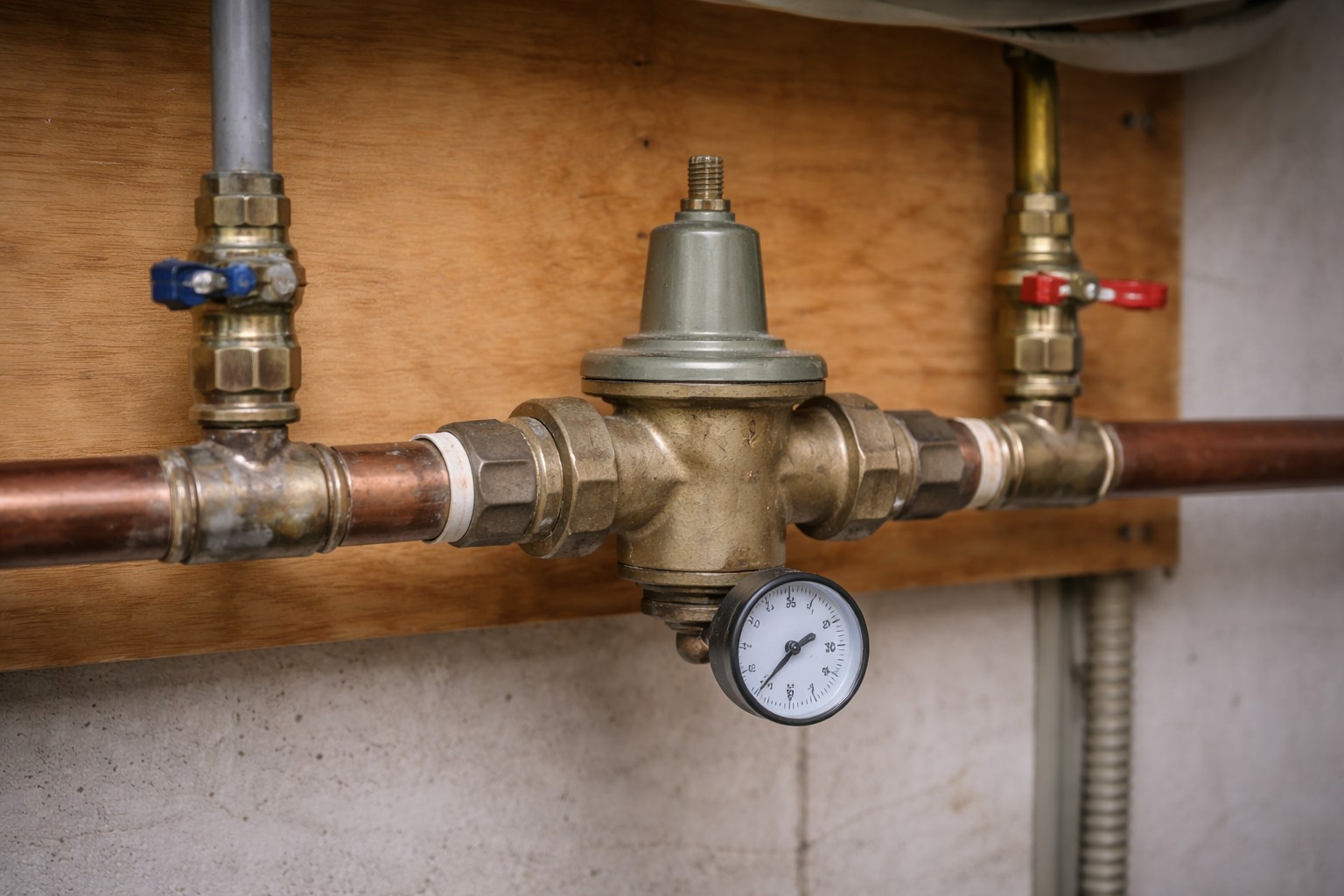
- Ask neighbors or your water utility if there was recent maintenance, a pressure regulator adjustment, or a surge. Municipal work and PRV (pressure-reducing valve) changes are common triggers.
- Record when the overflow started and whether it coincided with any known pressure changes.
2. Observe and compare
- Try a gentler flush: if the toilet has a partial/dual-flush option, use that. If you don’t, press the handle lightly to reduce the flush volume and see if overflow still occurs.
- Note whether other fixtures (sinks, showers, floor drains) show unusual behavior during the same period.
3. Test whether slower flow prevents overflow
- Slow-fill testing can be helpful: pour a measured, steady stream of water into the bowl to find the level at which it stays safe. If slower input prevents overflow, the issue is flow-related rather than an immediate trap rupture.
- Document what level or speed causes overflow; that information helps a plumber diagnose whether the problem is a clog, vent, or fixture defect.
4. Look for other clues
- Smells, gurgling in other drains, or repeated overflow after heavy use suggest a partial clog or main line issue.
- Cracks, loose seals around the base, or a warped bowl can let water escape independently of pressure, so inspect the visible parts carefully.
5. Limit use and contain water until resolved
- Use alternate facilities if possible. Put a shallow bucket or towels around the base to catch minor overflow and prevent water damage to floors.
- If overflow becomes severe, shut off the toilet’s water at the shutoff valve to stop further flow.
For related situations, check the advice for Overflow after remodel and read about similar patterns where the Toilet overflows intermittently.
What Not to Do
- Don’t immediately adjust pressure equipment (PRVs, pressure switches, or boiler controls) without a clear diagnosis — changes can make the problem worse or hide the underlying cause.
- Don’t rely on strong chemical drain cleaners for recurring overflow; they can damage pipes and won’t fix venting or pressure-related issues.
- Don’t ignore repeated overflows. Small spills lead to mold and structural damage if left unchecked.
- Don’t attempt major repairs to the sewer or main water pressure system unless you are qualified — a plumber is appropriate for those diagnostics and corrections.
When to Call a Professional
- Overflow continues even when flushing more slowly or stopping the use of the fixture.
- Multiple drains are affected, you smell sewer gas, or water is backing up from other locations—these are signs of a sewer or venting problem.
- You observe possible fixture damage (cracks, loose wax ring) or you are unsure whether pressure equipment needs adjustment. A licensed plumber can test supply pressure, inspect vents, and camera the drain if needed.
Safety Notes
- Avoid contact with overflow water—use gloves and clean up promptly to prevent bacteria and staining.
- If you shut off the water, know where your main shutoff and the fixture shutoff valves are before an emergency occurs.
- Do not mix chemical cleaners with each other; if you’ve recently used chemicals, ventilate the area and avoid plumbing work until the chemicals are cleared or a pro advises next steps.
Common Homeowner Questions
- Can a pressure change really make my toilet overflow?
Yes. A sudden pressure change can increase flush force or expose a partial blockage or venting problem that leads to overflow. - How long should I watch before calling someone?
If a slower flush prevents overflow, monitor for 24–48 hours. Call a plumber sooner if the problem repeats, other drains act up, or you detect sewer odors. - Is adjusting my home pressure regulator a good DIY fix?
No. Don’t adjust pressure equipment without diagnosis. A plumber can test and set pressures safely and check for related plumbing issues.
For more related articles, see the nan hub.