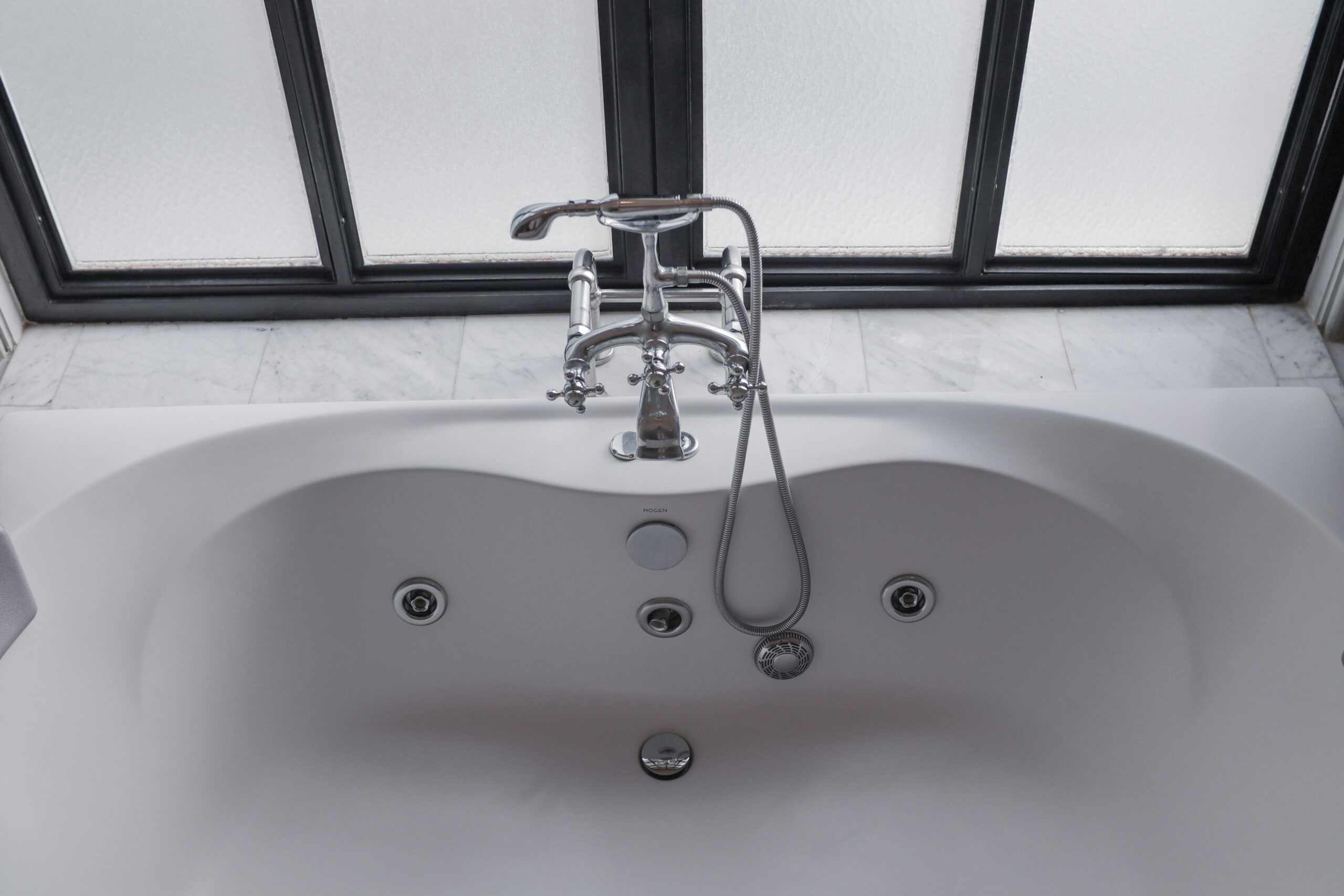
An upstairs shower can have different delivery because of elevation, its actual route, outlet and operating demand. Neither a strong downstairs sink nor a gauge on a lower outdoor tap directly measures the upstairs shower’s pressure.
Keep temperature and access safe
Stop bathing if temperature becomes unpredictable, scalding, or cold supply is lost. Keep others out of the spray and have the cause assessed; do not recreate an unstable event under the shower or turn full hot to diagnose weak flow. Do not use a hand or body part as the temperature instrument. Any suitable check is attended, off-body, with a stable safe temperature, an accepting drain and controlled capture; stop for temperature change, leakage or rising water.
For an uncontrolled leak, use only an identified safely accessible supply stop under its actual method; do not force it. Keep away from wet, sagging or unstable finishes. For suspected fuel gas, leave immediately, avoid switches, valves and phones in the affected area, and call emergency help from safety. Keep away from wet electrical equipment; never enter water to reach a breaker or touch wet controls. Use appropriate qualified help when access or isolation is unsafe.
Match height, outlet and draw conditions
- Which floor and fixture changed, original setting and whether temperature was stable.
- Actual elevations/routes if documented, model/rated outlet and other symptoms already observed.
- Gauge point, time and demand for any existing reading; recent work or filters.
Choose the next step from actual evidence
- A timed container measures flow; an appropriate gauge measures pressure at its own point. Compare suitable matched observations rather than run an upstairs shower while a helper adds arbitrary downstairs loads. Do not disconnect a sink supply just to fit a gauge.
- Height affects static pressure, while actual flowing losses and available pressure also matter. Do not use a universal “elevation cannot cause a trickle” rule or assume a faulty upper-floor regulator. Identify the actual connected zone.
- Check intended accessible head care and actual known service records. Do not open unknown branch valves or remove/bypass a filter by timing alone. Persistent weakness, unsafe temperature or hidden/uncertain service needs appropriate assessment.
Separate spray, flow and pressure
Spray feel is not a pressure reading. Volume collected over time measures delivered flow; a pressure gauge measures pressure at its own connection, with the location, time and draw conditions recorded. A different sink, bare shower arm or lower-floor hose tap has different resistance and may have a different route. A stronger result can help direct assessment but does not uniquely locate a fault or prove that a normally rated head is clogged. Use the actual outlet rating, installed valve and matched conditions before selecting parts or a regulator adjustment.
Keep service specific to the installed model
Ordinary owner-approved nozzle or removable-screen cleaning can be appropriate with water off, secure footing and the actual finish-safe cleaner and retention method. Identify a screen, seal and flow limiter correctly; do not pry out, drill or discard a limiter to make the spray stronger. Do not twist a concealed shower arm, force a stuck spout or use drain cleaner on a supply restriction. Fully refit serviced parts, required seals and protective components before the suitable leak/operation check.
Before removing a cartridge, spool, retaining part or pressure housing, isolate the actual supplied segment, control retained hot water, relieve its pressure by the approved path and verify shutoff. A nearby tap on a different branch may not release that segment. Some manufacturers permit a controlled cartridge-out flush or a properly retained untrimmed test; that requires the actual procedure, safe temperature, effective capture and control. Re-isolate and verify release before touching or refitting parts afterward. A towel, short time or comfort with tools is not a substitute. Preserve the correct retainer, lubricant, orientation, temperature-limit and commissioning requirements; do not open finished walls or change a PRV as a generic next step.
Will replacing the upstairs cartridge solve a floor-specific complaint?
It may be appropriate only if the installed valve and fault evidence support it. Floor location alone does not identify that component.
Related situations
- Shower pressure weak after installing filter
- Low pressure after replacing showerhead
- Shower & Bathtub Water Delivery
Sources and equipment limits
- EPA WaterSense at Work 3.4: showerheads and diverters
- Moen: no cold or no hot at a tub/shower unit
- Portland Water: pressure and flow troubleshooting
- Moen INS282A: actual 3320/3330 controlled flushing sequence
- CDC: electrical hazards near water
- Con Edison: suspected gas leaks
- Pentair FPS housing example: service and full secured reassembly
These primary sources explain the stated principles or named equipment examples. They do not identify your installed system. Use the actual model instructions and local requirements for service. Independent professional review and field testing have not been obtained.