Quick Answer:
If the disposal runs but the sink still floods, stop using the disposal immediately. If the basin fills rapidly, treat it like a near-total blockage. Check the P‑trap, then the drain branch downstream; if water won’t move with the trap removed, the clog is past your reach and needs professional clearing. For related issues, see Disposal works but pipe clogged downstream and Sink backs up when disposal restarts.
Why This Happens
Garbage disposals only grind material small enough to pass the drain. Grease, coffee grounds, fibrous vegetable peelings, and non-food items can build up where the waste pipe narrows or in the branch line after the trap. If you hear the motor run while the sink fills, the disposal may be working but the pipe downstream is blocked. Rapid filling suggests a severe restriction that prevents water from leaving the basin fast enough.
Step-by-Step What to Do
1. Stop running the disposal and cut power
- Do not keep restarting the unit. Turn the disposal off and unplug it or switch the breaker off at the panel if you can’t reach the plug.
2. Remove standing water safely
- Bail or scoop water into a bucket to reduce overflow. Wear gloves and eye protection. Clearing some water makes the next steps easier and safer.
3. Treat rapid filling as a near-total blockage
- If the basin fills rapidly, treat it like a near-total blockage and avoid forcing more water into the sink while troubleshooting.
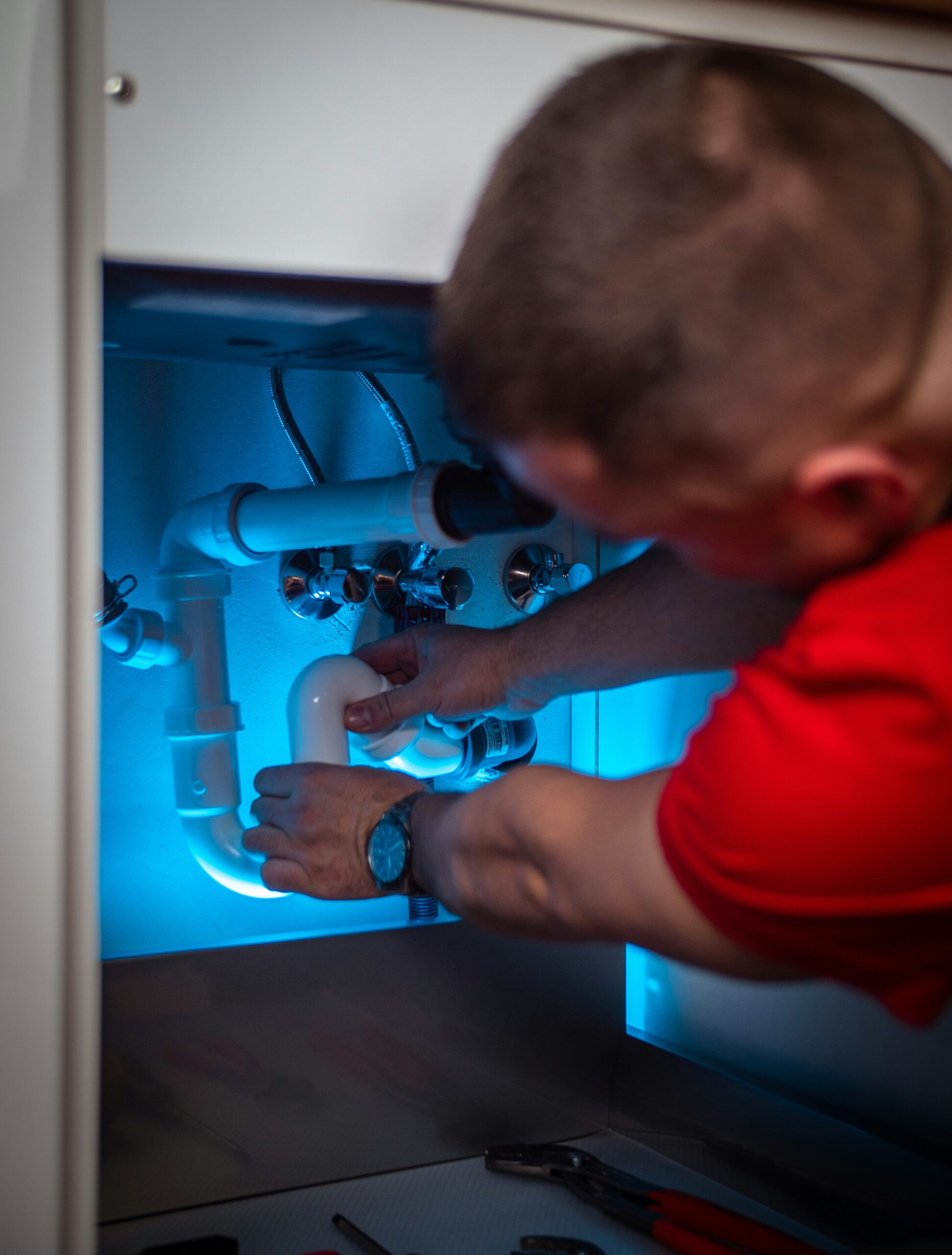
4. Check the P‑trap
- Place a bucket under the trap. Remove the slip nuts and clear the trap of debris. Many clogs are here and are easy to remove.
- Once cleaned, replace the trap and test with a small amount of water to see if flow is restored.
5. Inspect the branch line
- If the trap is clear but the sink still won’t drain, remove the trap again and look into the horizontal branch. Use a flashlight and a hand auger if you are comfortable. Check for visible blockages.
- Check downstream by running a little water into the open tailpiece. If water won’t move with the trap removed, the clog is downstream and needs professional clearing.
6. If basic clearing fails, stop and call
- A clog beyond the trap often requires mechanical or hydro-jetting equipment. If you can’t clear it from the branch, call a licensed plumber rather than continuing to run the disposal or pouring chemicals.
What Not to Do
- Don’t keep restarting the disposal during a flood—electrical + water risk; if flooding continues, shut it down and call a plumber.
- Don’t pour solvent drain cleaners into a flooded sink—heat and chemical reactions can be hazardous and they rarely fix major downstream clogs.
- Don’t stick your hand or fingers into the disposal or into the drain opening. Even when the unit appears off, components can still be dangerous.
When to Call a Professional
- Water won’t move with the trap removed—this indicates the clog is in the branch or main line and needs professional clearing.
- The sink fills rapidly or multiple fixtures are backing up—possible main sewer or deeper blockage.
- Persistent sewage odor, slow recovery after clearing, or repeated clogs—these suggest a problem that requires a plumber’s tools and diagnosis.
Safety Notes
- Turn power to the disposal off at the breaker before working near the unit.
- Wear gloves and eye protection when removing debris from the trap or drain.
- Avoid chemical cleaners in a flood situation—mixing chemicals or adding them to standing water can produce harmful fumes or reactions.
Common Homeowner Questions
- Can I run the disposal to try to push the clog through?
No — running it during a flood risks electrical shock and usually won’t clear a downstream clog. - Will a plumber need to replace pipes?
Often not; many downstream clogs are cleared with a snake or hydro-jet. Replacement is only needed if the pipe is damaged or collapsed. - Could this be a sewer problem?
If more than one drain backs up or you smell sewage, it may be a main sewer issue and you should call a plumber promptly.
For more related articles, see the Disposal Works but Drain Still Backs Up hub.