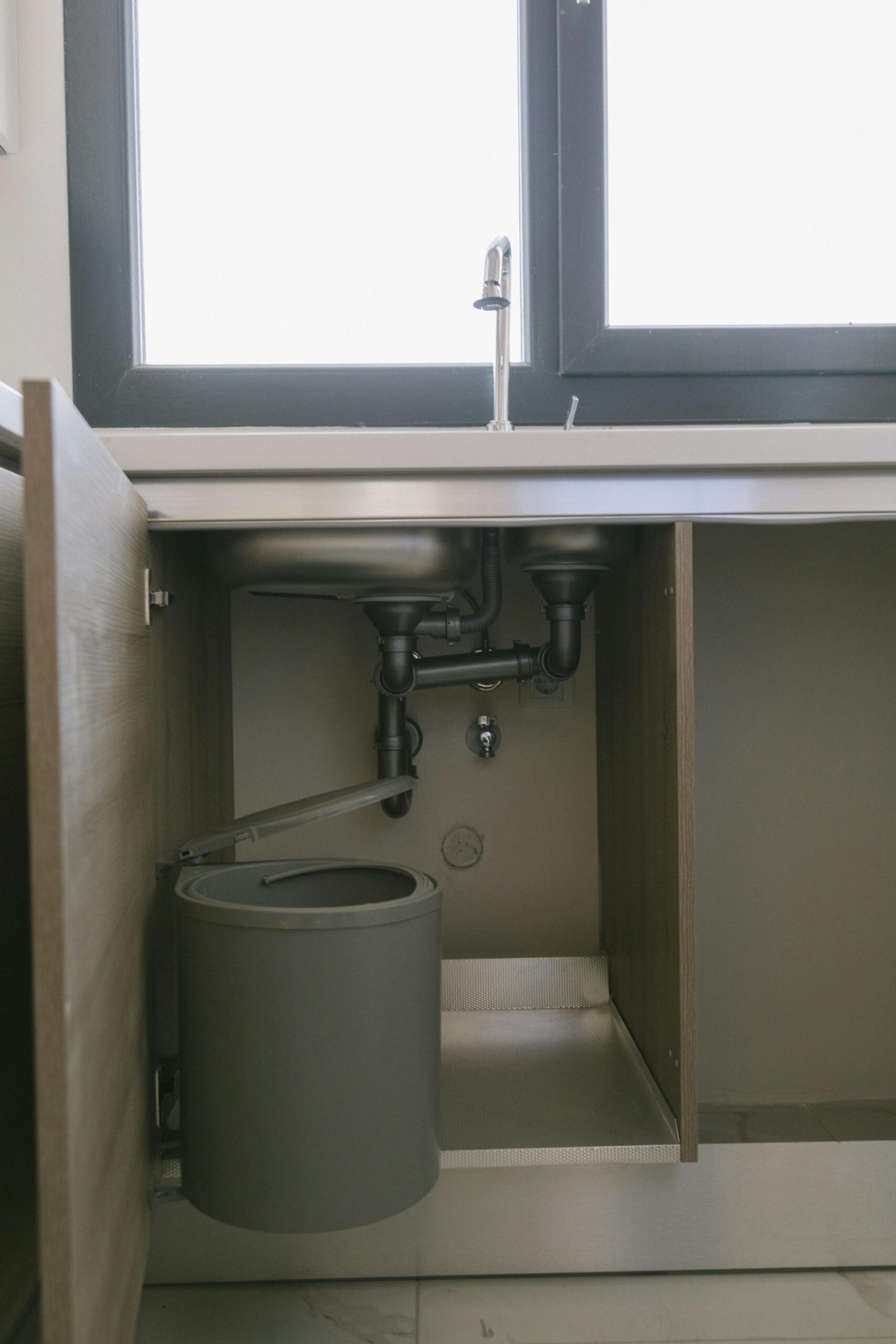
Quick Answer:
If your kitchen smells like a trash can near the sink, start with simple cleaning: remove and clean the drain opening, stopper or strainer, and the disposal baffle. If your sink has an overflow channel, flush it. Finish by running the cold water for a full minute to clear the branch line and check whether the odor is coming from inside the cabinet under the sink.
Why This Happens
Food, grease and soap scum can collect on parts you don’t see every day: the stopper, the strainer, the rubber baffle in a disposal and inside the drain opening. Over time that organic material breaks down and produces a sour, garbage-like smell. Changes you make to cleaning products or detergents can encourage different microbes to grow; note issues like Bio-buildup after switching detergent when you investigate recent changes.
Step-by-Step What to Do
1. Clear and clean the drain opening
Remove any visible debris from the drain top. Use a paper towel or disposable gloves to pull out trapped food particles. Wipe the rim and the exposed metal or plastic with a small amount of mild dish soap and warm water, then rinse.
2. Remove and clean the stopper or strainer
Take out the sink stopper or strainer. Clean around and under it—hair, film and food bits often hide on the underside. Scrub with an old toothbrush and warm, soapy water, then rinse and replace.
3. Clean the disposal baffle (if you have a disposal)
With the disposal turned off and the power disconnected at the switch, pull out the rubber baffle and wash it. Use a brush and soapy water to remove residue. Avoid sticking hands into the disposal while it’s powered. You can toss a few ice cubes and coarse salt into the disposal later and run cold water to help scrape the grinding chamber (follow the manufacturer’s recommendations).
4. Flush the overflow channel (if present)
If your sink has a rim overflow, it can hold stagnant water and food film. Pour warm, soapy water into the overflow opening and follow with a strong flush of water. If you’ve smelled persistent air coming from that area before, check resources on Odor from overflow hole for more details.
5. Run water for a full minute to clear the branch line
After cleaning, run a steady stream of cold water at full flow for at least one minute. This helps push loosened debris down the branch line and recharges the P-trap with fresh water. While water is running, sniff around under the sink and inside the cabinet to verify the smell is not coming from trapped debris or a slow leak.
6. Quick cabinet check
Open the cabinet and inspect for leaks, dampness or a hidden trash bag or compost container. Wipe down any wet surfaces and let the area dry. Persistent smells may come from a forgotten item or a damp sponge, not the pipes.
What Not to Do
- Don’t keep adding stronger cleaners into a smelly drain—mixing products can create dangerous fumes.
- If the odor is persistent and smells sewer-like (not just rotten food), don’t try to diagnose complex sewer problems yourself; a professional inspection is safer.
- Don’t stick your hand into the disposal or plumbing while it could be powered or while you can’t see what you’re touching.
When to Call a Professional
- If the smell remains after thorough cleaning and flushing, especially if it’s sewer-like.
- If you find leaks, damaged pipe fittings, or an overflowing or blocked vent line.
- If you’re unsure where the smell is coming from or uncomfortable working on the disposal or plumbing yourself.
Safety Notes
- Turn the disposal off at the wall switch and unplug or switch off the circuit before putting hands or tools inside.
- Wear disposable gloves and eye protection when handling drain debris or chemical cleaners.
- Use only one cleaning product at a time and rinse thoroughly before using a different product to avoid hazardous reactions.
Common Homeowner Questions
- Why does the smell come back after I clean? — Small amounts of biofilm can remain deeper in the drain or branch line; thorough scrubbing and a full-minute flush usually solve it. If it returns, professional cleaning may be needed.
- Can vinegar and baking soda fix the smell? — They can help remove light odors and freshen briefly, but they won’t replace physical cleaning of trapped food and grease.
- Is a sewer smell the same as rotten-finish smell? — No. Sewer smells often indicate a dry or failed P-trap or a vent/sewer issue and should be checked by a professional.
For more related articles, see the Food Waste Odors & Bio-Buildup hub.