Quick Answer:
If your sink is draining slowly after a faucet install, first check the drain opening for visible debris from the installation. Clear any particles, then run water and test the drain. If that doesn’t fix it, follow the step-by-step checks below before using chemical cleaners or calling a plumber.
Why This Happens
- Small pieces of plumber’s putty, tape, solder, or packaging can fall into the drain during installation and block flow.
- Air trapped in the line or an improperly seated sink strainer can slow drainage.
- Sometimes the issue is elsewhere in the house plumbing — for example, the bathroom may be fine while the kitchen is slow; see Kitchen sink slow but bathroom fine for related causes to consider.
- If the sink drains slowly at first and then suddenly backs up when the flow increases, the blockage is likely deeper in the trap or line, which can lead to the situation described by Kitchen sink drains slow then backs up.
Step-by-Step What to Do
Step 1 — Inspect the drain opening
Look directly into the sink drain opening. Use a flashlight and remove the sink strainer or pop-up stopper if needed. This is the most important immediate check: inspect the drain opening after faucet install to find any loose debris you can remove by hand or with needle-nose pliers.
Step 2 — Flush with hot water
Run the hottest tap water you safely can for a minute to help move any small, soft debris down the line. If the flow improves, the issue may have been minor residue.
Step 3 — Clear the stopper and strainer
Remove and clean the stopper or strainer. Hair, plumber’s putty, and leftover sealing material often cling to these parts.
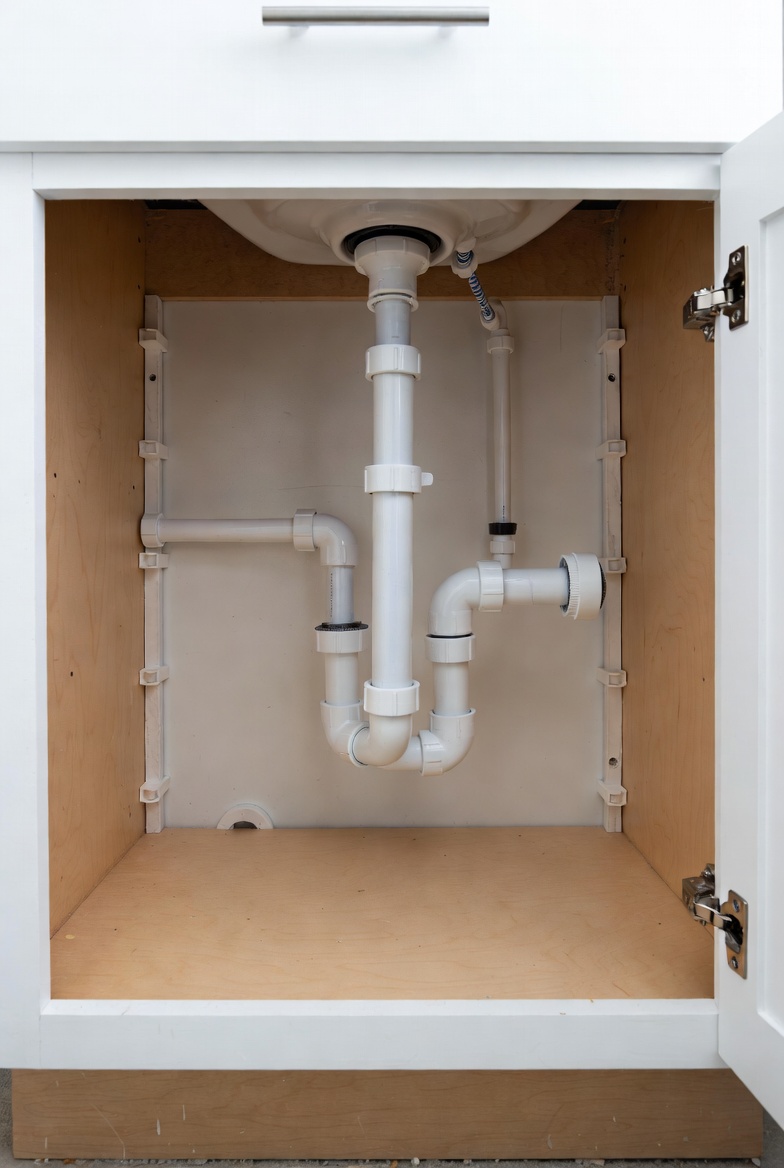
Step 4 — Check the P-trap
Place a bucket under the P-trap, then loosen the slip nuts and remove the trap. Inspect and clear any debris, then reassemble, making sure seals are seated and nuts are snug but not over-tightened.
Step 5 — Use a plunger or hand auger if needed
- Try a cup plunger over the sink (cover the other basin if a double sink) to dislodge clogs.
- If plunging fails, a small hand auger (drain snake) can reach obstructions in the trap or just beyond it. Feed it gently and retrieve debris.
Step 6 — Re-test and observe
After each action, run water to test. If clearing the visible debris and trap doesn’t restore normal flow, suspect a deeper blockage or a venting issue.
What Not to Do
- Do not leave debris in the drain opening. This can lead to recurring slow drainage and odor issues.
- Do not pour strong chemical drain cleaners into a recently worked-on drain — they can damage seals and harm you if a pipe is open.
- Do not force tools or metal objects deep into the drain where you can’t see; you can damage the drain or push obstructions further.
When to Call a Professional
- Water backs up into other fixtures or comes up in large amounts when you run the sink.
- You cannot locate or remove the obstruction after the P-trap and basic snaking.
- Foul odors persist after cleaning or you suspect a damaged pipe or venting problem.
- There are leaks you can’t fix, or you’re uncomfortable disassembling plumbing parts.
Safety Notes
- Wear gloves and eye protection when removing debris or working under the sink.
- Turn off local shutoff valves before replacing parts, and place a bucket under the trap to catch water.
- Avoid mixing cleaners; never combine bleach and ammonia-based products.
- If you use a drain snake, feed it slowly and withdraw it while turning to avoid scratching pipes.
Common Homeowner Questions
- Q: How long should a drain remain slow before I worry?
A: If it’s still slow after clearing visible debris and the trap, call a plumber within a day or two. - Q: Can I use a chemical drain cleaner after an installation?
A: It’s best to avoid chemical cleaners after recent work; mechanical cleaning is safer. - Q: Will a new faucet cause pipe damage that slows drainage?
A: Unlikely — most slow drains after a faucet swap are caused by debris or a displaced stopper, not pipe damage.
For more related articles, see the Slow Bathroom Sink Drain Behavior hub.
For more related articles, see the Slow Kitchen Sink Drain & Grease Accumulation hub.