Check for an emergency first
For strong, widespread or unexplained gas-like fumes, exposure symptoms, or suspected high sewer-gas concentrations in an enclosed space, leave the building immediately and call the fire department or emergency services from outside. Avoid flames, switches and other ignition sources; do not remain to ventilate, sniff drains or investigate. Smell intensity does not measure the concentration. A faint localized drain odor without those warning signs calls for a different plumbing investigation; it does not automatically establish a fuel-gas leak.
If fuel gas is suspected, leave the building or affected area immediately. Do not operate valves, switches, plugs, appliances or phones there. Call the gas emergency service from a safe location well away, and wait for responders’ clearance.
A winter odor at a bathroom sink needs the original timing and fixture history, after the emergency guidance above. Do not test drafts with a candle or lighter. Closed windows, infrequent use, leakage or vent conditions can be relevant, but season alone does not prove a dry trap or frozen roof vent.
Useful details to record
- Which location was already affected and whether it followed disuse, freezing weather or recent work.
- Whether the odor was faint/localized or widespread and any gurgling, backup or visible leak.
- Existing HVAC or exhaust timing, without cycling equipment to reproduce fumes.
What the pattern can tell you
- A fixture has not been used. A lost trap seal is one possibility; odor improvement after adding water is not a unique diagnosis.
- The pattern coincides with heating or exhaust. Tell the plumber/HVAC provider without changing combustion-air or ventilation provisions.
- Freezing conditions are present. Use qualified help for suspected frozen or damaged plumbing; do not climb icy surfaces or enter an attic to trace fumes.
What to do next
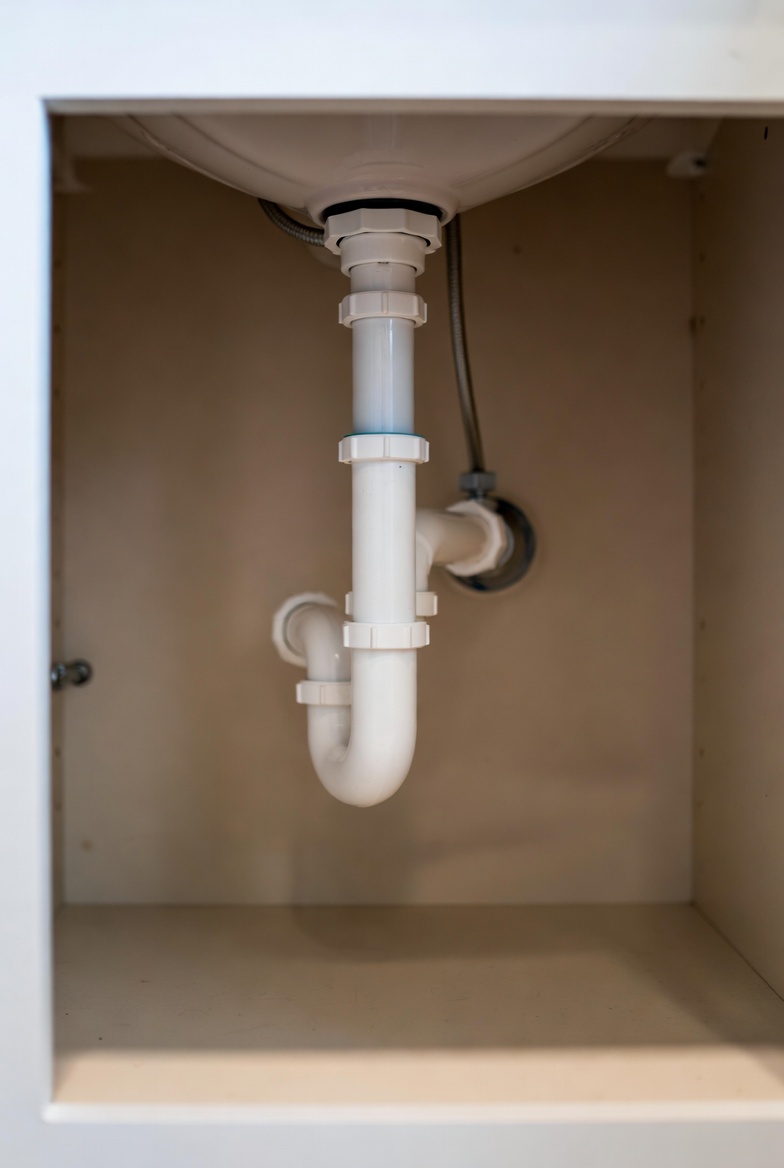
- Only for a faint localized drain odor without exposure symptoms, suspected fuel gas, strong fumes, active backup or cleaner residue: a known infrequently used fixture may have its trap seal replenished with a modest amount of plain water through its normal inlet if drainage is unobstructed. Stop if water rises or leaks. Improvement does not prove evaporation was the only cause or exclude a leak or vent problem.
- Keep cleanout caps closed. Do not loosen a cap to check a water level, watch a basin dump or release pressure; sewage and gas may escape. Do not climb to vents, enter pits or tanks, or use a flame to investigate an odor. Those checks need the appropriate qualified provider and controls.
- Do not hold a candle near a drain or cabinet, use smoke/flames to trace air, melt vent ice, or seal unknown openings. An intentional air path, vent or combustion provision must not be blocked.
- For ordinary accessible surface residue with no chemical history or hazards, keep the faucet and any connected appliance off, use the actual sink/stopper instructions and remove only an intended owner-removable stopper or cover. Clean accessible surfaces with a small brush and mild soapy water compatible with the finish. Do not force a retained stopper or push a tool into hidden passages; fully reassemble before a small attended cool-water leak check.
- Do not add mineral oil or drain chemicals as a universal odor remedy. Use the actual fixture and local maintenance guidance.
- For recurring odor, leaks, gurgling or more than one affected fixture, arrange qualified drain/trap/vent assessment. Provide the original winter pattern and service history rather than making the smell recur.
If adding water helps, have I proven the trap simply dried out?
No. The result can guide a plumbing inspection but does not rule out leakage or pressure-related seal loss. Strong or unexplained gas-like fumes belong on the departure path first; do not stay inside to find which drain responds.
Related situations
- Smell after long vacation
- Smell disappears when water runs
- Odors Originating from Bathroom Sink Drain
- Food Waste Odors & Bio-Buildup