Check for an emergency first
For strong, widespread or unexplained gas-like fumes, exposure symptoms, or suspected high sewer-gas concentrations in an enclosed space, leave the building immediately and call the fire department or emergency services from outside. Avoid flames, switches and other ignition sources; do not remain to ventilate, sniff drains or investigate. Smell intensity does not measure the concentration. A faint localized drain odor without those warning signs calls for a different plumbing investigation; it does not automatically establish a fuel-gas leak.
If fuel gas is suspected, leave the building or affected area immediately. Do not operate valves, switches, plugs, appliances or phones there. Call the gas emergency service from a safe location well away, and wait for responders’ clearance.
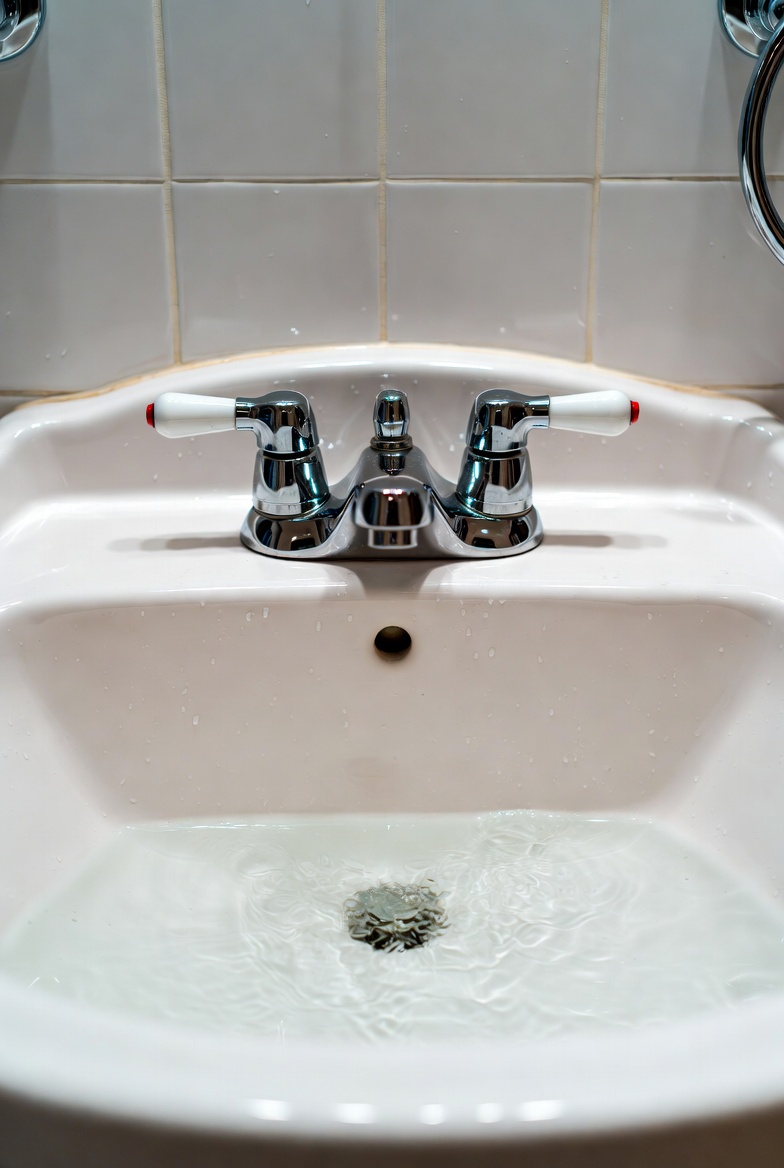
Standing water in a sink basin needs the outlet and waste path assessed, but normal water retained in the trap is not a fault. Do not run more water or several fixtures to diagnose how solid a blockage is, or assign vent failure from drainage speed alone.
Useful details to record
- Record whether water is in the basin, visible below a drain opening or returning from another fixture.
- Original drainage/odor/leak symptoms, recent work and any other affected fixture.
- Every cleaning product used, without touching or rinsing unknown residue.
What the pattern can tell you
- The basin will not empty. Stop added water; outlet/stopper and downstream conditions may need assessment.
- Only normal trap seal water remains. Do not try to make the trap empty itself.
What to do next
- A P-trap intentionally retains water in its bend to form a seal against sewer gas. That water is different from a sink basin that will not empty, water rising from a floor drain or a sag in a separate pipe section. Do not tilt, drain or remove the trap simply to eliminate its normal retained water.
- If a cleaner may be present, identify the exact product and follow its label. Do not add another cleaner, acid, bleach, ammonia, vinegar or an improvised neutralizer. Do not plunge, snake or open the trap while hazardous residue may remain; tell the provider what was used. A rinse or elapsed time is not proof all residue is gone.
- Keep cleanout caps closed. Do not loosen a cap to check a water level, watch a basin dump or release pressure; sewage and gas may escape. Do not climb to vents, enter pits or tanks, or use a flame to investigate an odor. Those checks need the appropriate qualified provider and controls.
- Only consider owner service on a sound accessible slip-joint sink trap in an ordinary isolated plain-water case without fumes, shared backup, cleaner residue or unsafe leakage. Keep the faucet and every connected appliance inactive, contain residual water and follow the exact parts/washer/assembly instructions. Fully reassemble the drain before any small attended cool-water leak check. Stop for damaged, rigid, glued, corroded or uncertain connections; do not force them.
- Use the linked bounded ordinary bathroom-sink guide only for a truly isolated plain-water restriction without hazards. Do not remove a retained stopper by force, use a generic slope number or open the trap while connected appliances can discharge.
- Request appropriate plumbing assessment for recurrence, shared symptoms, leaks or actual return of wastewater. Ask what evidence supports a local clearing, trap/vent correction or main-line inspection. A camera, smoke test or particular repair is not automatic. Do not modify air-admittance valves, pipe slopes or vent openings from the sound alone.
Should every bit of water leave a P-trap after the sink drains?
No. Its retained seal water is intentional. A basin remaining full or a drain level rising is a different problem; avoid treating a normal trap as a clog.
Related situations
Safety sources
- Wisconsin DHS: sewer-gas exposure and emergencies
- Con Edison: suspected gas leaks
- Oatey: the retained water seal and actual trap components
- Oatey HDC9682 example: specific parts, reducer washer and complete assembly before leak checks
- Example drain-opener label: restrictions on plunging, disposal operation and mixing
- Madison Metropolitan Sewerage District: stop discharge and report sewer backup