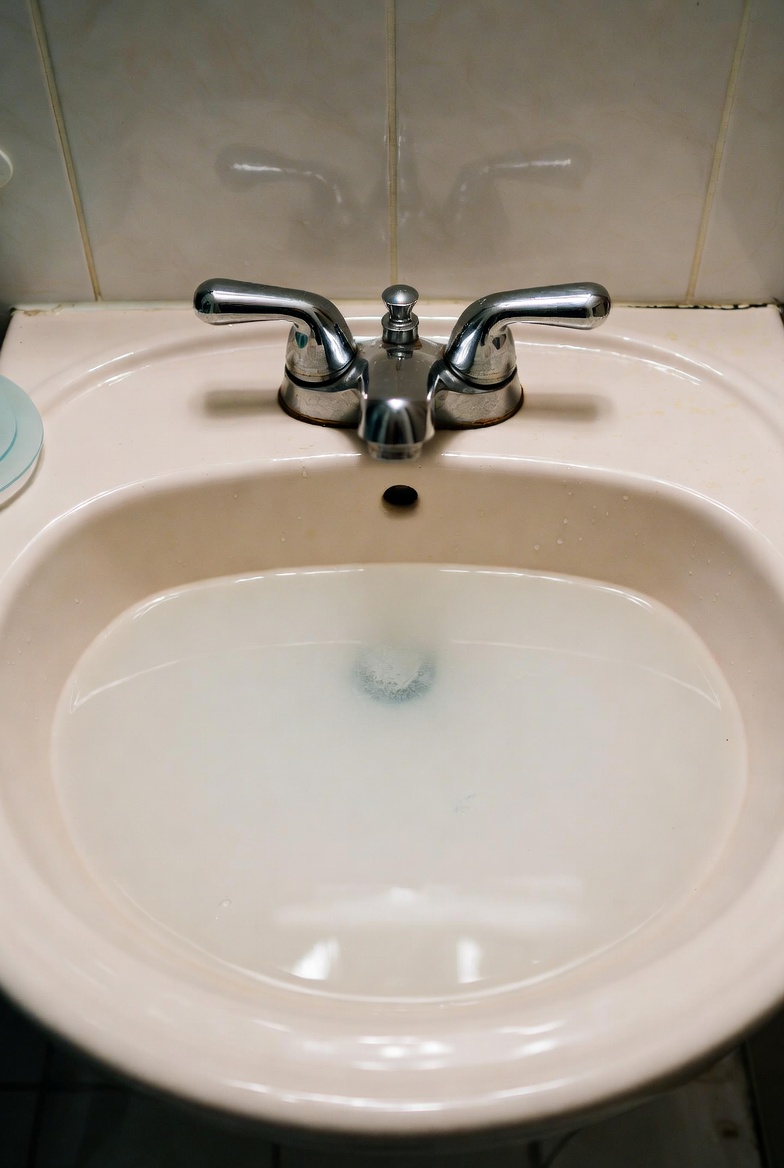
Quick Answer:
If the basin suddenly stops draining while you’re washing, it’s usually a fast-forming blockage in the stopper area or the P‑trap just below the sink. Stop running water, remove the stopper and check the throat. If the throat fills rapidly when you remove the stopper, the clog is close by and often removable with basic tools (plunger, hand auger, or by cleaning the P‑trap).
Why This Happens
Common causes for an abrupt stop during use:
- Hair, soap scum and toothpaste build up quickly around the stopper and in the tailpiece.
- Small objects (jewelry, packaging) can slip past the stopper and lodge in the trap.
- Grease or mineral deposits narrowing the pipe just below the sink.
- Recent work on the sink can introduce debris or misalign fittings — if you recently changed fixtures, check Sink stops draining after faucet replacement.
- If the sink was fine earlier and then suddenly clogged during use, that pattern is typical of a near‑drain blockage — see Sink drains fine then suddenly clogs.
Step-by-Step What to Do
1. Stop and clear the area
- Turn off the water and remove toiletries from the counter.
- If the basin is full, leave the water in the bowl until you’re ready to remove it safely (see safety notes).
2. Remove the stopper and inspect the throat
- Unscrew or lift out the stopper mechanism. You should be able to pull most pop‑up stoppers straight out; a pivot rod clip may need to be released first.
- Watch the drain throat. If the throat fills rapidly when the stopper is removed, the clog is very near the sink and usually easier to clear.
3. Try a sink plunger
- Block the overflow hole with a damp cloth so you can get a seal.
- Use a cup‑style sink plunger (not a toilet plunger), plunge firmly several times, then check the drain.
4. Clear the P‑trap
- Put a bucket under the trap to catch water and debris.
- Loosen the slip nuts on the trap and remove it. Clean out hair and gunk, then reattach and test.
5. Use a hand auger (snake) if needed
- A 3/8″–1/2″ hand auger is suitable for sink lines. Feed it through the tailpiece or from the trap opening, rotate gently, and pull out debris.
- Don’t force the auger; if it won’t progress, stop and try another approach or call a pro.
6. Reassemble and test
- Put the stopper back, run a small amount of water, and watch for drainage and leaks at the trap.
- If water now drains normally, run hot water for a minute to flush remaining residue.
What Not to Do
- Do not pour harsh chemicals when the bowl is full.
- Don’t stick metal wire or coat hangers down the drain — you can damage pipes or push clogs deeper.
- Avoid over-tightening plastic slip nuts; overtightening can crack fittings and cause leaks.
When to Call a Professional
- The clog won’t clear after removing the trap and using a hand auger.
- You see backups in multiple fixtures or a strong sewer smell — these suggest a main line issue.
- Leaks appear at fittings you can’t access or repair safely, or if you’re uncomfortable dismantling plumbing.
- Recent plumbing work created the problem and you prefer the installer to correct it.
Safety Notes
- Wear gloves and eye protection when working under the sink; debris and water can be dirty.
- Keep a bucket and rags handy to catch spills; wipe up water promptly to avoid slipping or damage.
- If you used any chemical products before the sink filled, ventilate the area and avoid mixing chemicals — chemical reactions can be dangerous.
Common Homeowner Questions
- Can I fix this myself? Yes, many near‑drain clogs are removable with a stopper removal, plunger or by cleaning the P‑trap.
- Will a snake damage my pipes? A small hand auger used carefully is safe for typical sink lines; avoid aggressive force.
- How long before I call a plumber? If the clog persists after basic steps (plunger, trap cleaning, hand auger) or multiple fixtures are affected, call a professional.
For more related articles, see the Sink Drains Then Suddenly Stops hub.