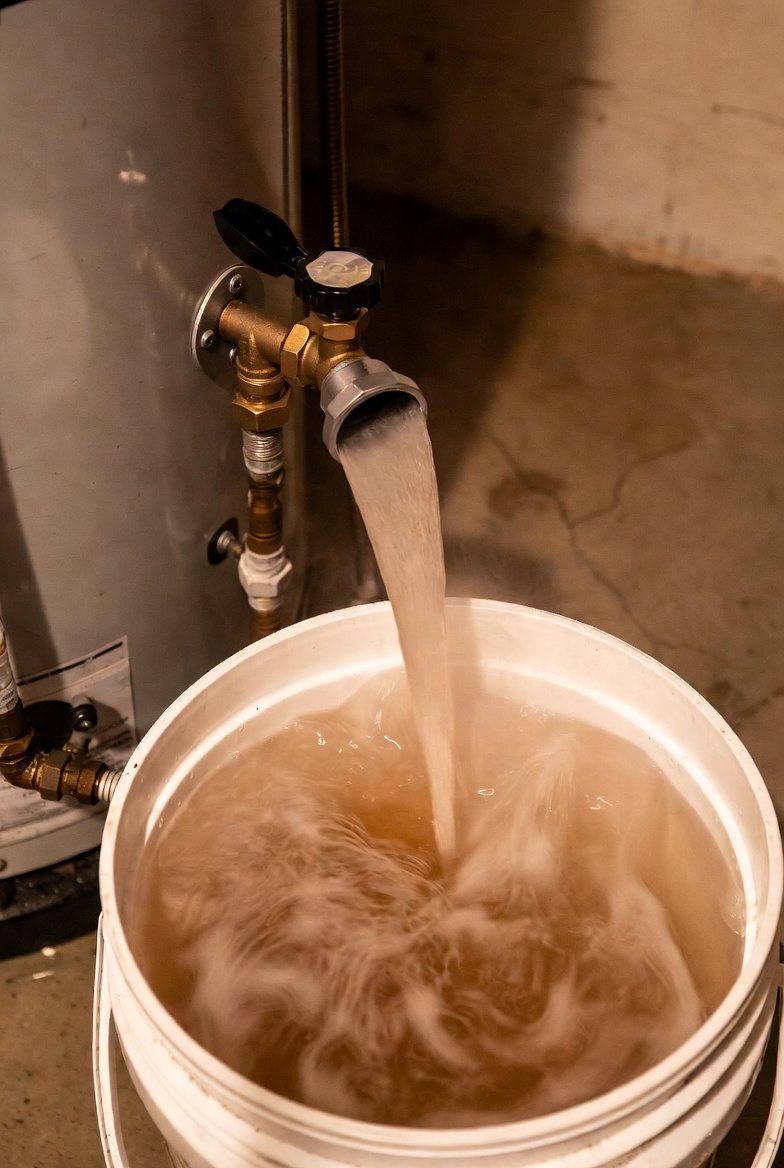
Quick Answer:
Seeing lots of tiny white bubbles in a glass after you restart plumbing is usually trapped air, not sediment. Let the water sit in a clear glass and watch — air rises and disappears while real grit settles and feels abrasive.
Why This Happens
When water systems are shut off or worked on, air can enter the pipes. Changes in pressure from a water main restart, opening a shutoff, or work on a pressure-reducing valve or water pump can leave the system aerated. Tiny air pockets form many small bubbles that make water look cloudy at first.
Air bubbles behave differently than sediment: they float up and vanish within seconds to a minute. Sediment or mineral particles will fall to the bottom of a glass, make water feel gritty, and not disappear on their own.
If you recently changed pressure settings or had valve work done, you might also notice flavor changes; check guidance on Bad taste after PRV install. If you recently repiped, the chance of real particles is higher — see Sediment after repiping.
Step-by-Step What to Do
1. Take a sample
- Fill a clear glass from the tap where the bubbles are most obvious.
- Hold the glass up to light or place it on a counter so you can watch it undisturbed.
2. Let water sit in glass and observe bubbles
- Watch for 60–90 seconds. If the cloudiness clears from the top down as bubbles rise and pop, it’s air.
- If particles sink and remain or you can rub material between fingers and feel grit, that suggests sediment.
3. Run the cold tap briefly
- Open the cold tap fully for 1–2 minutes to help purge air. If the cloudiness resolves, it was likely air.
4. Check other fixtures
- See if the same behavior shows at other taps, especially an outdoor spigot or a bathroom cold tap.
- If only one fixture shows bubbles, the issue may be local to that fixture or its supply line.
5. Note timing and recent work
- Record when the problem started and whether any plumbing work, repiping, or pressure changes happened recently. That information helps you or a plumber diagnose the cause.
What Not to Do
- Do not mistake air bubbles for grit. Don’t assume cloudiness equals contamination without observing behavior in a glass.
- Don’t attempt complicated repairs if you’re unsure—avoid opening the water heater or altering gas or electrical connections yourself.
- Don’t ignore persistent discoloration or gritty sediment; those can indicate pipe corrosion or debris that needs attention.
When to Call a Professional
- Cloudy water that does not clear in a glass or contains visible particles that settle.
- Persistent discoloration, a metallic taste, or sand-like grit after running taps.
- Problems that occur after repiping, major system work, or if you smell gas or chemicals from the tap.
Safety Notes
- If water smells strongly of chemicals or sewage, avoid using it for drinking and contact your water provider or a plumber.
- Do not run the hot water for testing if the water heater has been opened or drained recently until you confirm temperature controls are working and there are no leaks.
- If you suspect contamination, follow local advisories for boiling or alternate water use and call a professional.
Common Homeowner Questions
-
Q: Why does my glass clear from the top down?
A: Air bubbles rise to the surface and pop, so the water clears from the top. -
Q: Could repeated bubbles harm plumbing?
A: No—occasional aeration is normal after work or pressure changes and won’t damage pipes. -
Q: When is cloudy water a health risk?
A: If cloudiness is due to particles, discoloration, foul odor, or a metallic taste, treat it as a concern and consult a professional.
For more related articles, see the White Particles, Cloudy Water, or “Milky” Water hub.
For more related articles, see the After-Shutoff / After-Repair Water Quality Issues hub.