Quick Answer:
Smells that appear right after a water heater installation are usually caused by bacteria or stagnant water in the tank or plumbing, not by “decomposing sediment.” Before assuming the heater is bad, run a simple set of checks: identify where the smell is strongest, draw hot water immediately after the heater completes a heating cycle, and flush or ventilate the system. Often the odor clears after flushing and running hot water for a while.
Why This Happens
Common causes include:
- Stagnant water or biofilm in the tank or in the hot-water lines that gets disturbed during installation.
- Bacterial growth inside the tank or traps producing a musty or sulfur-like smell.
- Wet insulation, drywall, or flooring near the heater that developed mold before or during installation.
- New components (plastic dip tubes, packing materials) that off-gas briefly after installation.
If the house or plumbing sat unused for a while before the install, check guidance on Musty odor after long periods of no use. If the smell is localized to one area of the house, like the sink, see Moldy smell only at kitchen sink.
Step-by-Step What to Do
1. Pinpoint where the smell is strongest
- Smell faucets and nearby drains (cold vs hot) to see if the odor comes from hot water, the drain, or the room air.
- Open cabinet doors near the heater and check for visible dampness or mold growth.
2. Draw hot water immediately after the heater cycles
- Wait for the heater to complete a full heat cycle, then run a hot faucet for several minutes. This flushes lines and helps move any trapped or stagnant water out of the system.
- Check whether the odor fades as you run hot water; that’s a good sign the issue is in the plumbing rather than the structure.
3. Flush the tank (basic homeowner method)
- Turn off power (electric) or set gas control to pilot/off and turn off cold-water supply to the heater before draining.
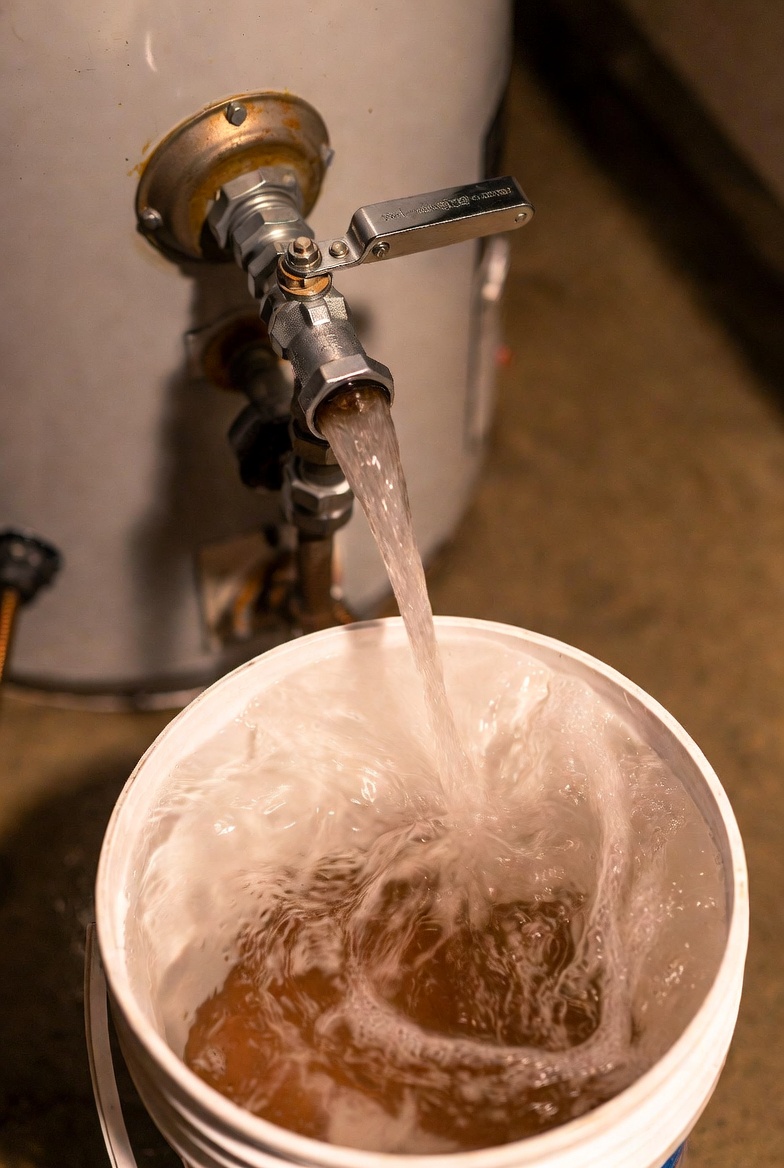
- Attach a hose to the drain valve and drain a few gallons into a safe drain until the water runs clearer; this can remove sediment and settled bacteria.
- Refill and restore power/gas only after the tank is back to normal water level. If you’re unsure, get a plumber to flush the tank.
4. Clean fixtures and aerators
- Remove faucet aerators and showerheads, soak in vinegar, and flush lines to clear biofilm.
- Run hot water through each fixture to confirm whether the smell is systemic or isolated.
5. Inspect for mold or damp materials around the heater
- Look for wet insulation, staining on drywall, musty odor in the closet, or persistent dampness under the heater. Visible mold needs to be remediated.
6. Re-check after flushing and cycling
- Run the heater through several cycles and draw hot water again. If the smell is gone, monitor for recurrence. If it persists, move to professional help.
What Not to Do
- Do not replace heaters before isolating cause — replacing the unit is often unnecessary and costly if the smell comes from plumbing, fixtures, or nearby mold.
- Do not pour bleach or strong chemicals into the tank unless instructed by a professional; this can damage components and create hazardous vapors.
- Do not open gas controls, the burner chamber, or electrical panels if you are not qualified to do so; leave gas/electric work to licensed technicians.
When to Call a Professional
- If the odor persists after flushing and running hot water several times.
- If you find visible mold or water damage around the heater or in nearby walls and ceilings.
- If you suspect a gas-related smell, leaks, or any electrical problem with the heater.
- If you’re uncomfortable performing the tank flush or checking the anode rod and plumbing connections yourself.
Safety Notes
- Turn off power to electric heaters or set gas control to pilot/off before doing any draining or maintenance.
- Hot water can cause scalding. Open hot faucets slowly and run at a safe temperature.
- Wear gloves and a mask if inspecting or cleaning visible mold; avoid disturbing large mold patches — call a remediation specialist.
- Do not tamper with pressure-relief valves or gas burners unless you are trained; unsafe handling can cause injury or property damage.
Common Homeowner Questions
- Why did the smell start right after installation? Installation can disturb settled water and biofilm, releasing odors; new materials can also off-gas briefly.
- How long should the smell last? Often it clears after flushing and several hot-water cycles; persistent odor beyond a few days should be investigated.
- Can the heater itself be the source? Yes, but it’s less common; a professional can inspect the tank, anode rod, and plumbing to confirm.
For more related articles, see the Musty, Earthy, or Moldy Water Smell hub.