Quick Answer:
Brown color that appears only from the hot tap usually comes from sediment or rust inside the water heater, not an immediate catastrophic failure. Do a quick check by running only cold water at a nearby tap to confirm the cold supply is clear, then feel the heater’s hot outlet pipe for any vibration while the hot tap runs—vibration can mean scale or sediment is breaking loose. Simple flushing often fixes it; replacement is not the first step.
Why This Happens
Inside a storage water heater, minerals and rust settle to the bottom over time. When the heater is used, that sediment can get stirred up and come out the hot tap. An anode rod meant to protect the tank can also corrode and shed particles. Incoming cold water usually stays clear because the problem is confined to the heater tank or its outlet plumbing.
If discolored water shows up after work on your plumbing, check other causes first like main-line disturbance — see Discolored water after main shutoff for related situations.
Step-by-Step What to Do
1. Compare cold and hot
- Run only cold water at a nearby faucet for 30–60 seconds to confirm the cold supply is clear. If only the hot side is brown, the heater or its hot plumbing is the likely source.
2. Feel the heater outlet while running hot water
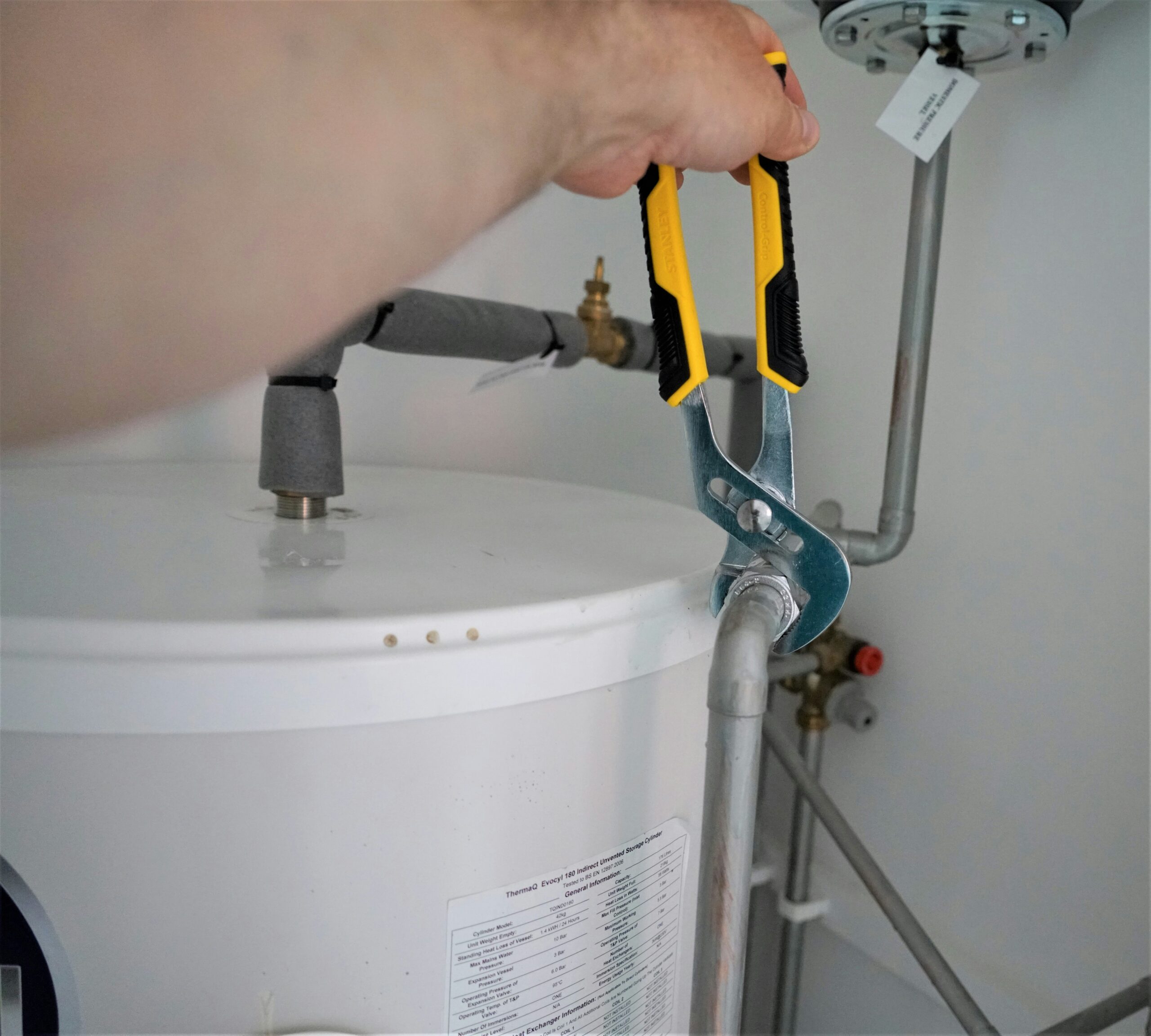
- Have someone run the hot tap while you open the water heater access area. Carefully touch the hot outlet pipe (not the tank body) for vibration. A vibrating outlet pipe can indicate chunks of scale or sediment being forced out of the tank.
- Do not touch bare metal that is very hot—use a towel or glove to check vibration safely.
3. Try a short faucet flush
- With the hot tap open, run water for 1–2 minutes to see if the water clears. If it clears, sediment was likely dislodged.
- If the water clears but returns later, keep an eye on it or follow the longer flush step below—this pattern can repeat as more deposits break loose (Water clears then turns brown again).
4. Flush the water heater
- Turn off power (electric: shut breaker; gas: set pilot off or gas valve to pilot) and let water cool a bit. Attach a garden hose to the heater drain valve and drain to a bucket or floor drain until the water runs clear. Lift or open a nearby hot faucet to let air in and help flow.
- Flushing removes built-up sediment and is a common fix. If you’re uncomfortable, skip to calling a pro.
5. Inspect basic fittings
- Check the hot outlet fitting and any inline mixing valves or filters for rust or debris. Replace or clean small fittings if accessible and you’re confident doing so.
What Not to Do
- Do not replace the heater without checking for sediment discharge first.
- Do not pour chemical cleaners into the tank; they can damage components or create hazards.
- Do not attempt major repairs on gas or electric heaters without shutting power/gas and understanding the risks—call a pro if unsure.
When to Call a Professional
- Brown water persists after flushing, or you find continuous rusty smell.
- You detect a leak, pressure loss, or if the heater is more than 10–15 years old and showing corrosion.
- You’re uncomfortable working on gas lines, electrical shutoffs, or tank drain valves.
- If sediment flushing does not stop brown water, a plumber can inspect the anode rod, tank condition, and plumbing for corrosion or failures.
Safety Notes
- Turn off power to the water heater before any work: electric at the breaker, gas at the valve. If you smell gas, leave the house and call the gas company or emergency services.
- Hot water and steam can cause burns—allow the tank to cool before draining or use heat-resistant gloves.
- Drain water to a safe place; hot water can damage surfaces. Use a hose and a bucket or a floor drain rated for hot water.
- If you’re unsure about any step, hire a licensed plumber—water heaters combine water, electricity and gas, which can be dangerous.
Common Homeowner Questions
- Why is only the hot water brown?
Because sediment or rust is inside the heater or hot-side plumbing; the cold supply is likely fine. - Will flushing fix it?
Often yes—flushing removes sediment and usually clears the water, at least temporarily. - Is brown hot water dangerous to use?
It’s usually not a health emergency but can stain dishes and indicate corrosion; avoid drinking until it’s cleared and consider a professional check if it persists.
For more related articles, see the Brown or Rust-Colored Water Events hub.