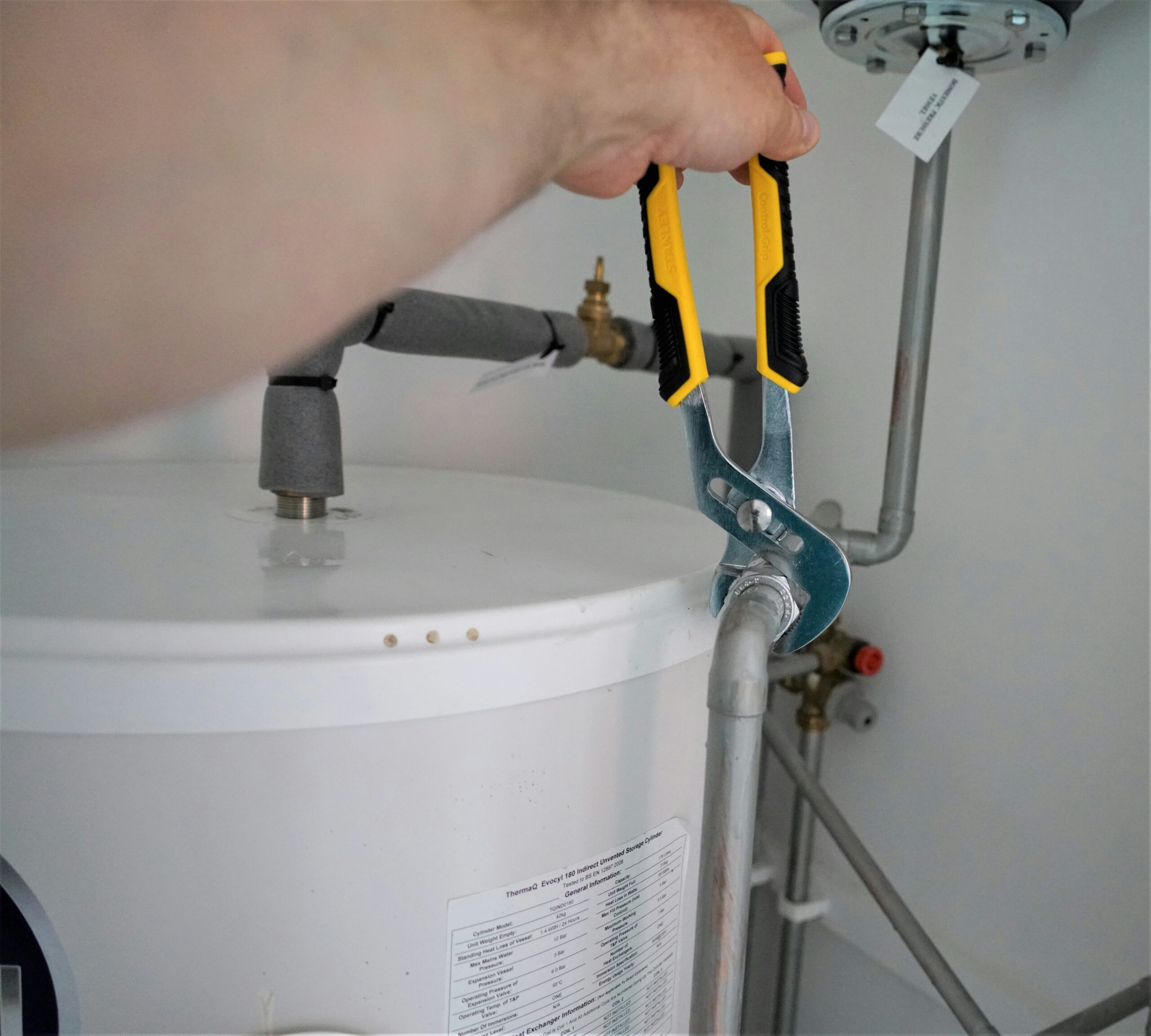
First identify what “refills” means for this water heater. An ordinary pressurized storage heater stays full in normal use, with cold makeup entering during a hot draw; it does not normally empty and later refill like a washing machine.
Check warnings before another cycle
Stop the relevant use for active leakage, severe hammering or movement, unsafe temperature, burning, smoke or a suspected electrical fault. Keep away from wet electrical equipment and unsafe spray. Use only identified safely accessible dry controls when safe; otherwise obtain appropriate emergency or qualified help. Do not keep resetting a trip or restarting a failing machine to capture the sound. A known safely operable customer shutoff may limit a supply leak; do not force an unknown or corroded valve.
For suspected fuel gas, a carbon monoxide alarm or exposure symptoms, leave immediately and call appropriate emergency help from safety. Do not operate switches, phones, valves or appliances in the affected area. Do not remain to listen or investigate.
Separate makeup, recovery and actual service refill
- System type: Record storage or tankless model, fuel/energy type and any circulation arrangement. Noise during a draw, heating recovery, circulation or a refill after maintenance represents different operating states. Do not assign every heater an automatic solenoid fill/drain cycle.
- No touch diagnosis: Do not grip either heater connection, tap an expansion tank or briefly close the heater feed to prove the source. Sound can transmit, and tank tone does not establish its charge or integrity. Relief discharge, leaks or overheating needs prompt qualified assessment.
- Service and restart: Use the actual heater’s energy and water procedure for service. A gas “pilot” position is not a universal safe service state. A drained electric storage heater must be correctly filled and purged as prescribed before energizing; do not recreate noise by cycling an uncertain or partly empty heater.
Does an expansion tank fix every refill noise?
No. Actual closed-system thermal expansion, pressure, tank sizing/condition and other component findings must support that choice. Retain relief and check protection. Ask the provider to distinguish the original draw or recovery event from a maintenance refill.
Observation and service need different conditions
Keep the actual model, original stage, time, recent work, displayed alerts and safe visible conditions. Ordinary intact operation or an owner test can be appropriate when the actual instructions and conditions permit it. Do not repeatedly reproduce a severe event, use hidden service buttons by guesswork, reach behind a running appliance, grip moving lines or touch pump housings to locate vibration. Gloves, a towel or drying a visible patch do not establish safe temperature or electrical access.
Hands-on service needs the actual energy, automatic-operation and water-control procedure, with retained heat, pressure and discharge water controlled before opening a joint. Power off alone does not remove water pressure; closing a feed alone may leave stored pressure. Complete the prescribed supported reassembly, protection and operational/leak checks before return to use. Do not force fittings, tighten every strap rigidly, block a required drain or disable safety devices. Appropriate support depends on material and intended movement.
Related guides
- Buzzing when smart shutoff cycles
- Pipes noisy during dryer steam cycle
- Noises Only When Appliances Run
Sources and equipment limits
- BrassCraft: identify and operate the actual supply stop
- Portland Water: flow, pressure and demand are different observations
- Example electric-heater manual: verified filling before restart
- Amtrol example: tank condition, ambient temperature and empty-water-side precharge
These manufacturer examples do not identify your installed model or authorize its repair. Use its actual instructions and applicable local requirements. Independent professional review and field testing have not been obtained.