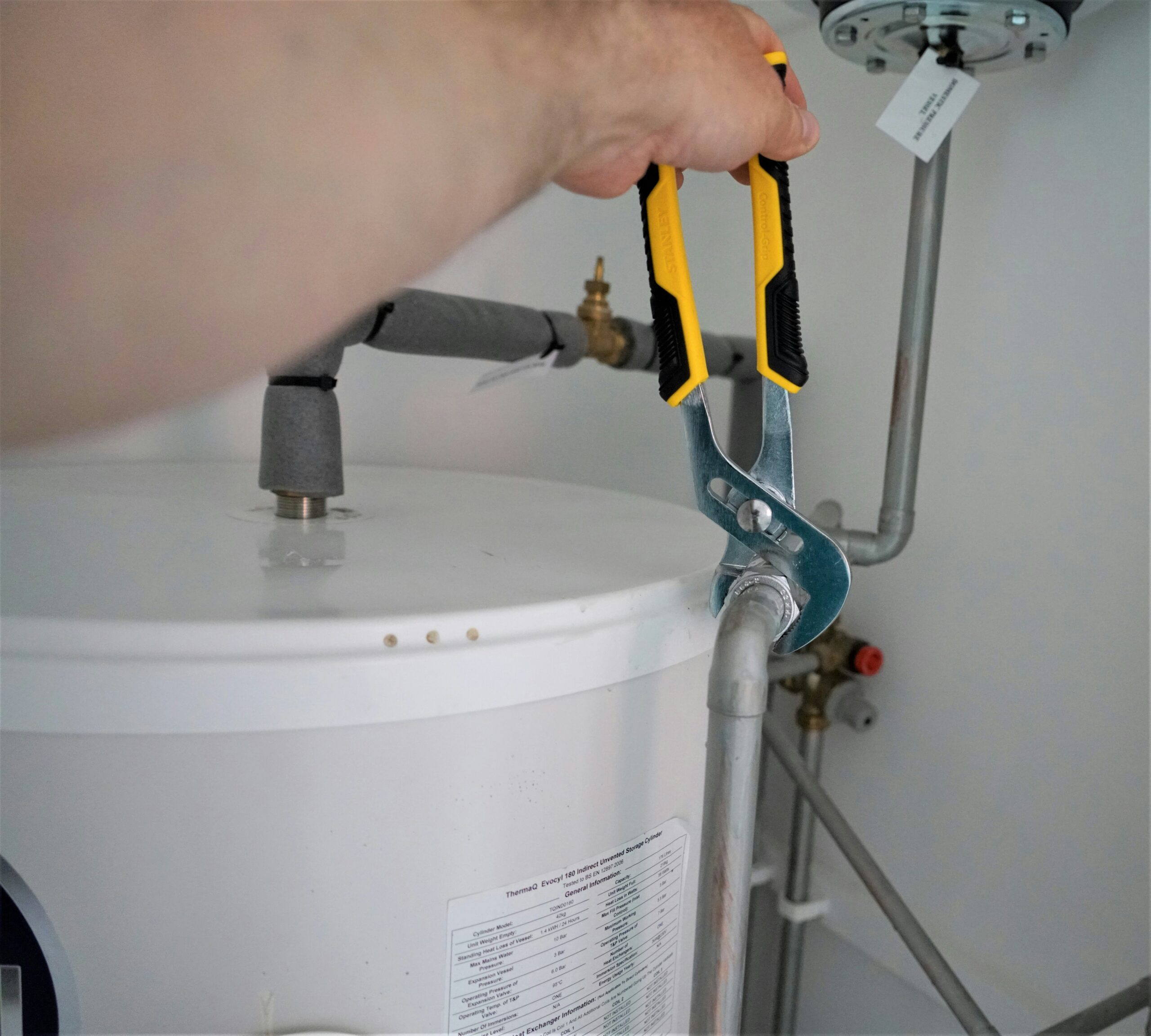
Quick Answer:
A rattling sound near the water heater usually comes from a vibrating pipe or a loose mounting clamp. Start by running the fixture slowly, then fully, to see when the vibration starts. Press lightly on the nearby wall or cabinet and listen from an adjacent room to find the pipe run. If access is limited or the pipe is behind finished surfaces, a plumber can open access and secure the run safely without causing damage.
Why This Happens
Pipes can rattle for a few common reasons:
- Water flow changes cause pipes to vibrate where they pass through studs or run near cabinets or walls.
- Loose clamps or insulation allow movement when pressure or flow changes.
- New equipment (valves, shutoffs) or faster flow rates can trigger vibrations in previously quiet runs.
For situations involving new devices, see Rattling after installing smart shutoff, and for fixtures that trigger noise when used, see Pipes rattle when faucet opened.
Step-by-Step What to Do
1. Reproduce the sound safely
Run the fixture slowly, then fully, to see when the vibration starts. Note whether the rattle begins at low flow, medium, or full flow—this helps pinpoint the cause.
2. Localize the run
Listen from an adjacent room to localize the run. Move closer along the wall or along the cabinet base to follow the sound. This helps identify where the pipe is contacting structure.
3. Feel for movement
Press lightly on the nearby wall, cabinet, or hatch to feel for vibration. If you can feel it through the surface, the pipe is probably touching framing or a fastener there.
4. Check visible clamps and supports
If part of the pipe is exposed and easy to reach, look for loose straps, missing insulation, or metal-on-metal contact. Tighten accessible clamps gently—do not force fittings.
5. Temporarily dampen the noise
If the run is reachable, wrap a short length of cloth or foam around the pipe where it contacts wood to reduce vibration as a temporary measure until a permanent fix is made.
6. Evaluate access
If the pipe is behind finished walls, ceilings, or near electrical wiring, avoid cutting or poking blindly. Note the exact location and call a professional if you can’t reach the run without damaging finishes.
What Not to Do
- Don’t open walls or wedge random shims blindly. That can damage finishes or hide structural elements.
- Don’t hammer or force pipes into place; sudden movement can stress joints or fittings.
- If the rattle is near wiring or finished ceilings, let a plumber locate the pipe first rather than poking around yourself.
When to Call a Professional
Call a plumber if any of the following apply:
- You can’t locate the exact run or the pipe is behind finished surfaces.
- The noise started after installing new equipment or wiring and you suspect a routing or support issue.
- There are signs of loose fittings, leaks, or if tightening supports would require cutting into finishes.
A plumber can locate the pipe without unnecessary damage and secure it with proper clips, insulation, or access panels so the run is safe and quiet.
Safety Notes
- Turn off water or reduce flow before working on exposed fittings. Use basic shutoff valves only if you’re sure how they operate.
- If you suspect the rattling involves gas lines, electrical wiring, or combustion vents, stop and call a qualified professional immediately.
- Avoid temporary fixes that compress or strain pipes; improper force can cause leaks later.
Common Homeowner Questions
- Will tightening a clamp void warranties? Generally no, but check appliance or valve instructions before altering factory-installed supports.
- Is a plumber likely to need to open the wall? Often not; many plumbers can secure runs from access points or add discreet access panels if a hidden section needs attention.
- Can high water pressure cause rattling? Yes—excessive pressure or rapid pressure changes can make pipes vibrate. A plumber can test and recommend a pressure regulator if needed.
For more related articles, see the Rattling Pipes Inside Walls hub.