Quick Answer:
Air in the hot plumbing after refilling or installing a water heater is common. Run one hot faucet steadily to purge the trapped air from the hot side. If you see leaking at the heater or hear loud banging during the heater’s recovery, stop and call a professional right away.
Why This Happens
When a water heater is drained, refilled, or newly installed, pockets of air can get trapped in the hot-water lines. Those pockets travel to fixtures and cause sputtering, spitting, or intermittent flows until the air is pushed out. The system’s temperature change during recovery can also create pressure spikes or pipe movement that sound like air problems.
Two common patterns homeowners report are Air only after long periods of no use and sudden bursts like Air blasts from faucet after water restored. Both are usually caused by trapped air, but repeated banging or active leaks point to pressure or component issues rather than just air.
Step-by-Step What to Do
1. Prepare and be cautious
- Ensure the heater is powered as required for normal refill and recovery (electric breaker on, gas pilot lit) unless you were instructed otherwise by a technician.
- Have a bucket or towels handy in case small drips appear while you work.
2. Run one hot faucet steadily to purge the hot side
- Open a single hot faucet and let it run at a steady stream. Choose a fixture near where you use hot water most often (kitchen or bathroom sink).
- Keep it open until the flow is smooth and no more sputtering or air pockets appear; this can take a few minutes after a refill or install.
- If you have multiple hot vents or long runs, you may need to do the same at a remote fixture to clear trapped pockets from that run.
3. Watch and listen during heater recovery
- If you hear banging or loud knocking while the heater is heating up, monitor the system for pressure spikes. Thermal expansion can cause brief noises that mimic air problems.
- Check the temperature/pressure relief valve area and a nearby pressure gauge (if you have one) for leaks or abnormal readings.
4. Inspect valves and connections
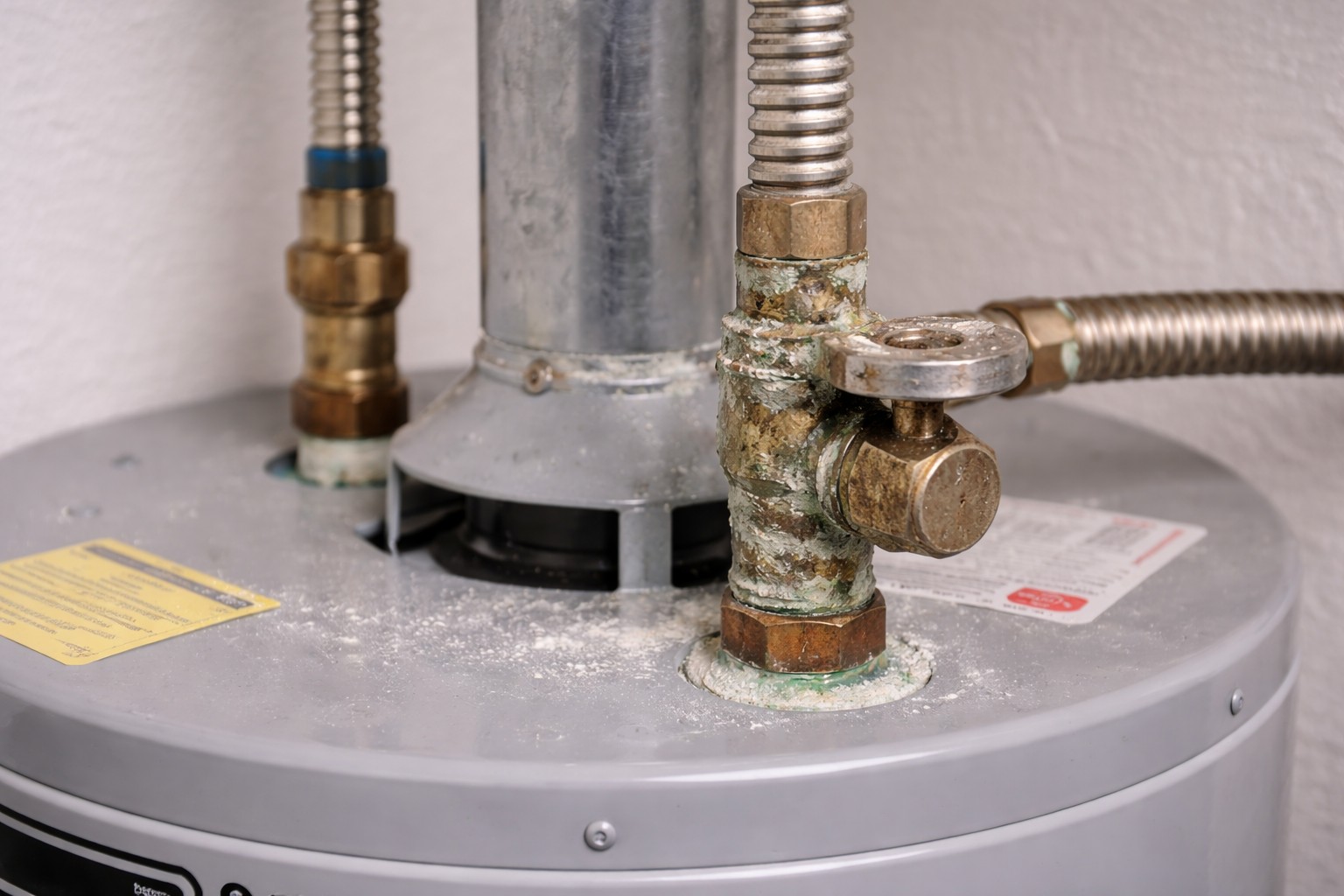
- Look for any actively leaking valves at the heater, loose fittings, or water pooling under the unit.
- If you find a leaking shutoff or heater fitting, stop using the heater and call a qualified plumber—leaks at the heater can get worse quickly.
5. If unsure or if problems continue, stop and call a pro
- If you smell gas, see electrical arcing, find a leaking valve, or are unsure about any step, turn off the heater (power or gas) and contact a professional.
- Persistent air, repeated loud banging, or a constantly dripping pressure relief valve are signs a technician should inspect the system.
What Not to Do
- Don’t ignore new leaks at the heater; if you see active leaking or electrical proximity, stop and call a pro.
- Don’t bang on pipes or try to “shock” air out with forceful water hammering—this can damage fittings or create bigger leaks.
- Don’t attempt gas-line repairs or electrical work unless you are licensed and experienced. If you smell gas or see faulty wiring, evacuate and call an emergency service.
- Don’t add sealants, hot-water additives, or unapproved fixes to solve an air or leak problem—these can hide the real issue.
When to Call a Professional
- The sputtering does not clear after running a hot faucet steadily for several minutes at multiple fixtures.
- There is new or increasing leakage at the heater, pressure-relief valve, or related fittings.
- You hear persistent loud banging, pressure spikes, or test gauges show unusual pressure during recovery.
- You smell gas, see electrical sparks, or are unsure about shutting off power or gas safely.
Safety Notes
- If you smell gas, leave the building immediately and call emergency services from a safe location.
- Do not touch exposed electrical wiring or controls. Turn off the circuit breaker for the heater only if you know how and it’s safe to do so.
- Use towels or a bucket to catch small drips. If a valve or fitting is spraying, shut off the water supply to the heater and call a plumber.
- If a pressure-relief valve is leaking continuously, treat it as a potential pressure or valve-failure issue and get professional help.
Common Homeowner Questions
- Why is hot water spitting air after I refilled the heater? Air trapped during refill travels into the hot lines; running a hot faucet steadily typically clears it.
- How long should it take to clear the air? Usually a few minutes at a single hot faucet; if it takes much longer or returns, call a plumber.
- Is the banging dangerous? Occasional brief noises during heating can be normal, but persistent banging or pressure-related sounds with leaks should be inspected by a pro.
Related Articles
If you’re troubleshooting a similar symptom, these guides may help:
For the full directory, see Air in Pipes After Shutoff.