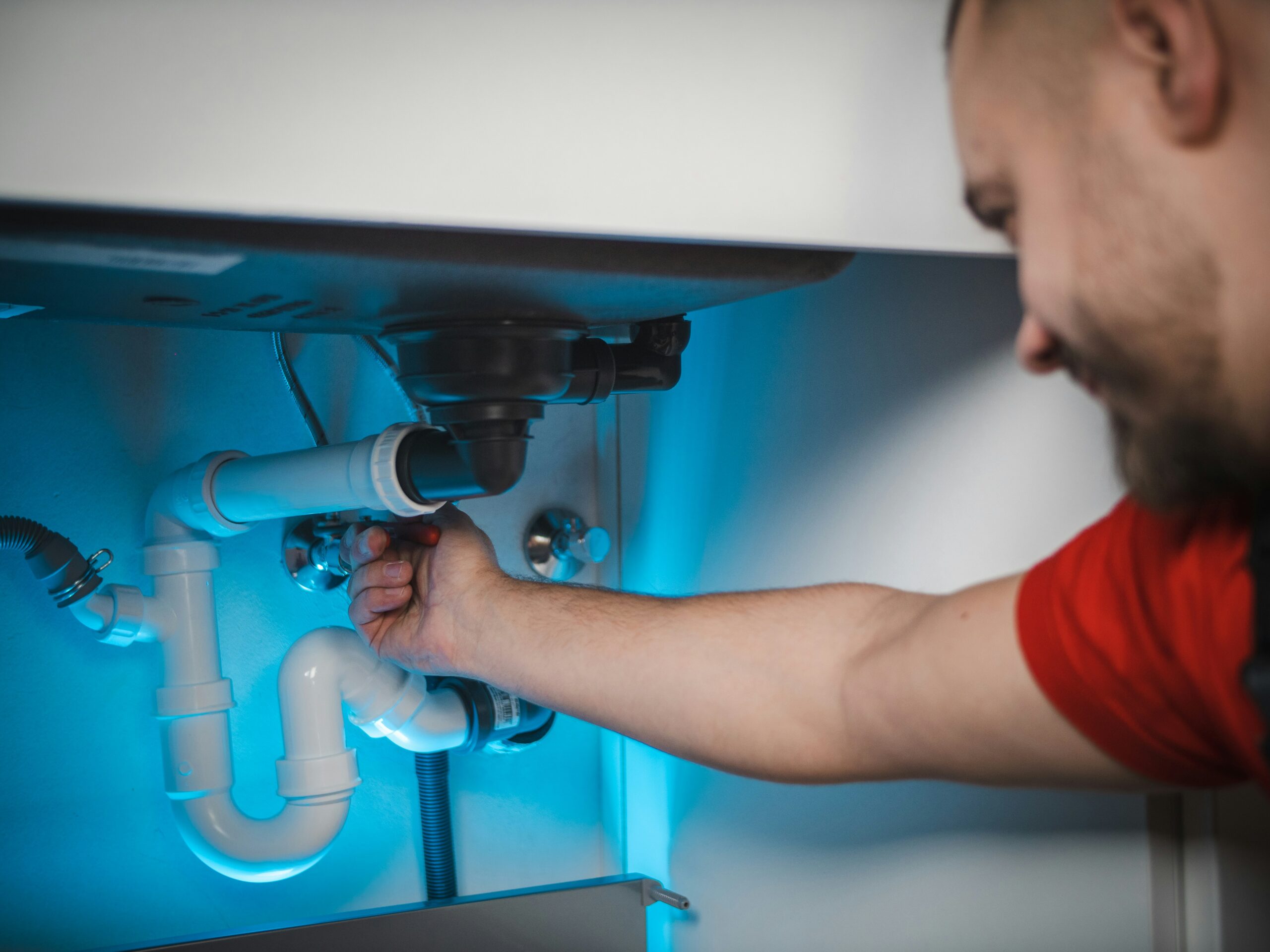
If you notice water pooling inside the cabinet under your sink, it’s a sign that something below the basin is leaking. Under-sink leaks can cause cabinet damage, mold, and odors if left unaddressed, even if the sink appears to work normally.
In most cases, these leaks come from connections or components directly under the sink — not from inside the wall.
Quick Answer:
A sink leaks underneath because a pipe connection, drain component, or supply line under the sink is loose, worn, or damaged. Common causes include loose slip nuts, cracked P-traps, leaking supply hoses, or failing seals.
Why This Happens
Under-sink plumbing includes multiple joints and fittings that experience regular movement, pressure, and temperature changes. Over time, these components can loosen or degrade.
Common causes include:
- Loose slip nuts on the drain pipes
- Cracked or damaged P-trap
- Worn seals or washers
- Leaking faucet supply lines
- Corrosion on metal fittings
Under-sink leaks are different from a faucet leaking at the handle or spout, which originates above the sink.
Step-by-Step: How to Identify an Under-Sink Leak
Step 1: Dry the Area Completely
Before troubleshooting, dry the cabinet and pipes thoroughly.
This makes it easier to spot where new water appears.
Step 2: Run the Faucet and Observe
Turn on the faucet and watch closely.
Check for leaks:
- At pipe joints
- Around slip nuts
- From supply line connections
- From the P-trap
Leaks may only appear when water is flowing.
Step 3: Check Drain Connections
If the leak appears while water drains:
- Inspect the P-trap
- Check slip nut tightness
- Look for cracks or separation
Many under-sink leaks occur at drain connections.
Step 4: Inspect Supply Lines
If the leak appears when the faucet is on but not while draining:
- Check hot and cold supply hoses
- Look for dripping at valve connections
- Check for corrosion or kinks
Supply line leaks often worsen quickly.
Step 5: Identify Intermittent Leaks
Some leaks only occur:
- When large amounts of water drain
- When appliances discharge water
- After the sink hasn’t been used for a while
Intermittent leaks are often harder to detect but still cause damage.
What Not to Do
- Don’t ignore small drips
- Don’t overtighten plastic fittings
- Don’t store items against wet pipes
- Don’t assume leaks will stop on their own
Small leaks often lead to larger failures.
When to Call a Professional
Call a plumber if:
- Pipes are cracked or corroded
- Leaks persist after tightening connections
- Water damage is visible
- You suspect a leak inside the wall
Some repairs require pipe replacement rather than adjustment.
Safety Notes
- Turn off water before tightening fittings
- Wear gloves when handling wet components
- Place towels or a bucket under the sink
- Check for leaks after every adjustment
Common Homeowner Questions
Why does my sink leak only when draining?
This usually indicates a loose or damaged drain connection or P-trap.
Can a loose slip nut cause a leak?
Yes. Slip nuts can loosen over time and cause under-sink leaks.
Is an under-sink leak serious?
Yes. Even small leaks can damage cabinets and lead to mold.