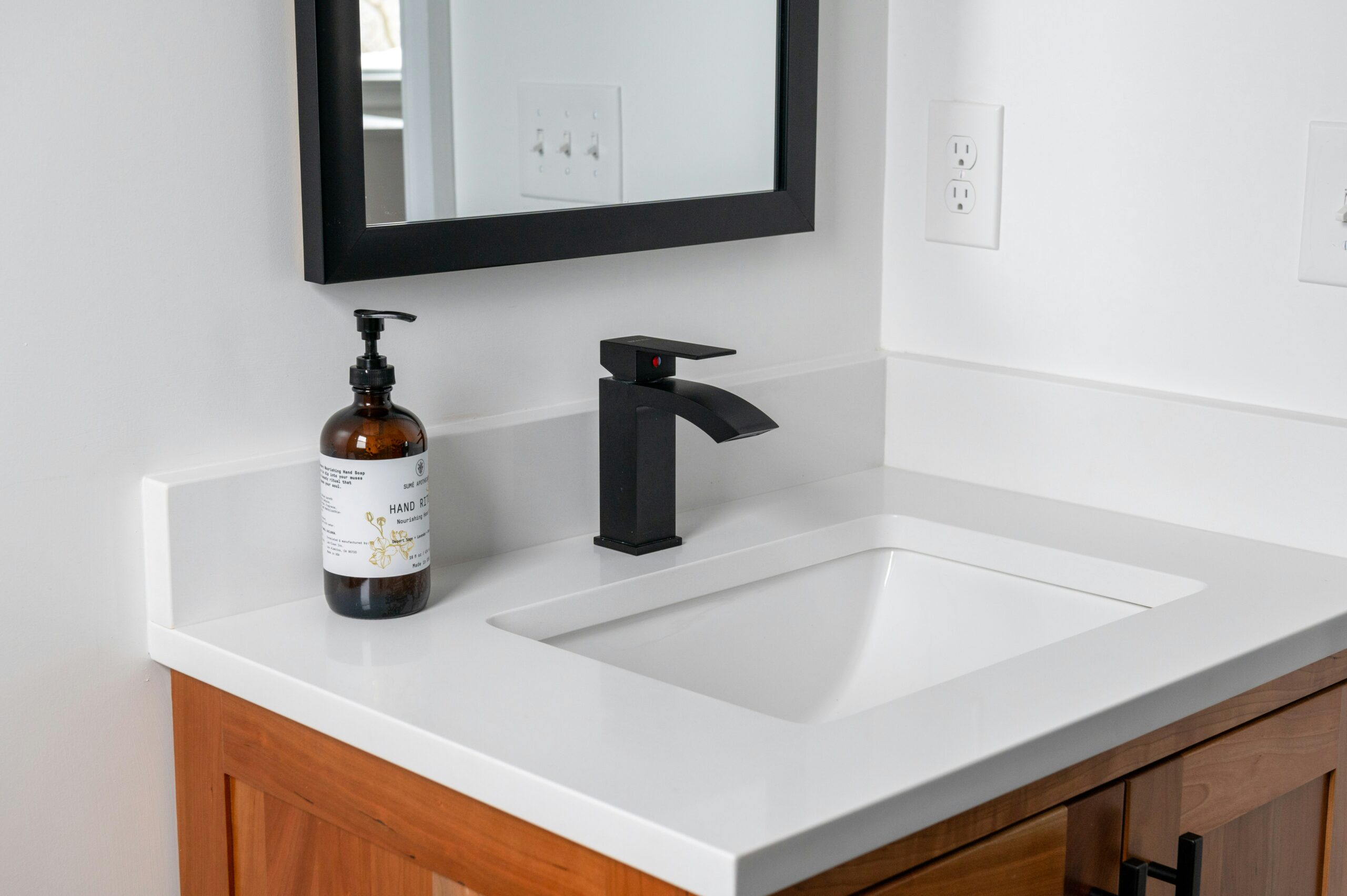
If only one sink in your home has low water pressure while others work normally, the problem is almost always localized to that sink. This can be frustrating because it feels inconsistent and hard to diagnose, but the cause is usually straightforward.
In most cases, the issue is close to the faucet — not inside the walls.
Quick Answer:
Only one sink has low water pressure because something near that fixture is restricting water flow. This is most often caused by a clogged aerator, partially closed shutoff valve, debris in the faucet, or a kinked supply line.
Why This Happens
Each sink has its own faucet, aerator, shutoff valves, and supply lines. When pressure is low at just one sink, it means the restriction exists somewhere along that specific path.
Common causes include:
- A clogged aerator on that faucet
- Partially closed shutoff valves under the sink
- Mineral buildup inside the faucet body
- Debris trapped in the supply line
- A kinked or crushed flexible hose
This is different from low water pressure throughout the house, which points to a main supply issue.
Step-by-Step: How to Fix Low Pressure at One Sink
Step 1: Compare Hot and Cold Water
Turn on the hot and cold water separately If:
- Only one side has low pressure the issue is likely isolated to that side’s supply line or valve.
Step 2: Remove and Clean the Aerator
Unscrew the aerator from the faucet tip.
- Rinse out debris
- Remove mineral buildup
- Soak in vinegar if needed
Aerators are the most common cause of low pressure at a single sink.
Step 3: Check the Shutoff Valves
Look under the sink for the hot and cold shutoff valves.
- Make sure both are fully open
- Turn counterclockwise until they stop
A partially closed valve can dramatically reduce pressure.
Step 4: Inspect the Supply Lines
Check the flexible hoses under the sink.
Make sure they:
- Aren’t kinked or sharply bent
- Aren’t pinched behind the cabinet
- Aren’t leaking or damaged
Even slight restrictions can reduce flow.
Step 5: Consider Faucet Buildup
If the aerator and valves are fine, mineral buildup inside the faucet may be restricting flow.
This often overlaps with causes behind low faucet water pressure, especially in homes with hard water.
What Not to Do
- Don’t assume it’s a house-wide pressure issue
- Don’t replace the faucet immediately
- Don’t overtighten shutoff valves
- Don’t ignore gradual pressure loss
Most single-sink pressure problems are fixable without major repairs.
When to Call a Professional
Call a plumber if:
- Pressure remains low after basic checks
- The shutoff valves won’t open fully
- You suspect a damaged supply line in the wall
- Multiple sinks begin losing pressure
These signs may indicate hidden plumbing issues.
Safety Notes
- Shut off water before disconnecting supply lines
- Place a towel or bucket under the sink
- Avoid forcing stuck components
- Check for leaks after adjustments
Common Homeowner Questions
Why does only one sink have low pressure?
Because each sink has its own valves and faucet, and restrictions often occur locally.
Can mineral buildup affect only one sink?
Yes. Faucets and aerators clog independently.
Is this expensive to fix?
Usually not. Many fixes involve cleaning or adjusting existing parts.